
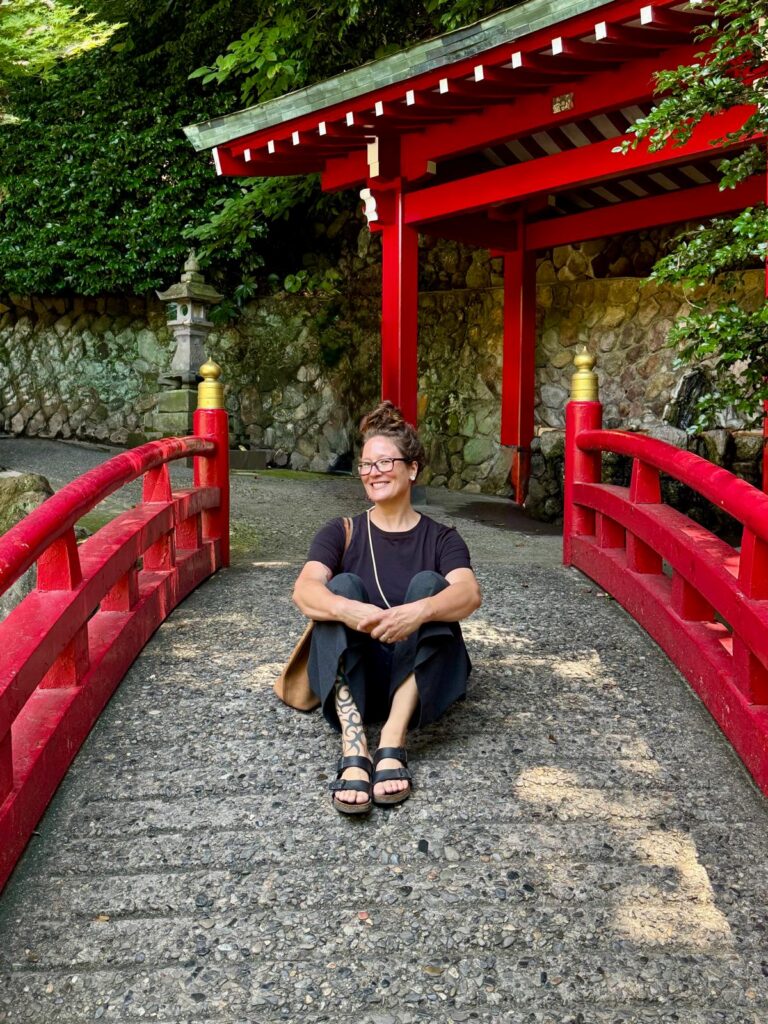
During my second time in Japan, I ran the full gamut of emotions. More so than the first time. I enjoyed the change of pace from the previous time. I loved the somewhat friendly, yet reserved culture, and at the same time discovered a place of racism. I was blown away by the bizarre and outlandish things that make Japan shine. And sushi. I ate lots…and lots….and lots…of sushi. I was also confused and at times disgusted by certain aspects of the culture. I was bamboozled by the language. And I was overwhelmed by the masses of people.
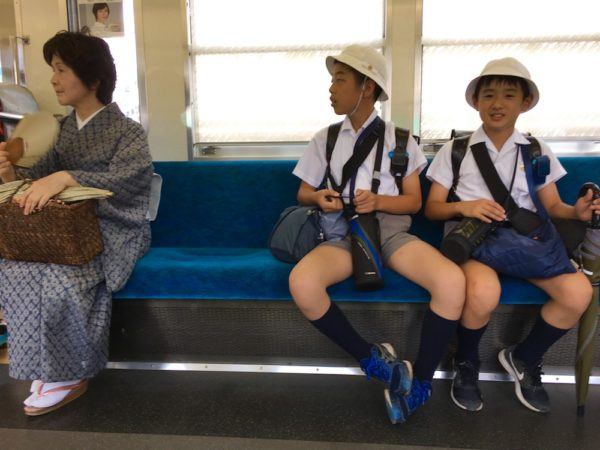
I made some harsh observations about the Japanese culture that, for me, are weird or deal-breakers in choosing Japan as a place to live. So today, I’d like to share with you some random observations about Tokyo that hopefully will give you a slightly more well-rounded sense of what it was like for me to visit Japan.
Transportation is Expensive, but Effective
…to which you might reply “DUH, Daniela! It’s Tokyo!” Hear me out. I know things like taxis are murderously expensive. But even the trains- the trains that everybody takes every day to and from work, shopping, and play- they’re really expensive. You pay for the train according to the line you ride on, and the distance you travel. So every trip is different.
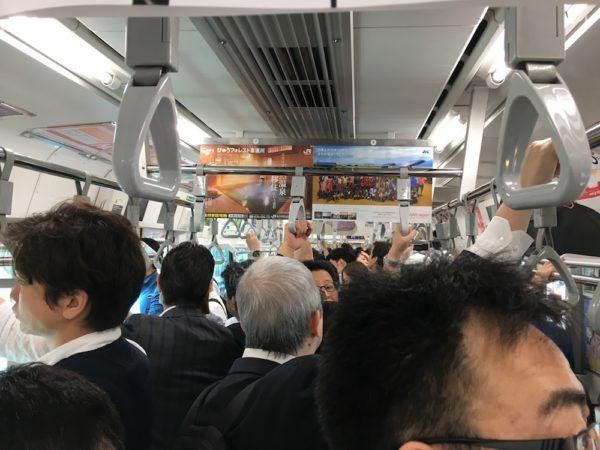
But there’s good news: since public transportation is the way most people in Tokyo get around, it’s everywhere, and everything generally runs on time. Like exactly on time. The trains are NEVER late. Tokyo is one well-connected, efficient city.
Tip: If you’re coming to Tokyo, get a Suica card right away. You can get them from vending machines at any train station. They cost 1000yen (a deposit that’s refunded to you when you turn in the card, minus an admin fee). Charge up the card with cash at any of the same vending machines. When you ride the trains, you simply swipe your Suica card when you enter and leave each train line.
But Sushi is Cheap
Oh, glorious sushi. It’s available everywhere, even in convenience stores. For less than 4 euros you can get a tuna roll, and the quality is even better. I regularly stuffed myself to oblivion on sushi at 7/11 supermarket sushi, which was super fresh. Now, as with many things in Tokyo, the sky is the limit on price; the more you spend, the better the quality of sushi you’ll receive.
It’s Super Safe
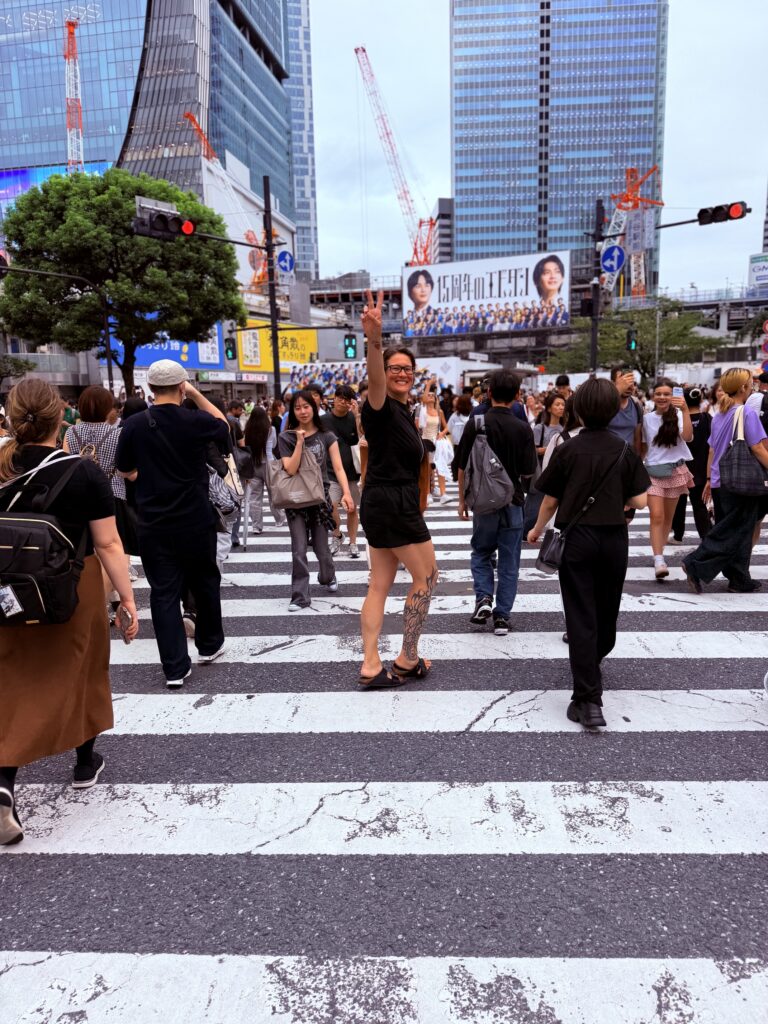
Considering Tokyo is the most populated metropolitan area in the world, it’s ridiculously safe. I left my shopping bags and drink unsupervised at my table while I went to the bathroom; not something I’ve ever considered before. I bet you could leave your phone and wallet on the table as well. As a female traveler, I can walk around at night in most areas of Tokyo without worrying. Driving a car in Japan is also very safe! We rented a car and drove all the way to Fukuoka without any issues. No road rage in Japan.
Garbage Separation is an Art
There is a distinct lack of garbage cans on the streets of Tokyo. If you have something to throw away, you take it home with you and figure out how to get rid of it. There are different pick-up days for wet/burnable/organic waste, plastic wrappers, plastic bottles, cans, glass bottles, milk cartons, cardboard, clothes, and more. And don’t screw up, because they won’t take your garbage (it’s in colour-coded transparent bags so you can’t sneak stuff in that doesn’t belong there). I thought the garbage separation process was finicky in Austria; Tokyo takes it to a whole new level.
Interestingly, this attention to separation of garbage (and lack of ability to throw things away while you’re out and about) makes for a very clean urban landscape. I didn’t see any litter in Tokyo – the world’s most populated metropolitan area; that’s impressive.
Packaging is Over the Top
For a city so attentive to the separation and recycling of waste, I was mildly horrified at the amount of packaging. First of all, because of the work culture, people don’t often have time to cook their own meals, so buying prepared meals at stores on the way home is common. Almost a quarter of every grocery store is dedicated to such prepared food. Every prepared meal comes in its own plastic container, with a plastic pack (or two, or three) of accompanying sauce. That’s a lot of plastic.
Or maybe you want to get some ramen at the 7/11 supermarket to make at home. Each ingredient is separately packaged in its own plastic wrap for you to assemble. Maybe you want some cookies or snacks; within the double-wrapped package are more individually wrapped goodies. And it’s not just food!
I guess all this packaging is a testament to the general sterility and cleanliness of the culture. Which in a place as packed as Tokyo serves a purpose in not enabling the spread of germs and disease. But when it came to separation of garbage, the most garbage I produced – by far – was plastics. And I don’t honestly know if and where these plastics are actually recycled at the end of the day.
Toilets are Funny
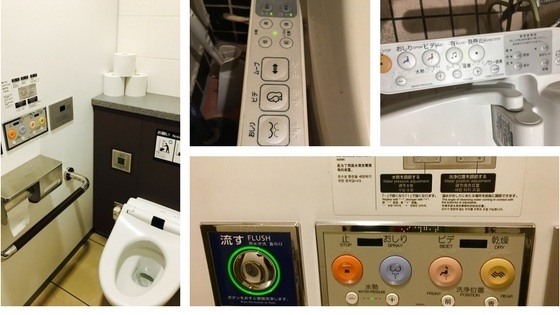
I’d heard about Japan’s confusing toilets from afar. So the first thing I did on landing in Tokyo was race to the airport washroom to take a picture of the “dashboard” of my toilet. There are buttons for everything, from ambient music (to drown out the sounds of your ablutions), to bidet spray, to “lady” spray, butt dryers, seat heating, and more. Every toilet is different, so make a point of visiting the bathroom in as many places as possible if such things amuse you as much as they did me. Also, some toilets are squat toilets; a commonality in Asia. They lack dashboard functions, though.
A Culture of Overwork
I find Japan’s working culture to be disturbing, with overtime expected and changing jobs frowned upon. There’s a uniquely Japanese term for working yourself to death. There’s also a uniquely Japanese term for leaving work on time, and it’s akin to a miracle. After a highly publicized suicide that highlighted Japan’s culture of overworking its employees, they implemented “Premium Fridays”, allowing people to leave work early, at 4:30 pm. Most people continue to stay late. People seem super tired and exhausted all the time, or as my son said, they look like robots. In my opinion, they do not have a work-life balance.
Stability (of Job and Home) is Revered
Changing jobs within your first three years out of school is considered taboo, because it labels you an unreliable employee. Moving house too often is also a no-no. Actually, it’s financial suicide to move too often; every time you sign a new lease it’s an expensive proposition with costly “gifts” and “deposits” owed to the landlord, much of which you don’t actually ever get back. In fact, there’s a uniquely Japanese term for becoming poor because you move too often. The term is hikkoshi binbō, which translates directly to “moving poverty” or “moving poor”.
Tattoo Taboos
I have tattoos, big ones, and I’m proud of them. They each mean something very dear to me, and I think they’re pretty to look at. But in Japanese culture tattoos are very much taboo, and still today are considered a sign of connection to the yakuza (Japanese gangsters).
I want to go on a little rant about how tattoos are taboo in Japan, and how it meant I refused to go to any onsen/sento (public hot springs/baths) for fear of being kicked out or ostracized. Although this social policy is apparently relaxing, to my eyes it’s not quickly enough. There are places where you cannot go when you have tattoos. Also, many Japanese people looked at me in a weird, almost disgusted way when they saw my tattoos, which was kind of uncomfortable.
So, I dressed mostly in a way that covered my tattoos. Most people dress pretty conservatively in Japan anyway (eg: spaghetti straps and flip-flops are uncommon). And if you can’t (or won’t) cover up your tattoos, wear ’em loud and proud. Just don’t expect to blend in, and don’t be surprised if you get the odd dirty look.
Such a judgemental close-minded attitude is offensive to me. That’s all. And although the prevailing sentiment is that this attitude towards tattoos is changing, it depends on who you talk to as to whether it truly is.
It’s a Fashion Show
Every single time we left the house, I was impressed by how well put together people in Japan are. The people-watching opportunities are everywhere; Japan is not just about Harajuku Girls and cosplay either. There are many styles on the street, many of them understated and classy. Other styles are fresh and flirty. Both men and women are consistently well-coordinated and accessorized. I guess all this “girl power” stuff pays off in producing a generally pretty population.
Girl Power (or Not)
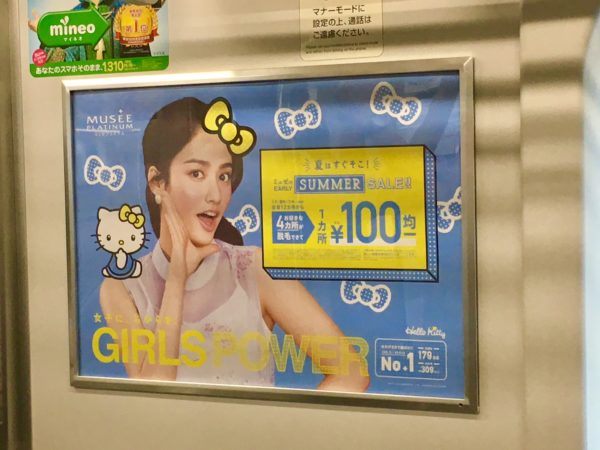
In the West, we define Girl Power as that of a woman’s independence, empowerment, control of her life, and expression of femininity in a courageous and still flirtatious way. Although I would never have called myself a raging feminist, seeing the attitude towards women in Japan has made me reconsider my stance.
This picture above is a very prevalent ad on the subway. With this sort of slogan, you’d think it’s for something empowering to women. Instead, it’s for a hair removal product. Because Japanese women apparently like to embrace their “Girls Power” by ensuring their arms are hair-free. It’s part of a whole cultural movement encouraging Japanese women to be pretty, and “feminine” in the most delicate (and labourious) of ways. Weird to me.
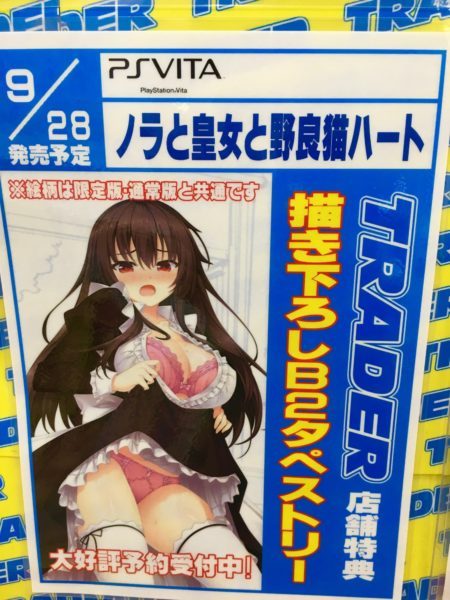
My rude awakening surrounded the graphic and at times vile exploitation of women (and let’s get it right – more like little girls) in anime and video games, books and magazines. Now, I’m all for some racy content in the right context, but this stuff was everywhere, for adults and children, women and men to see and use like it’s just another day. Exit any one of these stores and walk down the street and you’ll be approached by women in a slutty maid outfits trying to lure you into their “maid cafes” – a place where people (mostly men) go to be doted on by scantily dressed women in an over-the-top cutesy-pie (dare I say “little girl”??) manner. Very weird.
Conclusion
When I arrived, I loved the place. Everything is new! The food is great. The smells are different. The people are friendly. The scenery is majestic. It’s magic. And then, as I settle into daily life and dig around a bit culturally, I often start to see the ugly underbelly of the country (and trust me, every place has one). It always happens; in some places it just takes a while longer for a variety of reasons, and in some cases it’s easier to take the bad with the good. But depending on how bad “the bad” is, I start to change my stance.
Years ago, after a friend showed me a crazy anime movie set in Tokyo, I coined a phrase that became a silly go-to among my group of friends: “Tokyo is years ahead of us in nonsense”.
And while Tokyo is certainly ahead of western countries on many levels (not the least of which is technologically), it’s also steeped in what we in the west would call antiquated ways. This juxtaposition of futuristic and antiquated is one of the most culturally bizarre phenomenons I’ve ever experienced.
Overall, I forgot how jarring the culture shock can be. This was my second time in Japan , which likely exacerbated my feeling like a fish out of water. Cap it off with a transition from Austrian quiet village life to Tokyo skyline, and it’s no wonder I suffered a “crisis of dislike” with the place. But I’m not giving up on Japan or Tokyo; in fact I just might return to the same gig; but not in the summer anymore. Sucker for punishment, or open-minded? We’ll just have to wait and see. For now, I am just glad to be back safe and sound. Afterall, there was an earthquake (two days after we left this particular area!), a volcano erruption (again after we left!) and now a typhoon (our plane still took off while many others got cancelled!). Gotta love Japan. Something is always boiling.