Recently, at work, I struck up a conversation with a new mom holding her tiny baby. “He’s adorable,” I told her. She looked up at me with teary eyes. “He’s growing up so quickly, it makes me sad.”
Through the years, many new moms have told me the same thing, and I remember feeling that way, too. My friends especially worry about their sweet kids growing into surly teens. But recently, the biggest realization I’ve had is…teenagers are pretty funny.
Of course, there are highs and lows, as with all stages (sometimes you want to pull your hair out), but overall, parenting teenagers has been my favorite chapter yet. I hadn’t expected that at all.
Sometimes I worry about losing the connection with my funny son as he gets older, and, when I mentioned this to a friend the other day, she replied: “It will be just the way it is now, only he’ll be a sweet-hearted young man, and you will feel very short.”
I hadn’t realized that raising a teenage boy would involve all the tenderness of a violin spilling out a persistent heartbreaking melody in the background — and also, of course, all the crash-banging of a drum set. But it’s both things all the time. The main rule is to love these big kids fiercely and excessively. Here are some other tips that work for me:
1. Teach them to respect others in the way of real, human equals with rights, intelligence, and space on the subway.
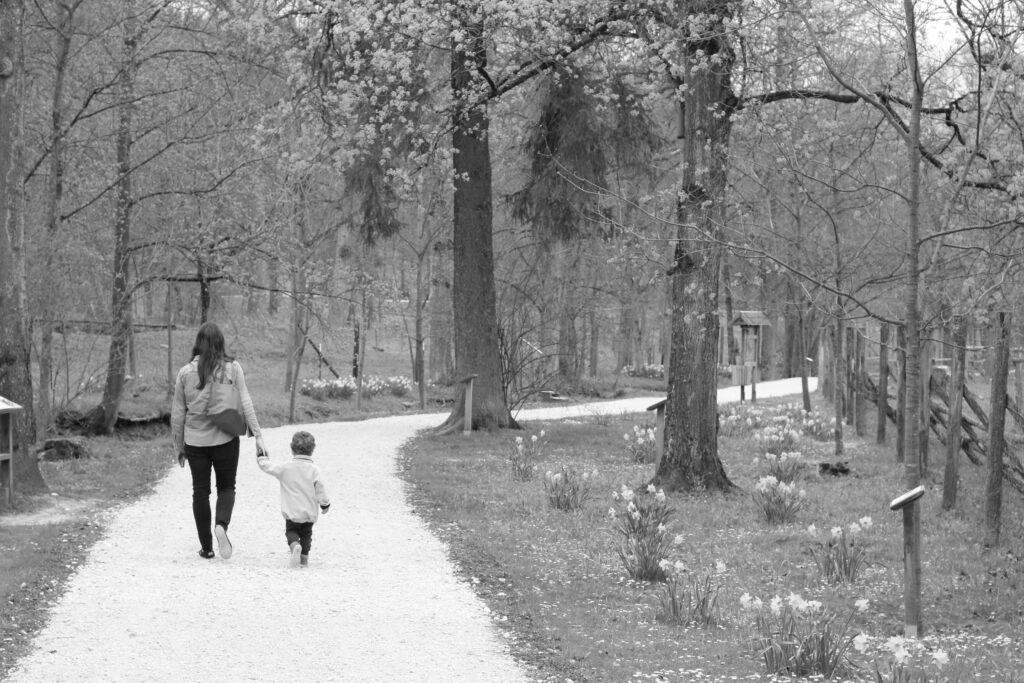
2. Enjoy the same funny conversations you’ve always had, especially while walking in the woods or cuddling on the couch. “How many pieces of Kinderriegel do you think I could eat?” he might ask, and then look aghast when you say ten.
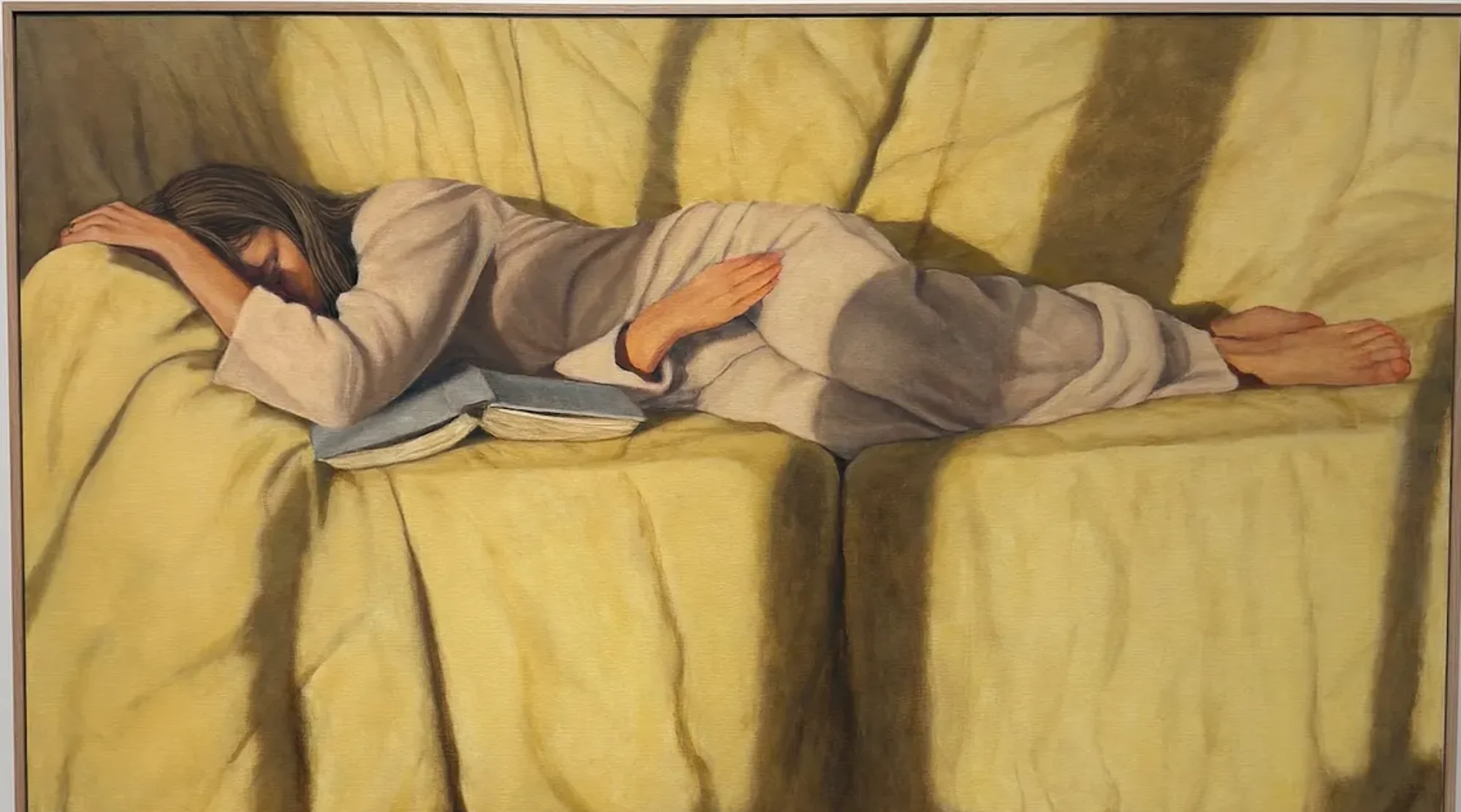
3. Love them for sleeping late. The only other option is to not love them for sleeping late, since sleeping late is itself a given. They’re creating many inches of new human flesh a day, and it’s exhausting! (Remember pregnancy?) When they stagger out at 2 p.m. with their man-sized arms and legs and their sleep-creased baby faces, you can just say, “Did you have a good sleep, my love?” instead of “Good AFTERNOON,” as all of our own passive-aggressive parents did. And you might be treated to a languid smile, a comfortable stretch, and the simple pleasure of the words, “I did.”
4. Be kind to your child, even if it seems like he doesn’t notice or care. He does. Treat him to muffins, to barbecue, to a big smile, a cup of hot chocolate, the benefit of the doubt.
5. Prepare for cranky questions to emanate from the open fridge: “Is the cheese all gone?” “Wasn’t there leftover steak?” Answer with your sunny good nature. “It is!” “You ate it!” Go grocery shopping together and talk about the things he likes.
6. Enjoy the beautiful, gentle, funny boy who says things like, “Herro,” instead of hello to make you laugh after you muse aloud that work today was killing you.
7. Be trustworthy. Be respectful. If he turns to you with something bad or hard, the first message should be, “I’m so glad you told me.” The second message should be, “How can I help?”
8. Assuming you actually want your son to join you, whatever it is you’re doing, the answer to the question, “Is it okay if my friends come with us?” is yes unless of course you don’t know his friends at all and you are not home.
9. Relatedly, keep around plenty of books to give the kids lots of fun things to fill their time with besides the kinds of fun things that you might be less excited about.
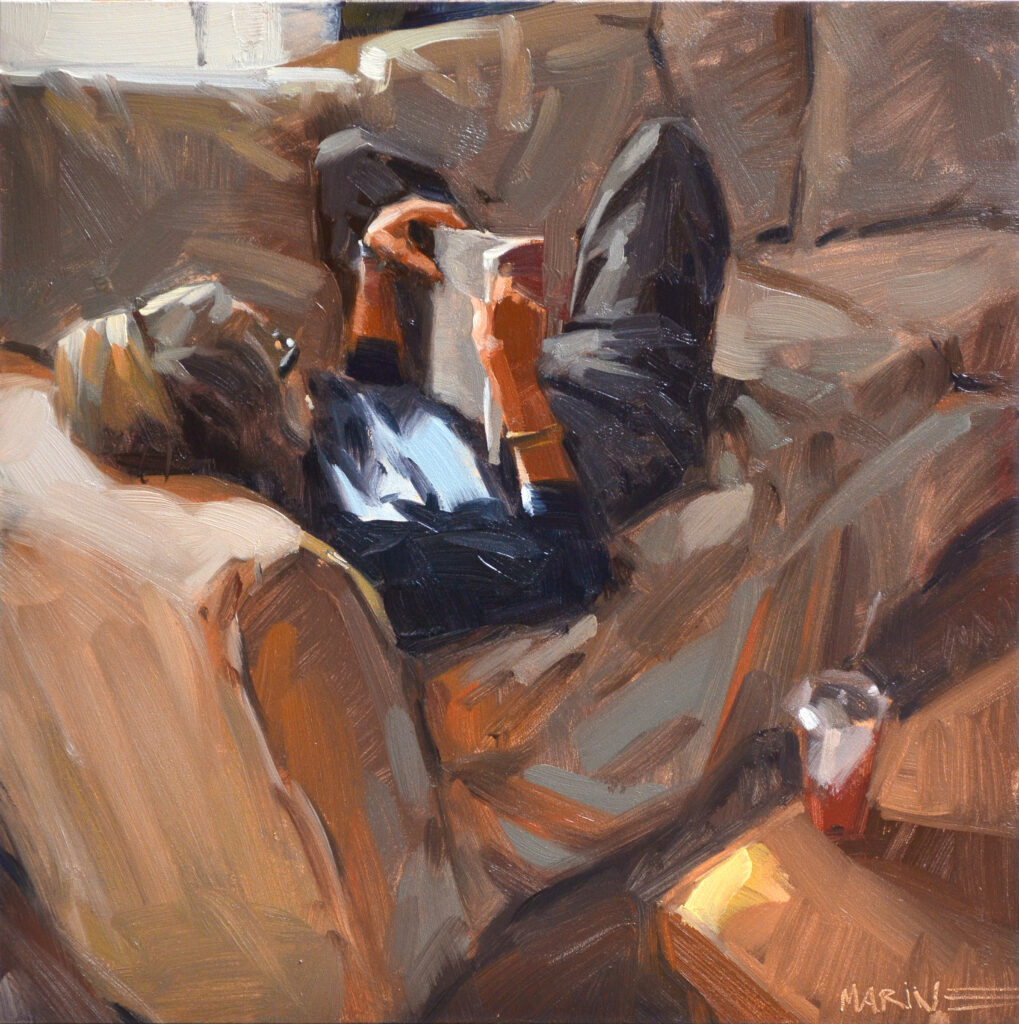
10. At home, I give him alllll the space to do his own things and always knock before going into his rooms. Meanwhile, I stay quietly available — say, reading on the sofa or hanging out in the garden — in case he wants to wander over to me and extend a paw over mine.
11. Take a picture of the heap of gigantic shoes by your front door because one day they will not be there and you will want to tearfully reminisce.
12. Teach him the important life skills: How to send a thank-you note. How to listen and ask questions. How to walk into a kitchen and say, “Put me to work.” How to clean a bathroom, do a load of laundry, cook pasta. How to sit patiently on the sofa between their two grandparents with their two new iPhones, nodding slowly and saying, “Here, let me show you,” when the grandparents are convinced the Google has gone missing.
13. Substance-wise, consider moderation over prohibition. That said, if you make one rule, let it be this: “Don’t ever try meth, crack cocaine, or heroin. Ever, ever, ever.”
14. Pick your battles. Personal style is a pretty low-stakes form of self-actualization; if the way they wear their hair or jeans is fine, as long as they don’t smell or are dirty.
15. Pretend you’re just tying your shoe so they won’t notice you leaning in to sniff the still-intoxicating smell of their scalp.
16. Lying in bed at night, scanning around to check for various dangers and unhappinesses, you will mentally find your son safe in his bed, in his room, in your house. And you will remember to be so, so grateful. Because one day you will buy him a memory foam mattress and a set of twin XL sheets and, poof, he will leave behind a heartbreaking boy-shaped hole.
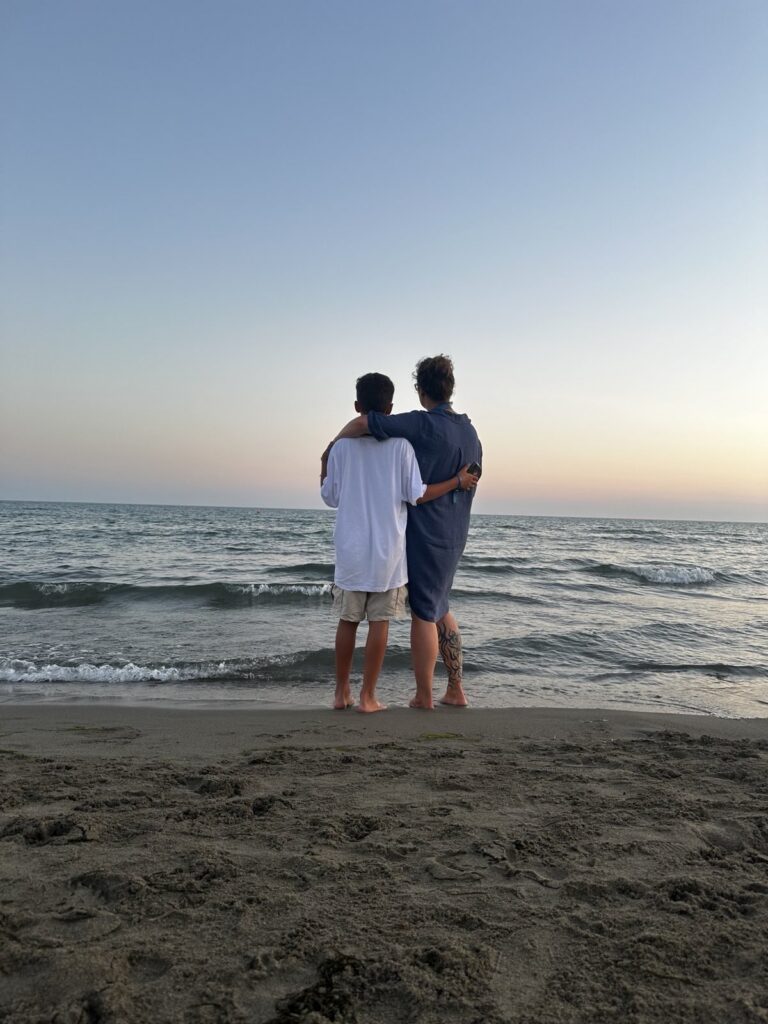
17. Wherever they go, physically or emotionally, understand that they’ll come back to you. And when they do, go ahead and fling your mama arms — your mama heart! — wide open. Wide, wide open.
18. Ask for their advice, genuinely. Teens are desperate for independence (gahh, don’t you remember that feeling?), but they’re still newbies — they can’t drive, they can cook only a few dishes, they’re figuring out their style/culture/mocktail preferences. So, whenever it makes sense, I ask my boy for advice — what haircut should I go for? How would you handle an issue? — so he can realize how wise and trustworthy he already is.
19. Take an interest in their passions. Joey loves science and wants to know how everything works. Even though I sometimes don’t know what he is talking about, I will ask him all about the stuff he’s pondering.
20. Plus, find new things to enjoy together. With little children, you imbibe mind-bending amounts of cartoons and board books. But as they grow older, they begin to enjoy some of the same shows, movies, and games as you do. (!!) We’re currently into the series Ghosts.
21. Enjoy the texts. Texting with teenagers is never not hilarious. If they even text you back. A recent request that made me laugh: Mom MOM MOM Where r presents in my lunch 😭 Pretzels not prezzies 🥨 Can u bring 🥨 Mom I forgot to finish my project Did u buy glowing ✨Can u bring ✨ MOM
22. Remember that they’re still little. Even though my son makes me laugh like actual friends, they, of course, still want (and need) cuddles and hugs. Because, no matter how old our kids get, they’ll always be our babies. xoxo
Happy 13th Birthday, my love! I am so proud to be your mom!
Sometimes life is tough and demanding, and we don’t see a way out of this misery. I wanted to share a few small decisions that have made a difference for me. Whether you’re navigating a health challenge, recovering from surgery, or simply moving through a tough personal season, I hope they help you, too.
Here are six daily decisions you can control, no matter what life throws your way:
What You Put Into Your Body
When I feel stressed, I tend to make some wild choices about what I put in my body. The instant gratification often leaves me feeling lousier in the long run, so I’m trying to pay more attention to the difference between foods that numb and foods that nourish.
I’m not trying to be prescriptive about what anyone eats. But especially when you’re stressed, and your body and brain need extra support, it’s worth asking: Is this actually making me feel good, or just making me feel less bad for two minutes?
Try this: Identify two or three nourishing foods that leave you feeling satisfied and energized. Keep them on hand for the days when you need a little extra support.
The Content You Consume
A question I’ve been asking myself lately: What am I allowing into my mind every day, and how does it make me feel?
When it’s so easy to succumb to the mindless scroll, it’s worth being a little more intentional about what we let influence us. Otherwise, you might find yourself watching a complete stranger unbox their 16-step skincare routine.
I’ve made a running list of content I actually want to consume, mainly documentaries, nonfiction books, and podcasts that spark curiosity or teach me something new.
The goal isn’t to make every minute of screen time productive. It’s to notice the difference between things that leave you feeling informed, inspired, or entertained and things that leave you anxious, agitated, or wondering where the last 45 minutes went.
Try this: Before you hit play or open an app, ask yourself:
What kind of content do I want to seek out on purpose?
What consistently leaves me feeling anxious, depleted, or like I’ve lost time I won’t get back?
Use your answers to curate what you follow, watch, listen to, and read. You don’t have to give up your favorite reality TV show or comfort rewatch. Just make sure you’re choosing what you consume, rather than letting the algorithm choose for you.
What You Buy (or don’t)
Stressful times can lead to some serious add-to-cart activity. But the dopamine hit of a new purchase is fleeting, while the aftermath can stick around a lot longer: credit card debt, piles of cardboard cluttering up your home, and the occasional pang of buyer’s remorse.
On the flip side, spending can be a powerful way to support the kind of world you want to live in. Your neighborhood bookshop, your family-run grocery store, the small business whose values you believe in, the organization you want to support: where you spend your money matters.
I keep a running list in my Notes app of businesses, brands, and organizations I want to support, alongside things I actually need. It’s a helpful gut check before buying something I don’t need from a business whose values I don’t share.
Try this: Start a running list in your phone of things you need, businesses you love, and local spots you want to support. Check it before your next impulse purchase and let it guide where your money goes.
How You Care For Yourself (and others)
When life feels uncertain, it’s easy to let the basics slide. But rest, hydration, fresh air, movement, sunlight, and a little self-compassion aren’t luxuries. They’re the infrastructure that makes everything else possible.
Think about what would give you a little boost this season. Maybe it’s a morning walk, a journaling practice, a mini meditation, reading a magazine, or simply staring at the sky for five minutes without your phone. It doesn’t have to be elaborate to make a difference.
And while you’re at it, remember that kindness is a choice, too. Look for one small opportunity each day to make someone else’s life a little easier: offer a genuine compliment, send a check-in text, or let someone go ahead of you in line. Small gestures can shift the energy around us, often more than we realize.
Try this: Identify one small thing you can do for yourself and one small thing you can do for someone else each day this week.
How You Care For Your Home
When life feels chaotic, I find it especially helpful to focus on my immediate environment: my home. It doesn’t need to be perfect or magazine-ready, but a little care can go a long way toward making everyday life feel calmer and more manageable.
That might mean clearing the kitchen counters, changing your sheets, putting on a load of laundry, opening the windows, or tackling that one depression pile or perpetually cluttered surface. You don’t have to take on an entire room or embark on a full-blown organizing project. Sometimes a fifteen-minute reset is enough to make your home feel a little more like a sanctuary.
Try this: Choose one small area of your home that would feel better tidied, refreshed, or simplified.
What You Choose to Think and Believe
We can’t control everything that happens to us, but we often have more say in how we make sense of it than we realize. Try not to get stuck in a why me? mentality. Life can be wildly unfair, but there are so many positive things in life too. Choose to believe that this experience teaches you something. For example, that it will deepen your resilience, empathy, and gratitude rather than define or diminish your life.
That doesn’t mean pretending everything is fine or opting for toxic positivity. It means making room for two things to be true at once: is is obvious I would rather not be in this situation, but I am incredibly lucky that I am healthy and am able to look for other options with a clear mind. We may not get to choose our circumstances, but we can practice choosing the stories we tell ourselves about them.
Try this: Think of something difficult you’re navigating right now. Can you identify two things that are true at once, even if they seem contradictory? Is there any small thing that feels hopeful, helpful, or worth holding onto?
Over the years, I built a toolkit to break through negative mindsets and let go of what is holding me back, and I want to share those tools with you. I will always be honest with you, even when it is going to pierce your heart. But truth is always best. So, let’s dive in.
The Emotional Toll
I think we all have those moments when we find out that someone isn’t who you thought they were. I think we all encounter this, and it stings. And you start to question yourself: “Did I do something wrong? Was I too trusting? Was I too loyal?”
Some people only come into your life to use you. They don’t love you, care for you and just want the benefits that come with you. For somebody who truly loves you, you’re not an opportunity. They see teamwork and something special in you.
If all you had to offer was friendship, who would still be around? Most of the time, real life situations expose fake people. People pretend well when they want something from you and sometimes it’s the ones you love the most who want to see you fail.
I am talking about the ones who care so much about your struggle, but are yet so silent when you win. Not everybody in your boat might be rowing, but silently drilling holes into your “friend-ship”. Some people’s lives are so miserable, they don’t want you to be happy either.
I want to share five warning signs on how to detect fake people. There are probably a million, but these are the obvious ones to me.
Number one.They only come around when they need something. If you ever feel like your relationship is based on convenience for them, that is a red flag. Sometimes you literally give everything you have got, but when you need them, they never have time. I am not saying it should be tit for tat, or that I am keeping score, but I should be able to know that I can count on you the way you can count on me. Others are keeping people in their lives who just want to drain them. Some just take, take, take from your life until they can’t use you anymore, and then they throw you away to move on to the next “best friend” they can use.
Number two.They’re never happy for your success. When you start winning, their love gets distant and they don’t talk to you for days and weeks. Life is too short to be around people you have to tiptoe around, and cannot even bring up your accomplishments. You shouldn’t have to quiet your happiness for anybody. They might not even be fake friends, but they are also not real ones because a real friend will celebrate your wins like they are their own. They support and help you no matter what.
Fake friends will go silent, or even worse, they will try to downplay your success or make it about them. You never have to force something real.
Number three. They are not loyal. Loyalty is truly displayed when you’re not around. They would also never disrespect anybody you love because you will always be loyal to the people they love. It is also strange if a friend likes someone who you cannot stand at all. It is sort of weird.
Number four.Inconsistency. Inconsistency is a choice. I’m not saying friendship should be perfect because no friendship is perfect. I’ve not been a good friend at times in my life, for sure. But inconsistency is something I will not tolerate. One day, you are best friends, and the next day, you are distant, silent, and cold for days and weeks? Red flag. I know people go through things. I don’t want to talk to anybody sometimes, but I let my friends know. I’m mature enough to communicate what is going on.
Number Five. They don’t respect your boundaries. They’ll ask for more than what you’re willing to give or get upset or silent when you say no. As humans, we have to be mature enough to communicate our boundaries to our friends. Again, communication is key.
The Psychology of Fakeness (why do people do it?)
In my opinion, the main thing is insecurity, jealousy, and envy. As human beings, we feel insecurity and jealousy. But we don’t have to follow through on it and turn it into envy. Some friends really don’t have a bad heart, and they truly love you but they have so much insecurity in their life that every time you are winning, in their mind, they are losing. They want what you have.
They fear of being alone. Some people fear being alone so much that they will maintain superficial relationships to avoid loneliness, even if it means being fake. If you have that mindset, you are creating a life of settling. And when you create a life of settling, you are creating a life of suffering.
How to protect your peace
When your soul is speaking to you, listen! Turn to your gut feeling. If you feel drained after every interaction with your “friend” and if you feel you cannot be yourself, that is your intuition speaking. When we ignore what is real and what we know, we will always put ourselves in difficult situations.
Create and maintain healthy boundaries. It is okay to limit your time with people who don’t respect you. Some people need to be demoted and don’t need to have the same access to you. It is okay to outgrow people because some are just lessons.
Communicate directly but firmly. Sometimes fake people don’t even realize the damage they are doing. Have a real conversation with them. Your mental health and peace come first. It is about having self-respect. Move on with grace. No need for drama or scenes. Simply distance yourself, wish them well, and focus on relationships that lift you up.
If all you had to offer was friendship, who would still be in your life?
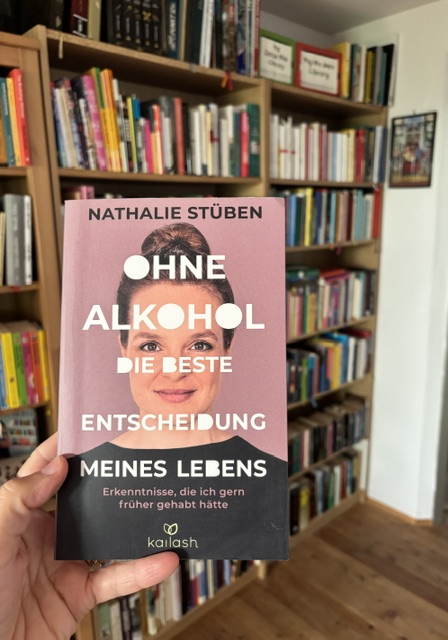
After more than two decades of drinking, I decided to stop drinking alcohol for good almost four years ago! Some life changes happened that I was completely unprepared for. My life had changed, my values had changed, my career had changed, and my body had changed. I knew I needed to change one more thing. And so I did. I stopped drinking alcohol. In the beginning, I just wanted to “give it a 30-day try,” but then it felt so aweseome that I quit for good.
BENEFITS FROM QUITTING ALCOHOL
First, there were the obvious benefits. I lost some weight. I slept so much better. I saved a ton of money. I am on an incredibly smooth ride which has been an unexpected booster for my life, productiviy and work. Less energy spent trying to manage my emotions is energy that can be invested into my daily life and writing.
MORE CLARITY AROUND MY VALUES AND PRIORITIES
Perhaps the greatest side effect of the steadier mood is that I feel more clarity around what I care about. Back when I used to drink, I used to get excited and worried about so many dumb things. I would dedicate myself to a new idea only to start questioning that idea a few days later. I would ride this rollercoaster of emotions one day feeling like I was doing exactly what I was meant to be doing, and the next having an existential crisis that it was all a waste of time.
Removing alcohol from my life has replaced social energy with physical energy. I took up running again and ran a halfmarathon. Overall from the outside, my life probably appears boring and dull, but I’m way more satisfied and happy. And this is all that matters.
So, I don’t want to be preachy here, but if you ever asked yourself after yet another hangover if you drink too much, the answer is most likely yes.
I am sharing the article on purpose on a Friday. You know how many are looking forward to Friday and the weekend to go out (or stay home alone) to get hammered because we deserve it after a long, hard, stressful week of work! This Friday, try a different approach. Let’s get sober as fuck.
Come on, let’s get absolutely sober. It’s Friday. It’s been a long-ass week; I need to get clear-headed.
Teas, right? Let’s get some tea. You want some milk? Get some calcium. Yes, there it is. Okay, first tea of the night—let’s slam this shit down.
Oh man, that’s hot. That’s crazy hot. Whoa, yeah. That’s good. I just got this rush of lucidity. It just hit me straight away. I love it. Friday, is awesome!
Oh , you remember that time I got four teas here? I just lined them up. The server was like, “What the fuck? No way you are drinking four teas!” And I’m just like, “Yeah, just watch.” Boom. Steeped that tea for four full minutes because, you know, got to bring that flavor out. Spent the next half-hour gently sipping every single one. She must have thought I was insane. That was so wild. My mental clarity that night was out of control.
Okay, wow, that first tea has really hit me. It’s like, whoa, you know? My head is so clear. I’m completely present in this conversation. I’m literally holding space for your narrative right now. I’m not just waiting for you to finish saying things so I can say my thing. Come on, let’s go get some sodas. I love it.
You got soda? Damn. That shit’s hardcore. When you want to get sober, you don’t play. Oh, did I tell you? Last Friday we got sooooo sober. I was with Pete, you know Pete? Canadian Pete? We were out-of-control. We had some awesome conversations. Then we spent thirty minutes researching history, politics, and the latest books and movies we enjoyed. It was so serious. Wild.
I felt so good the next day. I was hydrated as fuck.
I am so sober right now. I just texted Jackie to confirm I’m helping him move tomorrow morning. Didn’t even hesitate. Your friend needs you, you check your calendar, and you honor that commitment. Strict reliability.
All right. This has been awesome. I just really needed it, you know? After a long, tough week, you need to go out and get completely sober. I’m actually so clear-headed right now that I’m getting tense. That shit’s too much for a Friday night.
So, yeah, crazy times. I should stop getting so sober. You know, I say that every week. I get crazy sober, and I’m, like, never again. Next Friday, though, I’m back, trying this new juice bar down the road. They make awesome smoothies.
What? Some coffee? For the road? You are so responsible, you lead me astray. Okay. You know what? Let’s make it an espresso double shot. I mean, what else are Fridays for?
Keep an eye on yourself. Be your own friend. Be your own parent. Be kind to yourself. Check on what you are doing. Do you need to watch the last episode of the series when it is after midnight? Do you need that third or fourth glass of wine? Or even drink alcohol at all? Is that really in your best interest?
Declutter your mind. Panic is the product of overload. In an overloaded world, we need to have a filter. We need to simplify things. We need to disconnect sometimes. We need to stop staring at our phones. To have moments of not thinking about work. A kind of mental feng shui.
Listen to calm noise. Things that aren’t as stimulating as music. Waves, your own breath, a breeze through the leaves, the purr of a cat, and best of all: rain.
Let it happen. If you feel panic rising, the instinctive reaction is to panic some more. To panic about the panic. To meta-panic. The trick is to try to feel panic without panicking about it. This is nearly, but not quite, impossible. I had an anxiety/panic attack once in my life (it happened while I was still drinking alcohol!) and it was horrible. Since I stopped drinking alcohol almost 4 years ago, I never had a similar feeling again.
Accept feelings. And accept that they are just that: feelings
Don’t grab life by the throat. “Life should be touched, not strangled,” said the writer Ray Bradbury.
It is okay to release fear. The fear tries to tell you it is necessary and that it is protecting you. Try to accept it as a feeling, rather than valid information. Bradbury also said, “Learning to let go should be learned before learning to get.”
Be aware of where you are. Are your surroundings over-stimulating? Is there somewhere you can go that is calmer? Is there some nature you can look at? Look up. In city centres, the tops of buildings are less intense than the shop fronts you see at head level. The sky helps, too.
Stretch and exercise. Panic is physical as well as mental. For me, running and yoga help more than anything. My body tightens from hours of hunching over a laptop or standing, and yoga and running stretch it out again.
Breathe. Breathe deep and pure and smooth. Concentrate on it. Breathing is the pace you set your life at. It’s the rhythm of the song of you. It is how to get back to the center of things. The center of yourself. When the world wants to take you in every other direction. It was the first thing you learned to do. The most essential and simple thing you do. To be aware of breath is to remember you are alive.
Remember that how you react to the news isn’t just about what the news is, but how you get it. The internet and breaking news channels report news in ways that make us feel disoriented. It is easy to believe things are getting worse when they might just make us feel worse. The medium isn’t just the message; it’s the emotional intensity of that message.
Limit the number of times you look at the news.
Realise the world is not as violent as it feels. Many writers on this subject, such as the famed cognitive psychologist Steven Pinker, have pointed out that, despite all its horrors, society is less violent than it used to be. “There is definitely still a lot of violence,” says the historian Yuval Noah Harari. “I live in the Middle East, so I know this perfectly well. But, today more people die from eating too much than from human violence, which is really an amazing achievement.”
Be near animals. Non-human animals are therapeutic for all kinds of reasons. As A.A. Milne wrote in Winnie-the-Pooh: “Some people talk to animals. Not many listen, though. That’s the problem.”
Don’t worry about things you can’t control. The news is full of things you can’t do anything about. Do the things you can do stuff about, raise awareness of issues that concern you, give whatever you can to whichever cause you feel passionate about, and also accept the things you can’t do.
Remember, looking at bad news doesn’t mean good news isn’t happening. It’s happening everywhere. It’s happening right now. Around the world. In hospitals, at weddings, in schools and offices and maternity wards, at airport arrival gates, in bedrooms, in inboxes, out in the street, in the kind smile of a stranger. A billion unseen wonders of everyday life.
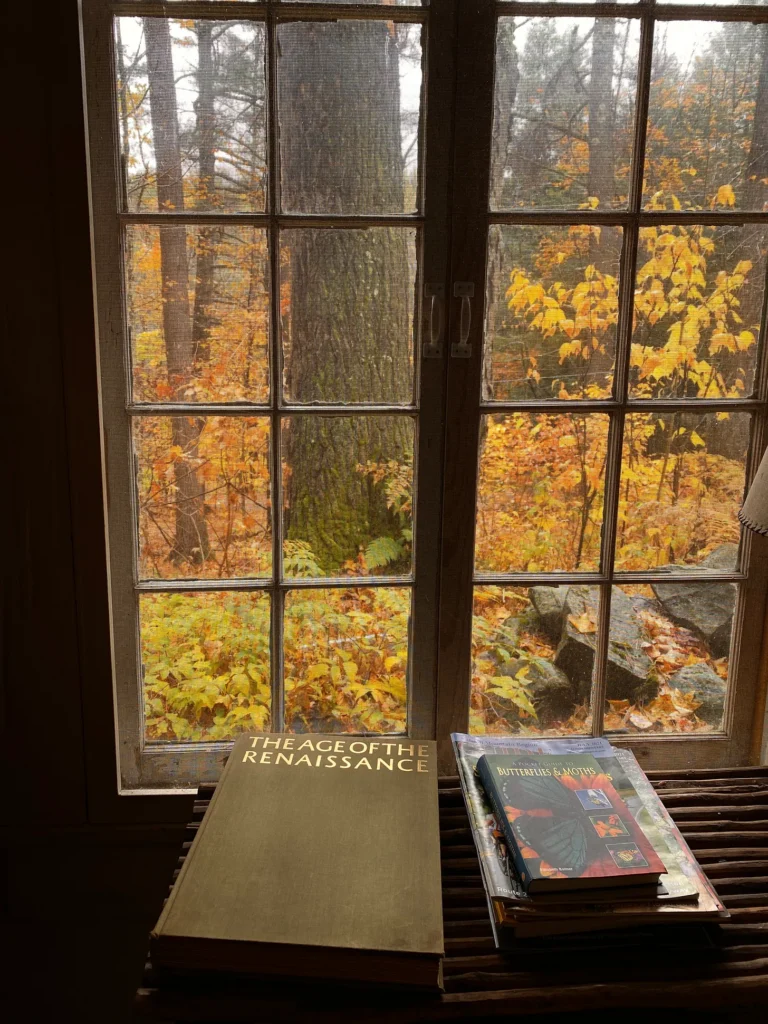
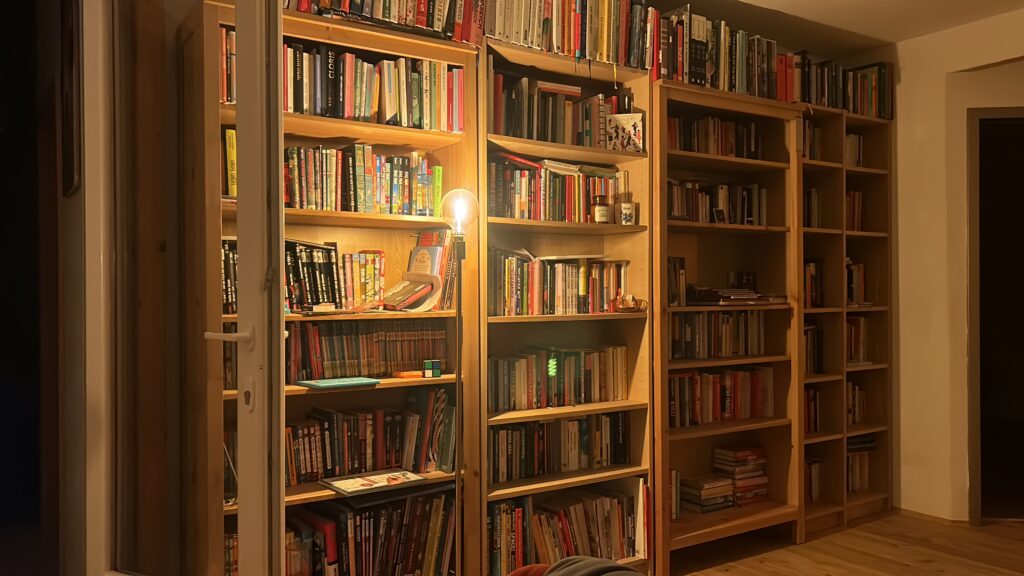
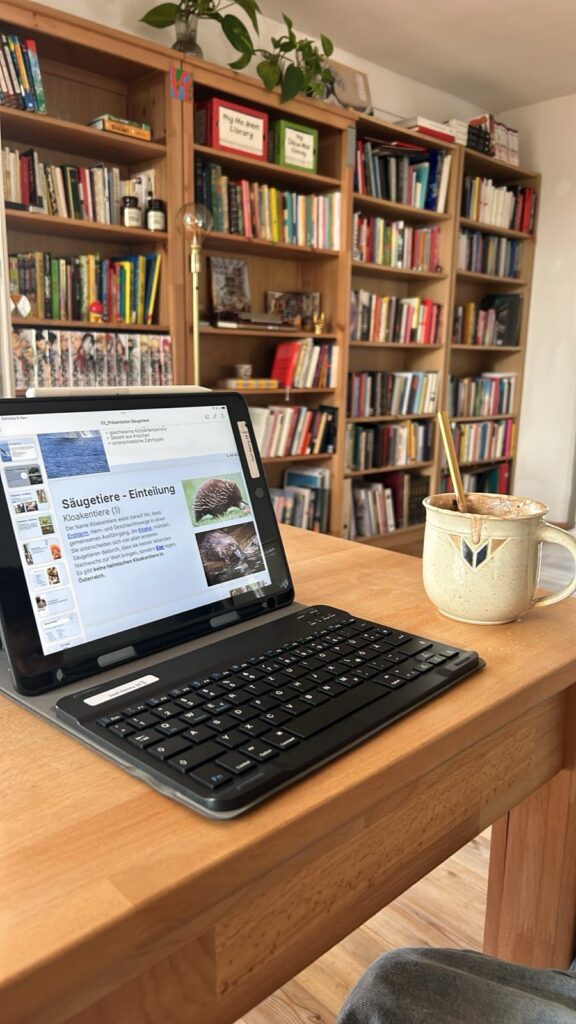
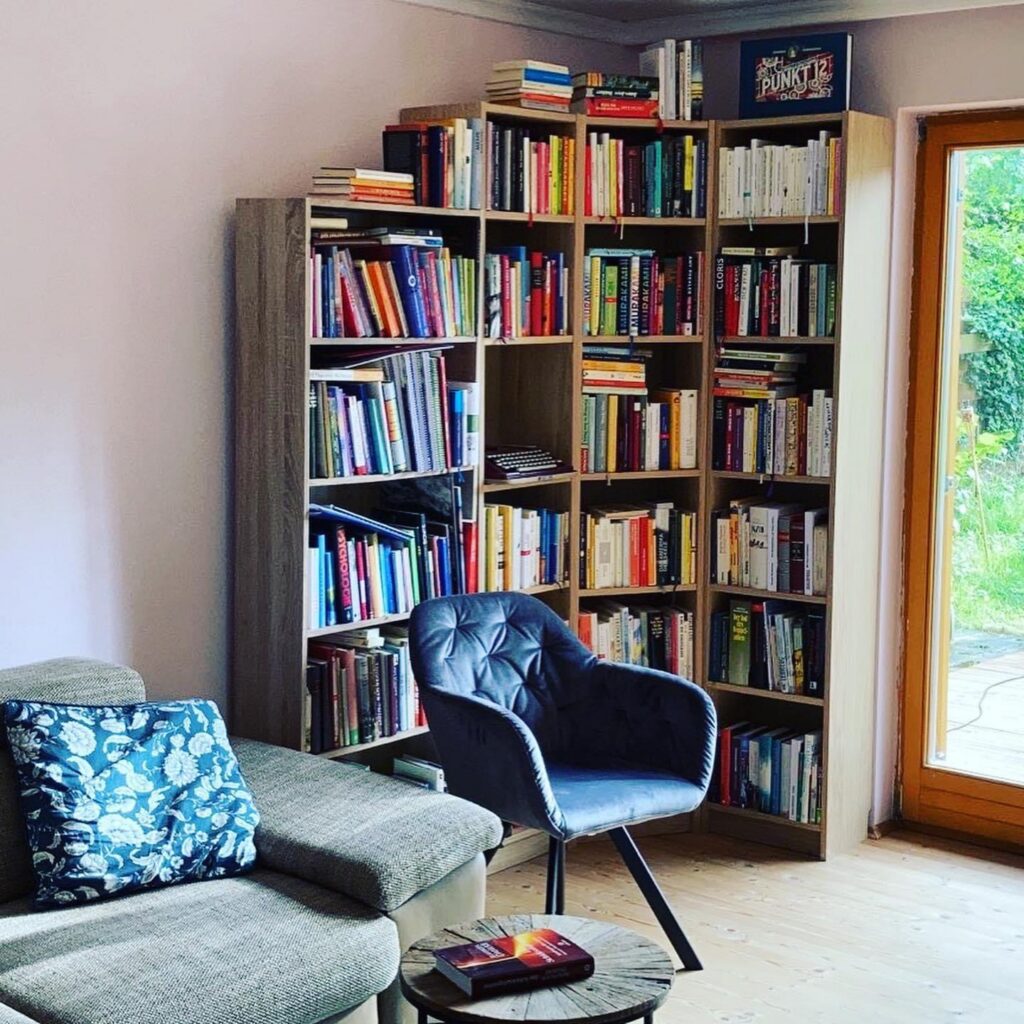
If you came to my house, you’d find stacks of books everywhere. On tables, in bookshelves, on counters; I just love having books in every corner. It makes me feel like I live in a library.
I talked about the importance of creating an intentional space for learning or reading at home. It’s something I think about often as I reorganize and redecorate. How can I create a space that truly inspires learning? Over the years, I’ve embraced a few practices to make it feel more like that.
Take advantage of vertical space
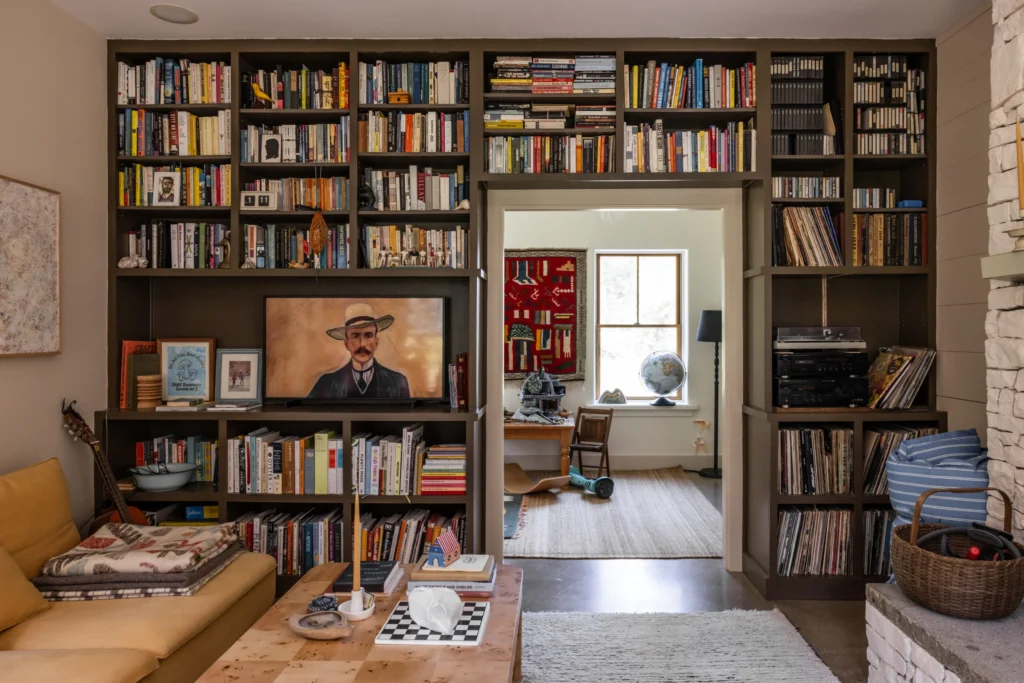
Something I love about libraries and secondhand bookstores is the floor-to-ceiling bookshelves. That is the dream! But for now, I’m making do with what I have. I spread out my bookshelves all over the house (I even have books in the bathroom).
Use your books as decor—and entertainment!
“In every room of the house there should be a desk and books. Books are the foremost ornament of a house. All the members of the family must feel that their home is always able to keep them entertained, and to this feeling books contribute most of all.”
I referenced this quote last year, and I still love it. I came across it while reading Modern Swedish Design: Three Founding Texts. I 100% agree—but I also think it should be a natural, organic process. Don’t buy books just because. Buy them because you genuinely love them. And then put them all over your home! Have small stacks of books near your kitchen, on the coffee table, on your nightstand, near your entryway, next to the television. Having books everywhere is an easy way to skim through them more.
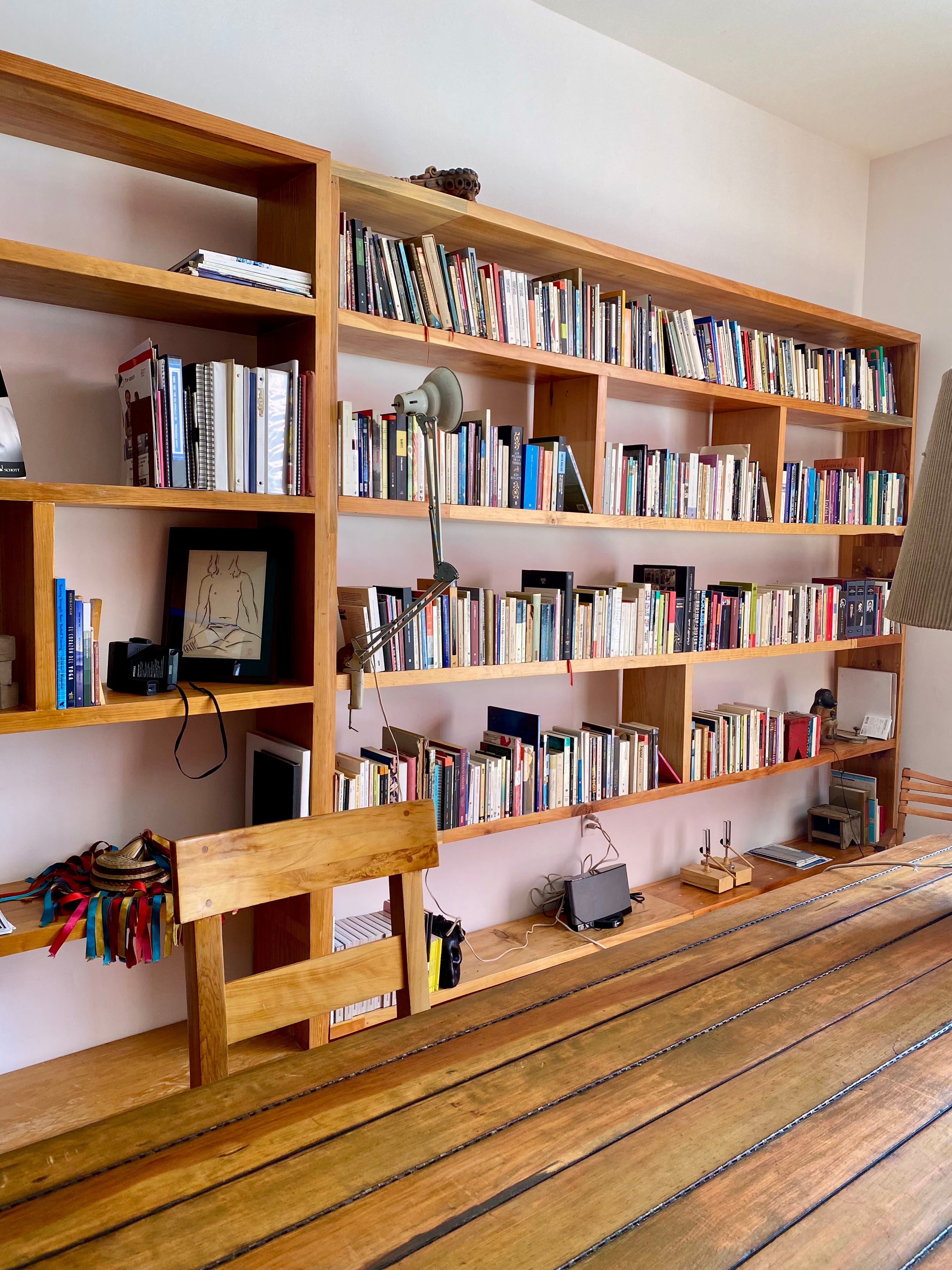
The bookshelves at Casa Pedregal in Mexico. Stunning. <3
Slowly acquire your books
A personal library takes time to build. Umberto Eco, an Italian writer, had over 50,000 books in his personal library at the time of his death. My partner and I have around 500. It excites me to think about what my library will look like five, ten, twenty years from now. There’s no rush. You’ll come across the right books when the time is right.
Buy secondhand as much as you can
The best books are discovered in dusty bookstores, on the street, on eBay, or when gifted from friends. Sometimes the most interesting books aren’t the ones on this year’s best-selling lists—they’re gems that were written years ago.
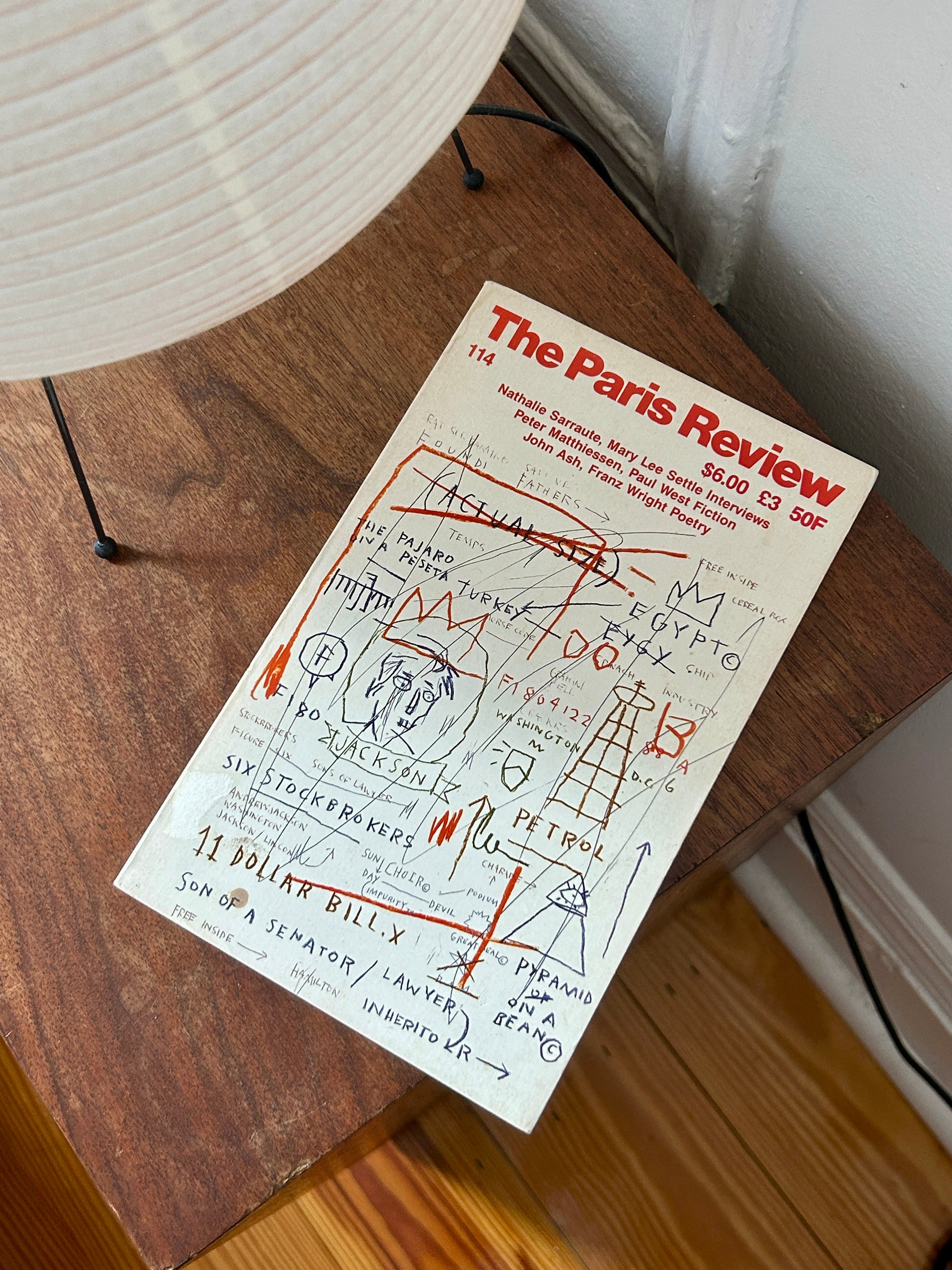
The Paris Review from Spring 1990 that I found on the street years ago. Such a cool cover.
Have a system (or at least try to)
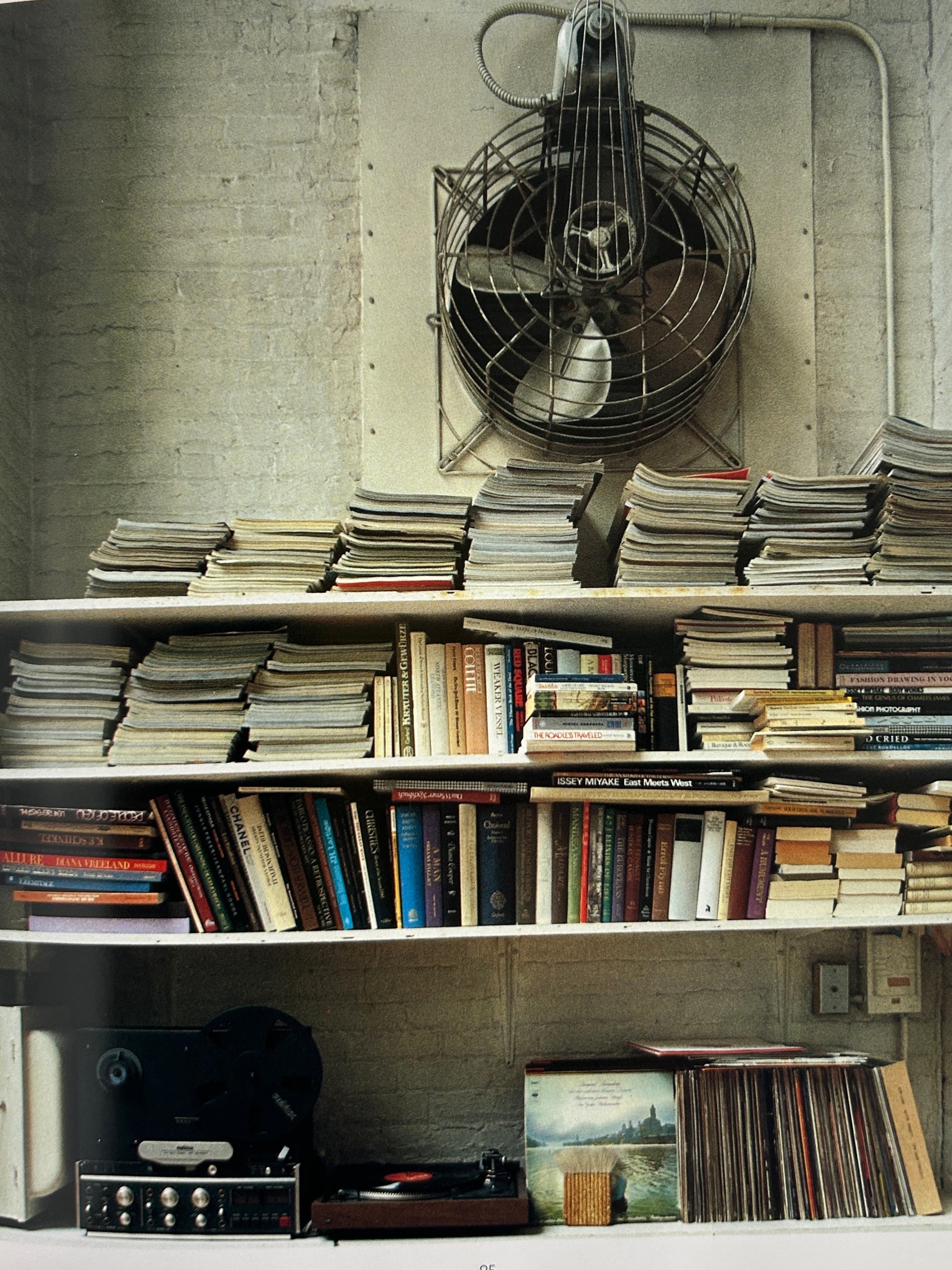
I watched Party Girl (1995) for the first time on the plane, and I’m determined to learn the Dewey Decimal System, but for now? My stacks of books are categorized roughly by themes like art, health, nonfiction, interior design, classical drawing, furniture design, classic literature, and so on. And my system is flexible. The number of times I’ve moved stacks of books from one room to another, bought shelves (and then gotten rid of them), reorganized my books…it never ends. I spent an entire day creating new stacks of books in my living room. And I’ll probably switch things around in a month again. C’est la vie.
Allow a little imperfection
The stacks of books don’t have to be perfect. The shelves don’t have to be impeccably styled. Lean into the lived-in feeling of it all. Books are meant to be grabbed and paged through and put back on the shelf and moved from one shelf to another. Flip through them as much as you can. Enjoy them. Learn from them. And it’s okay if you don’t finish reading your entire 300-page interior design book. There’s nothing wrong with unread books! I read this article the other day on the hidden value of unread books. They’ll be there waiting for you when you’re ready.
Happy reading! I would love to see pictures of your bookshelves if you would like to share.
Lately, many couples I personally know are getting divorced. With some, I was really surprised and sad; with others, I congratulated to the decision. I am by no means an expert in relationships, but I have been around, and I know by now what I want and don’t want pretty clearly. These are the strategies that work for me. You know, always spiced up with some humor and sarcasm, but you will get the point, I hope.
Limit overlapping interests
This might sound counterintuitive, but trust me, it is correct. Real conversation from the other night when I foolishly interrupted my boyfriend’s intense, concentrated scrolling with some straight-up bullshit:
him “have you seen the reel of the Poland invasion in 19……blabla?”
me “What? Have you seen the invasive plant species that is choking the oak tree next to the compost?”
me (awkward silence)
her (irritated silence)
both (happily return to our separate interests)
Befriend their friends but not too too much. Do not rely on your partner for all your social needs.
Separate your bank accounts
Of course we have one that we share, but that’s not the one I buy my stupid bullshit out of. He isn’t even the kind of person who would dig up the receipts like “Why did you spend one hundred and fifty euros on books”? Or “Why do we have all these different cakes and chocolates?” Or “Is it necessary to buy more plants?” Or “Do we really need another bookshelf?” Or “No, we don’t need another couch and a matching carpet with it!”
Sometimesgo to bed at different times(or sleep in adifferent room if one snores,for example!)
Spend quiet, quality time alone. This is totally fine. Set clear boundaries when you need space.
Have a real conversation about the temperature at which you maintain your home. Closing windows when it is too cold, don’t close them or keep them wide open if it too hot. Don’t suffer through this. Share your true opinions.
Don’t agree with everything the partner says or does. They are not almighty! Maintain your own self-identity.
Get two smaller pizzas instead of trying to agree on one big one. Maintain your own independence.
I don’t want fresh corn, I don’t want serrano chiles, I don’t want asparagus, I don’t want roasted cherry tomatoes, I don’t want bacon, I don’t want fig jam, I don’t want buffalo sauce, I don’t want hamburger, I definitely don’t want hot dog (??), I don’t want raw onions, I don’t want brussels sprouts, I don’t want alfredo sauce, I don’t want eggplant.
Read different books and then talk about it
Don’t listen too closely when the other person is talking; then they’re always a little mysterious to you
Have a suggestion ready when you broach the difficult question “what do you want for dinner?”
“Where should we eat tonight?” is another fucking landmine, so come prepared
Vacation separatelysometimes (you simply don’t have to do eeeeeverything together)
Only have low-stakes microfights (a mini-fight a day keeps the maxi-fights away)
Don’t move shit that isn’t yours! I am still working on this one!
Speaking of microfights, one of my favorite ones is “You put away that thing I left in a common area that annoyed you, and now that I can’t find it I have no other choice than to purchase another one.”
Gossip a lot (because it is fun)
Get some pets so you can always say “hey look at the dog” if you need something to say
One jokester is enough! There isonly one clown allowed in this circus; someone has to be the ringmaster! (everyone hates the “funny” couple)
MIND YOUR OWN BUSINESS (don’t be in the other person’s business at all times!)
Concede first and quickly if it’ll shut down a conversation you don’t want to have
You know when you have a talk that’s not necessarily a fight, but is definitely not a casual chat? Like, it’s serious but not deadly serious? I never want to have those; there’s always something stupider and more fun I could be doing. So as soon as I feel a “hey, can i talk to you for a sec?” brewing I am heading it off at the pass like, “you’re right, i’ll do that, thank you” or “you’re right, I didn’t do that, I apologize” or “you’re right, whatever you want to do about that is fine, you know best” and then the shit is over and I can go back to doing whatever I want to be doing, which is never ever talking about whatever this bullshit is!!!!
Anything you would add? What tips do you have to stay in a relationship?
The goldenrod is blooming. The days are getting shorter, the evenings cooler. Most kids are back to school in other parts of the world (mine is already in summer school for two weeks and hates me for signing him up for it!). My inbox is filling up with invites for the latest books, book parties, harvests, and farmers’ markets. It’s time to return. To school, to work, to politics, to the city—to all of it.
I recently learned that the French have a phrase for this time, “la rentrée” (literally, “the return”). In France, most people take much of August off for grande vacances (a looong summer vacation). September is when people return to work and life in the city. Part of the reason la rentrée is so palpable in France is that it’s not just families with young kids returning to responsibility in September. Plus, “Whether you’re in Paris, Provence, Brittany, or even Corsica, you’ll see crowds of children and adolescents heading back to class at the same time, which contributes to the feeling of it being a shared national moment.” There’s even a literary rentrée!
I wish we had a more shared la rentrée experience here in Vienna, Austria. Instead, I feel behind talking to a colleague whose kids went back weeks ago. An anxious feeling accompanies the official return to school, which is craziness again. I’ve gotten a little too used to sleeping later, ignoring the news (I will keep doing that for my sanity!), and saying yes to just about anything my kid asks to do. September has always felt like the start of a new year to me. Many people find this time invigorating, and many parents look forward to the start of the school year. So do I.
So, I’m actively working on a mental reframe. I’m thinking about our time away and the more relaxed lifestyle as a chance to refill my reserves for new challenges (including pottery classes I want to take and a new language I want to learn!). I’m embracing September as an opportunity to dig into writing projects I’ve put off.
I know I thrive when my home is in order, so I am also claiming this time as a moment for a next-level home reset. Think: A deep decluttering, an even deeper cleaning—maybe a reenvisioning of some of the ways we have our house or apartment arranged.
Whether you are dreading or looking forward to September, I believe getting your house in order will help you get back into the swing of things. So, I’ve put together a list of ways to get your home (and yourself) ready for whatever is ahead of you this fall:
Do a preliminary clean-up
I took some time to get my house cleaned and tidied to host friends soon, and I recommend a mini-reset to kick things off. That preliminary putting things away and making everything look nice for guests makes the bigger work of a deep decluttering feel more manageable. It also made me feel happy to have my place all spiffy.
Start a serious decluttering streak
I’ve written often about the Snowball Method of decluttering, in which you declutter one item on Day 1, two items on Day 2, three items on Day 3, and so on until you’ve run out of steam or gotten to the end of the month. However, it has been years since I’ve done it myself. I decided to start a snowball on September 1 and document what I let go of–with a full report at the end of the month.
Winnow your wardrobe
Separate but related to home decluttering is cleaning out your closet. I find the end of a season is a good time to take stock of what I actually wore. It’s easy to let go of summer things that didn’t get worn while it’s still warm out. Whereas in mid-winter you might think, “Oh, I might need that.” It’s also a helpful barometer to take a look at the next season’s clothes and see what you’re excited to wear again; you might be able to spot a few things you know you won’t want to wear ever.
Push pause on new purchases
At the start of the school year, it can be tempting to click “buy” whenever a bit of friction arises. Instead of rushing to buy solutions, wait a few days to assess what’s truly a need. Also look for ways to source things secondhand first: You can reduce waste and save lots of money buying things gently used.
Deep clean textiles
I plan to do a deep cleaning of my home after I finish my month-long decluttering, but in the meantime, I will make time for the seasonal washing of fabric items like the sofa covers, outdoor seat cushions, mattress pads, and the decorative cushion covers. Washing those items is an easy way to make everything feel fresh.
Plan something fun
I think part of the reason I get the September Scaries sometimes is that it feels like all the fun stuff is winding down. Putting a few things on the calendar to look forward to this fall makes it easier to remember that all seasons are fun. What awesome things do you have planned this fall? (Seeking inspiration.)
Pick *one* project
Home to-do lists tend to run miles long. I get overwhelmed whenever I think of all the things I’d like to do in my house. So I am recommending that you pick just one project to tackle this fall. Instead of writing a giant (and frankly overwhelming) list of all the things you want to do, write all the micro-tasks associated with this one project. I’m still noodling on what my one project should be.
Shake up your senses
There’s something magical and witchy in finding sensory ways to signal a new beginning. You could do it with scent: Wear a different perfume or buy a new scented candle. Or maybe it’s taste: Swap up your usual coffee brand or reinvent your breakfast routine. Cover the sofa with a brightly colored sheet or tablecloth, listen to some new artists–anything to signal “change” and “new” to your brain.
Pamper yourself a little
You may feel more ready to face all the responsibilities that September brings if you take the time to take care of yourself. Whether it’s a haircut, a trip to the fancy health food store, or a restorative yoga class, I find even a little bit of self-pampering can bolster my spirits.
Move your body—preferably outside
Somehow I found less time to exercise this summer than during the school year. Whenever I’m feeling down or overwhelmed, a run, a walk, or a Yoga class is just the thing to get me back in a better frame of mind. If you tend to let exercise go by the wayside, maybe sign up for some classes or make dates to walk with a friend.
“Wow, Mongolia! Why? What is there to see,” I kept hearing from people before my trip started. I always found it fascinating, this huge country, the steppe, Shamans, horses, camel milk, jurtes, and Nomads. And off I went, fortunately in the summer because this is the coldest capital city in the world (along with Canada), with winter temperatures regularly dropping as low as -40°C, and many locals having no option but to heat their homes with coal in order to stay alive. I found out that a lot of the city’s population live in gers (Mongolian yurts) without running water, heating, sanitation, or paved roads.
My first impressions weren’t great. The traffic was abysmal, huge waiting lines at gas stations due to gas shortage, the sidewalks were falling apart, and there was a sense of depression lingering in the air with a lot of drunk people lingering around and pickpocketing and begging.
Slowly, though, I began to warm to the city. Ulaanbaatar is home to some of the best museums I’ve ever stepped foot in — no exaggeration! — and I learned more about Mongolia than I thought I would.
I had fun shopping here, too, from the chaotic stalls of the local Black Market of Narantuul to picking up world-class cashmere. I took an incredible tour that introduced me to Mongolian culture, and promptly developed an obsession with Mongolian metal band the Hu. I wandered around colourful temples and monasteries, met friendly locals, and began to understand that what I’d mistaken for bleakness was more like resilience.
The city is sort of dirty, chaotic, and absolutely not set up for pedestrians (or cars, there seem to be no traffic rules whatsover!), but it’s also a fascinating city, where you can dive into the country’s history, culture, and recent transformation, all in one place.
A QUICK PRIMER ON MONGOLIAN HISTORY
If you’re anything like me, you’ll arrive in Ulaanbaatar slightly confused.
Why are there ornate Buddhist temples sitting next to Soviet apartment blocks? Why does everything feel both ancient and brand new at the same time?
To make sense of the city, it helps to understand Mongolia’s four big eras: the Mongol Empire, Buddhism, Communism, and the country’s pivot to democracy.
In the 13th century, Genghis Khan united the Mongol tribes and went on to build the largest contiguous land empire in history. The Mongol Empire stretched from Eastern Europe to the Sea of Japan. After his death, the empire fragmented, and over the centuries Mongolia’s global dominance faded. But Genghis Khan remains a respected national figure, and you’ll see his face everywhere, from statues to vodka bottles.
Centuries later, Tibetan Buddhism became central to Mongolian identity. Monasteries flourished, religious leaders held political power, and spiritual life shaped the country. Many of the temples you’ll visit in Ulaanbaatar today reflect that era, although much of what you see now are reconstructions.
Because in the 20th century, everything changed again.
In 1921, Mongolia became the world’s second socialist state after the Soviet Union. Under strong Soviet influence, religion was brutally suppressed. Thousands of monks were executed, monasteries were destroyed, and Buddhism was pushed underground. Ornate temples were replaced by concrete apartment blocks and vast public squares. The name Ulaanbaatar even translates to Red Hero in Mongolian.
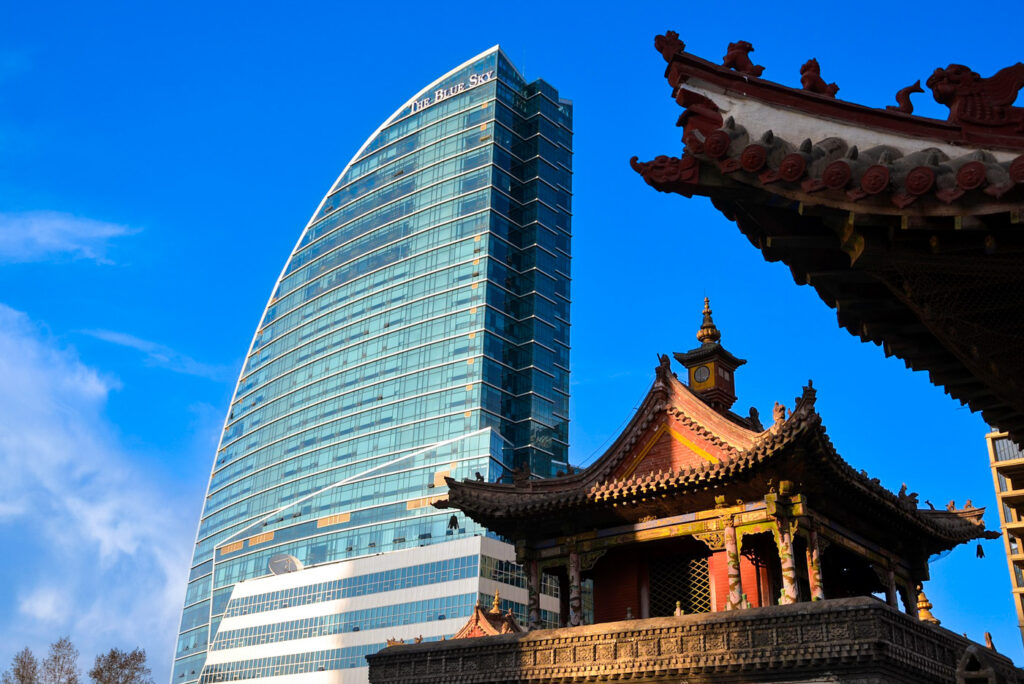
In the 90s, the Soviet Union began to collapse, and Mongolia had a peaceful democratic revolution. Suddenly, people could vote freely, start businesses, and live life outside of strict government control. The transition was rocky, but it reshaped the city once again. Today, you’ll see glass skyscrapers, Korean coffee chains, traditional gers on the outskirts, and Soviet architecture all blended.
THE BEST MUSEUM IN MONGOLIA
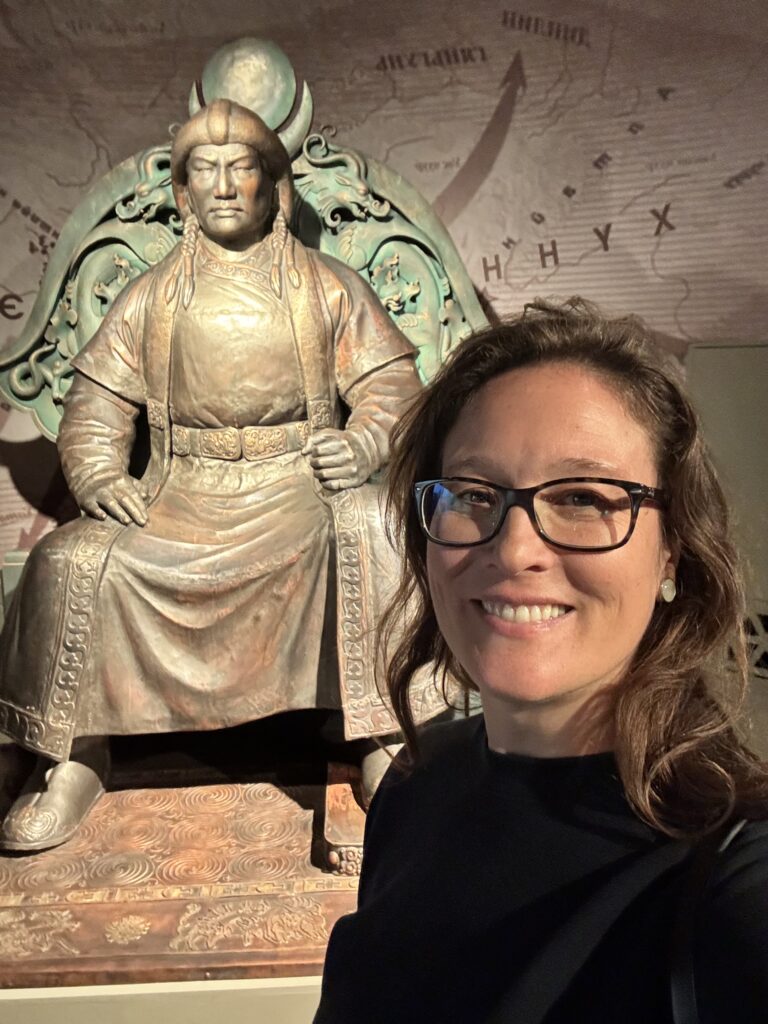
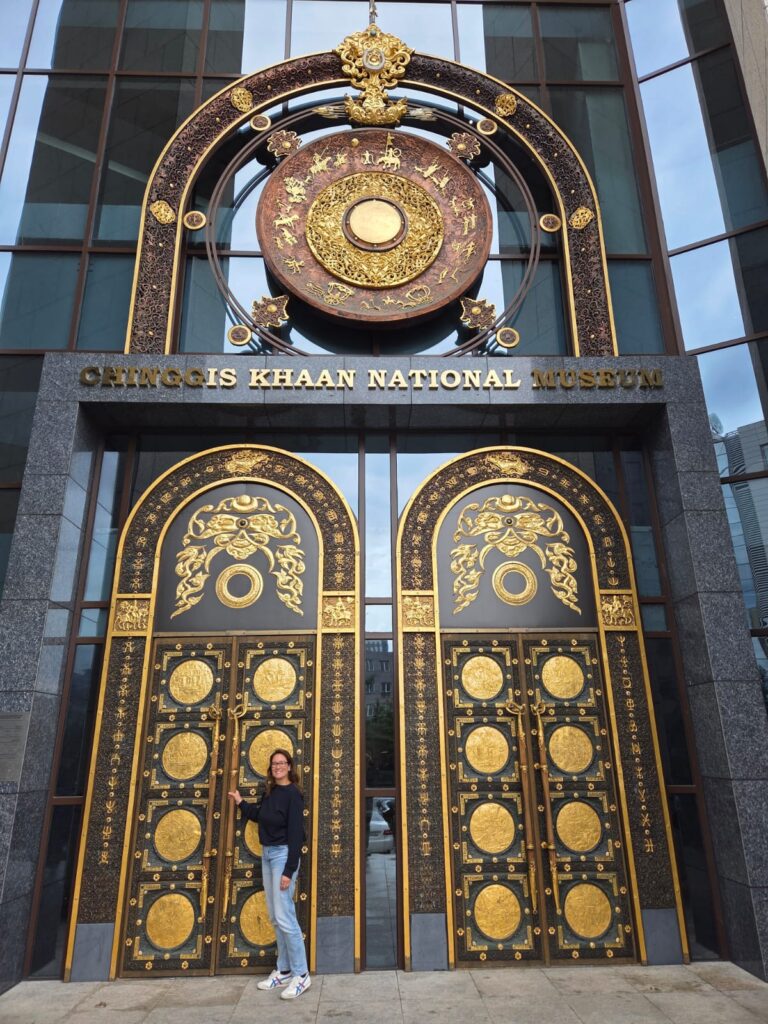
What an absolute delight it was to wander the rooms of the Chinggis Khan Museum.
This building is enormous, and you could spend hours here, learning all about the life and legacy of Genghis Khan… which raises the question: why is it called the Chinggis Khan Museum?
Well, to start with, Chinggis’s actual birth name was Temüjin. It was after he created the Mongol Empire that he was given the title Chinggis, which in the Mongolian language roughly translates to oceanic. (For nomads living far from the sea, the ocean represented something unimaginably vast, so the title described a ruler whose empire they believed would be equally as large.)
When Europeans first heard about the Mongols, there was no standard way to write Mongolian sounds using the Latin alphabet. Instead, they had to rely on how the names were pronounced by Persian, Chinese, and Russian sources. In those languages, the Ch sound often came across to Western ears as a hard G, so Chinggis became Genghis.
But Chinggis is the correct spelling and actually how his name is pronounced.
As you can see, I spent a lot of time in the Chinggis Khan Museum!
But back to the size of this museum. If you can believe it, the exhibitions here are spread out over nine floors, with over 12,000 artefacts on display — many for the first time ever. It covers Mongolian history from the first nomads to the Mongol Empire, showing how Chinggis fits into the timeline of the country, rather than focusing on his life alone.
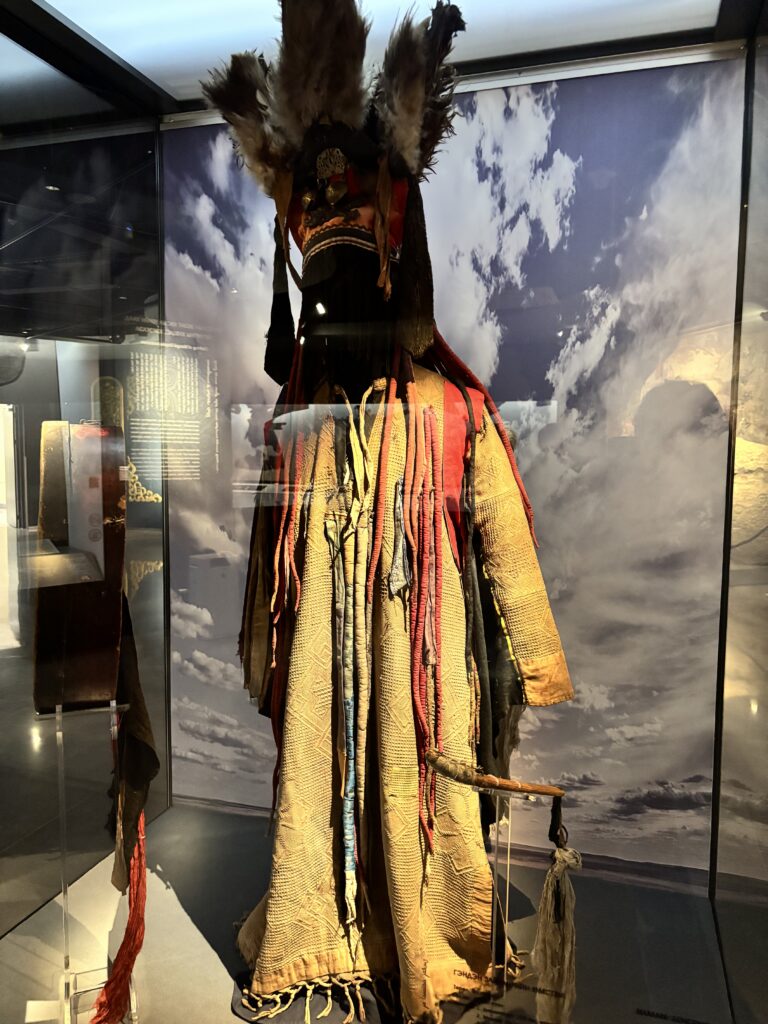
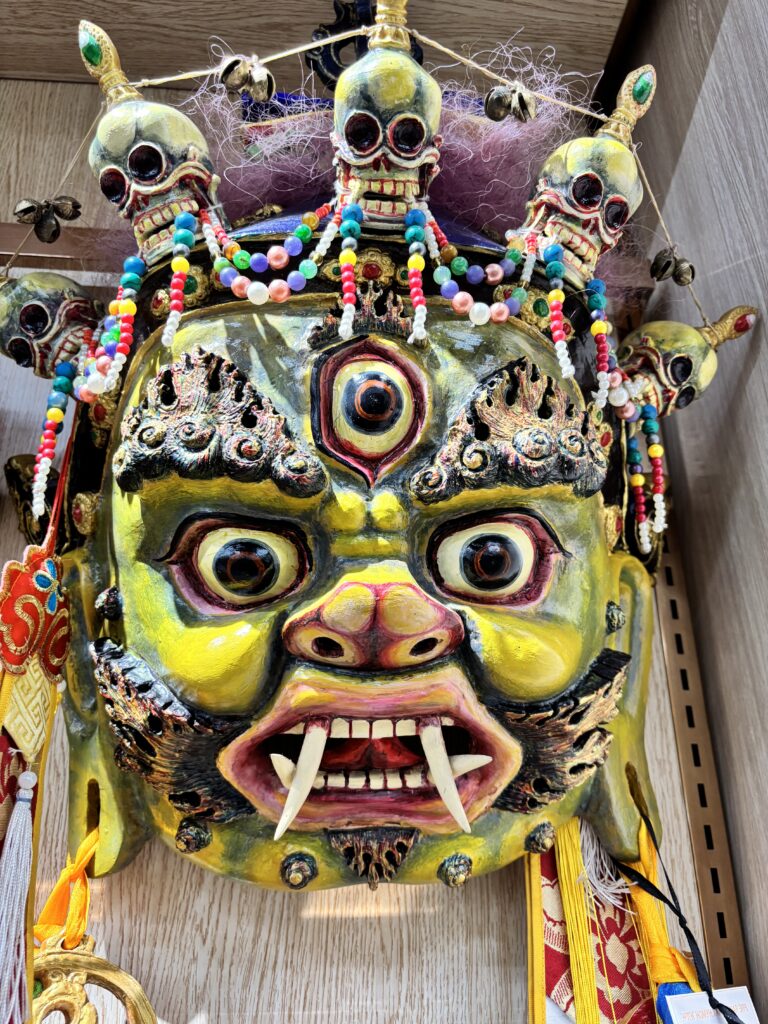
Traditional Shaman outfit.
Each floor has its own focus. You’ll start with the very beginnings of nomadic states, and see things like carved deer stones, jewellery and burial reconstructions that give you a sense of how people lived and moved on the steppe long before the Mongol Empire.
As you move up, you’ll hit the Mongol Empire itself: the rise of Temujin, and the rapid expansion under Chinggis and later khans.
By the mid-levels, the focus changes from battles and leaders to how everyone from aristocrats to ordinary people lived under the Mongol Empire. You’ll see robes, tools, household items, and objects that were traded along the Silk Road, and there’s a section covering why the Mongols were so successful.
On the upper floors, you’ll learn about the empire at its peak and how life worked behind the scenes. Colourful religious objects, ceremonial items, and other artefacts show how people lived, what they believed in, and how society, from everyday families to the rulers, was organised.
I loved the museum, learned a lot, and was really impressed by the items on display, but one complaint: it didn’t really feel like the museum was set up for English-language visitors.
DASHCHOILIN MONASTERY
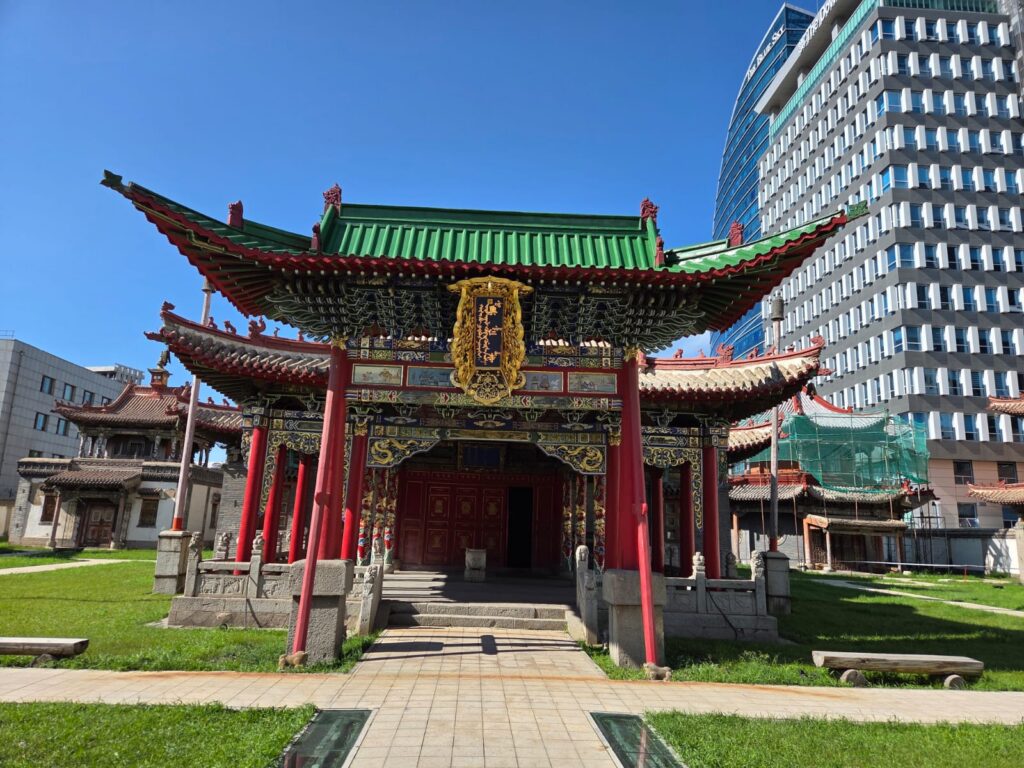
Most of the city’s monasteries were destroyed decades ago, but this one was restored in the 1990s and provides peaceful respite from the traffic of Ulaanbaatar. I enjoyed wandering the complex, marvelling at Buddhist statues and faded-but-still-colourful murals.
Roughly one hundred monks still live here, and if you’re lucky, you might catch a ceremony with chanting and drums. If you’re unlucky, you might do as I did and enter a temple ger and interrupt a group of monks having a meeting.
THERE’S LOTS TO SEE AT SUKHBAATAR SQUARE
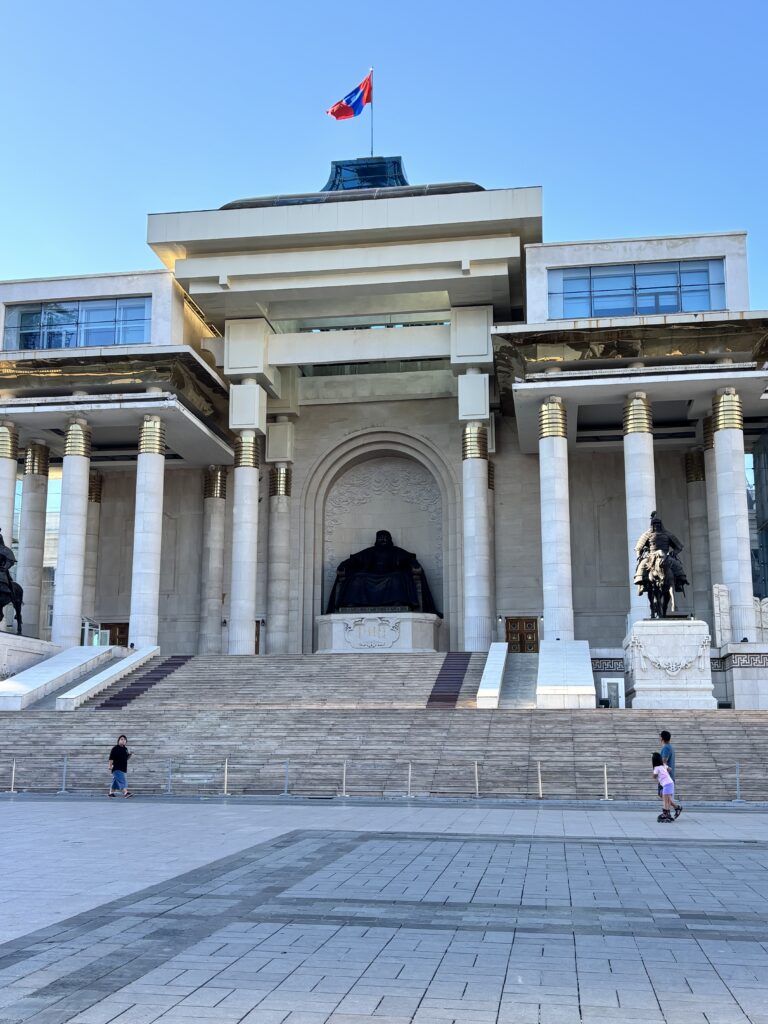
Sukhbaatar Square, in the heart of the city! You can think of Sukhbaatar Square as the main town square: a wide open, concrete plaza in the centre of town, surrounded by all of the most important buildings, like Government Palace, the Mongolian Stock Exchange, the Opera House and Central Post Office.
The square is named after Damdin Sukhbaatar, a key figure in Mongolia’s 1921 revolution against Chinese influence, which paved the way for decades of Soviet influence, and a large bronze statue of him on horseback stands in the middle of the square.
Throughout the 20th century, Sukhbaatar Square was where official parades and state ceremonies happened under the socialist government. In 1990, it became one of the main gathering points for the peaceful protests that eventually helped bring about Mongolia’s democratic transition.
Today, the space still hosts public events, concerts and celebrations, and is a relaxed place to hang out, take photos or just watch locals and travellers pass through on a sunny afternoon.
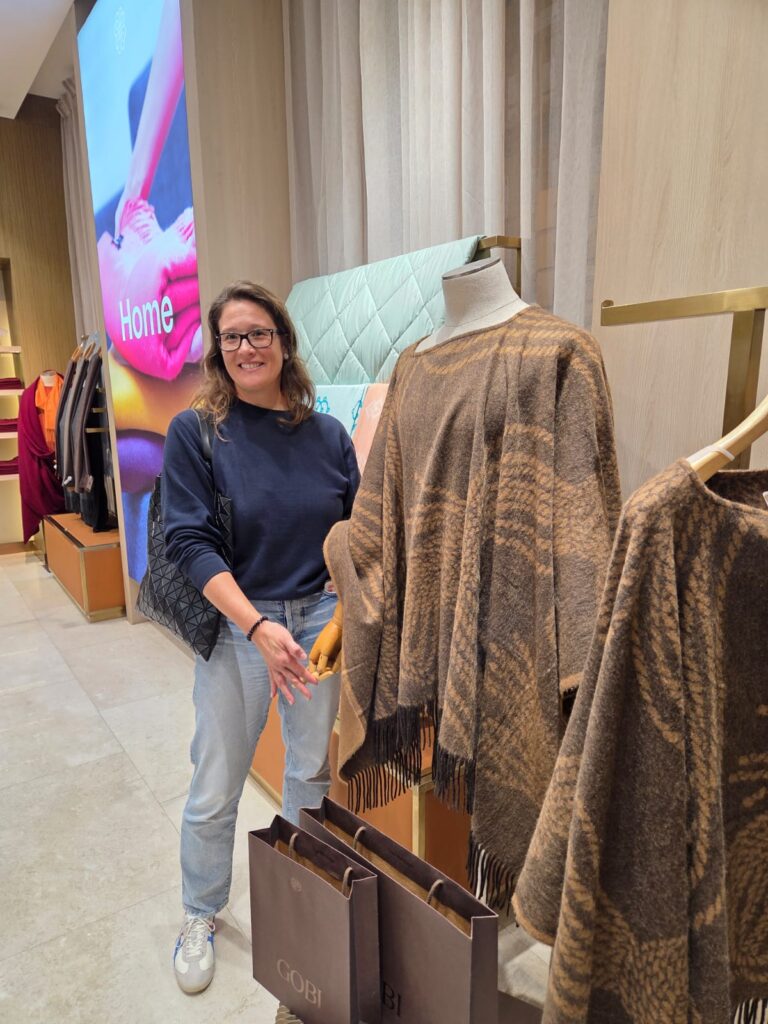
PICK UP SOME CASHMERE FROM GOBI CASHMERE GALLERIA STORE
If you weren’t aware, Mongolia is home to the best cashmere in the world. It’s all thanks to the freezing winter of the steppe, which cause the local goats to produce a wool that is finer and warmer than you can find anywhere else in the world.
GOBI Cashmere is one of the biggest producers of cashmere in Mongolia, and they’re one of the few companies to process the wool entirely within the country. (Many other producers will send the wool to China to be processed to save money.)
You can get a tax refund on your purchase if you give staff your passport number, and prices were honestly pretty reasonable for some of the best cashmere you can buy.
SWING PAST ULAANBAATAR SIGNS AND STATUES
Ulaanbaatar Park is a relatively new addition to the city’s attractions, opening in 2024 and giving residents a much-needed green space in which to escape the dust and traffic jams of the city.
What drew me to the park, however, was the huge Mongolian flag, 60 metres tall. Unsurprisingly, it’s the tallest flagpole in Mongolia. There’s a whole bunch of different areas in the park to check out, too, like a skate park, playground, pond, walking trails, and an amphitheatre.
SHOP FOR EVERYTHING AT NARANTUUL MARKET
There’s around 10,000 vendors operating here, with 100,000 daily visitors wandering around the stalls. The locals refer to it as the Black Market, and there are stories of sketchy items being sold here in the past, from guns and bullets to prescription drugs, but for the most part, the stuff for sale is less illegal, and the market isn’t scary.
Old Soviet medals and tobacco snuff bottles are for sale, but other items that stood out were horse riding saddles, Mongolian musical instruments, deels and gutals (traditional clothing and boots), bows and arrows… and then you’ll turn a corner and find beds and carpets and motorbikes and more.
As you may have gathered, this is more of a market for locals than tourists, which I think makes it all the more interesting. Keep an eye on your belongings in case of pickpockets, but otherwise aim to spend a couple of hours marvelling at the sheer variety of items that are for sale here.
CLIMB UP TO THE SOVIET ZAISAN MEMORIAL
Zaisan Memorial sits quite a way out of town — it’s a 90-minute walk south of Narantuul — so you’ll want to hire a taxi to take you there, or jump on a city bus.
Prepare yourself for a strenuous climb, too, as there’s roughly 600 steps to scale in order to get to the top. If you’re feeling lazy, you can also enter the Zaisan Hill Complex shopping mall, take the elevator up to the seventh floor, and cross the bridge that takes you to the half-way point of the staircase, cutting out a solid 300 steps.
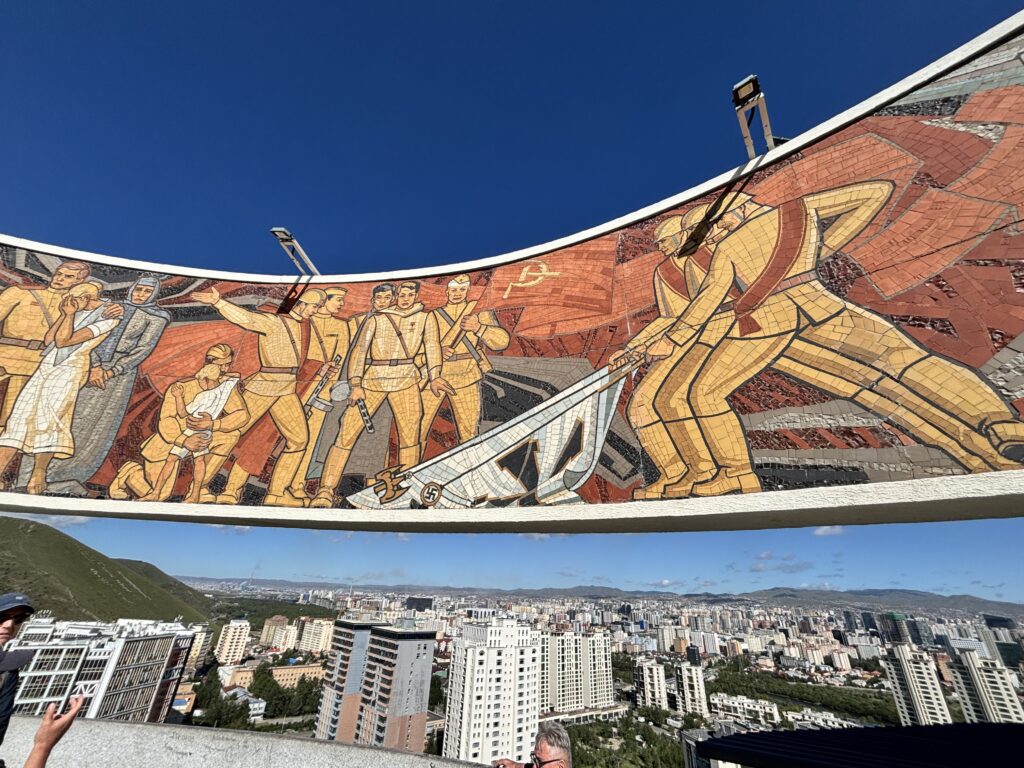
The structure was built to honour the Soviet soldiers and Mongolian-Soviet friendship after World War II, and the mural on the interior is full of bright colours and heroic poses; giving that slightly over-the-top socialist vibe. Today, most locals see the memorial less as glorifying the USSR and more as honouring the Mongolian soldiers who fought in WWII, as well as an excellent vantage point over Ulaanbaatar.
Because yes, even if Soviet architecture isn’t your thing, the views from the top are panoramic. You’ll get 360-degree views over Ulaanbaatar from up here: the ger districts, the new glass skyscrapers, and the hundreds of concrete Soviet-era buildings that still dominate of the city, with mountains and the steppe stretching into the distance.
AN EPIC DAY TRIP INTO THE COUNTRYSIDE
This day-trip to the Mongolian countryside was amaying. Seriously — I think this is one of my favourite tours I’ve ever taken.
My guide was exceptional and it felt like I was driving around the countryside with a friend. I learned a ton about Mongolian culture, what life is like outside the city, and the aspects of the country that its residents love.
The tour was also more than a little action-packed, whisking me from an extravagant stainless steel statue of Chinggis Khan to the humble interior of a local family’s ger. I had the opportunity to try local dishes and drinks, ride camels and horses, meet hunting eagles and falcons, and learn archery.
By the end of the day, I was dusty, tired, and smitten with Mongolia.
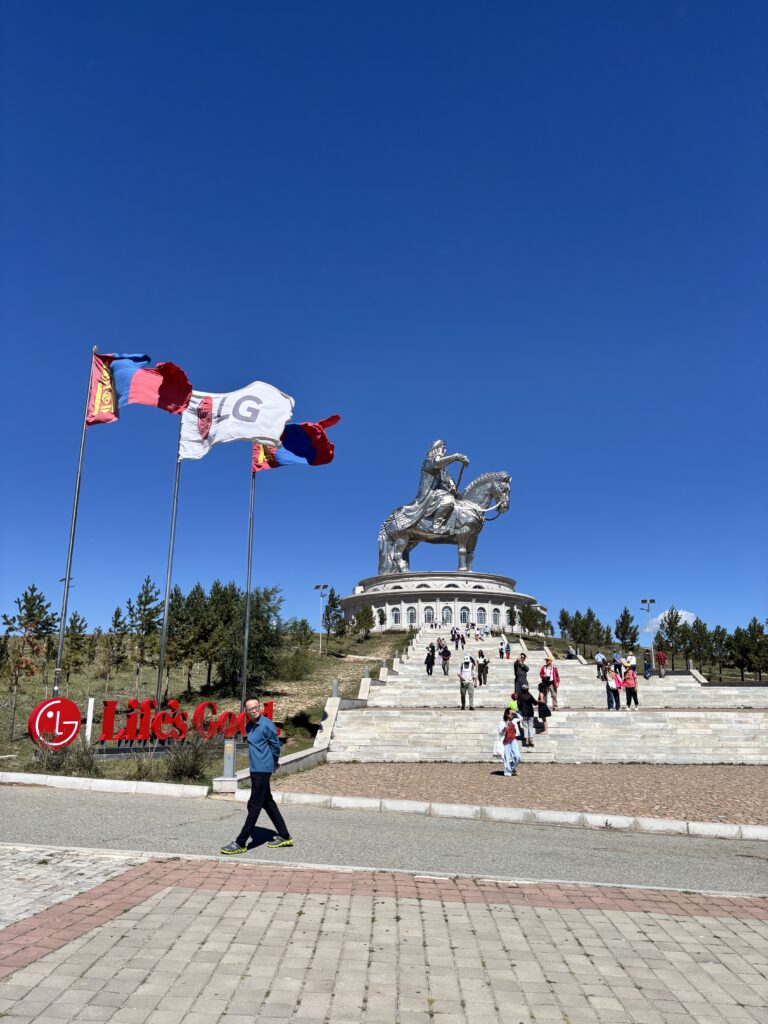
One minute you’re driving through open steppe with little more than grass and sky in every direction. Then next, there’s a 40-metre tall stainless steel Chinggis Khan plonked atop a hill, glimmering in the morning sun which is the tallest equestrian statue in the world.
It was built to commemorate the 800th anniversary of the founding of the Mongol Empire, facing to the east, towards the region where Chinggis Khan was born, with the statue marking the spot where he supposedly stumbled upon a golden whip.
You can go inside and climb to the top of the horse’s head.
I ventured up to the viewing platform, which is located on the horse’s mane. From up there, you can really gain a sense of how vast and empty Mongolia is, with little to see but grass and gers.
Back on the ground, it was time to dive into Mongolian culture.
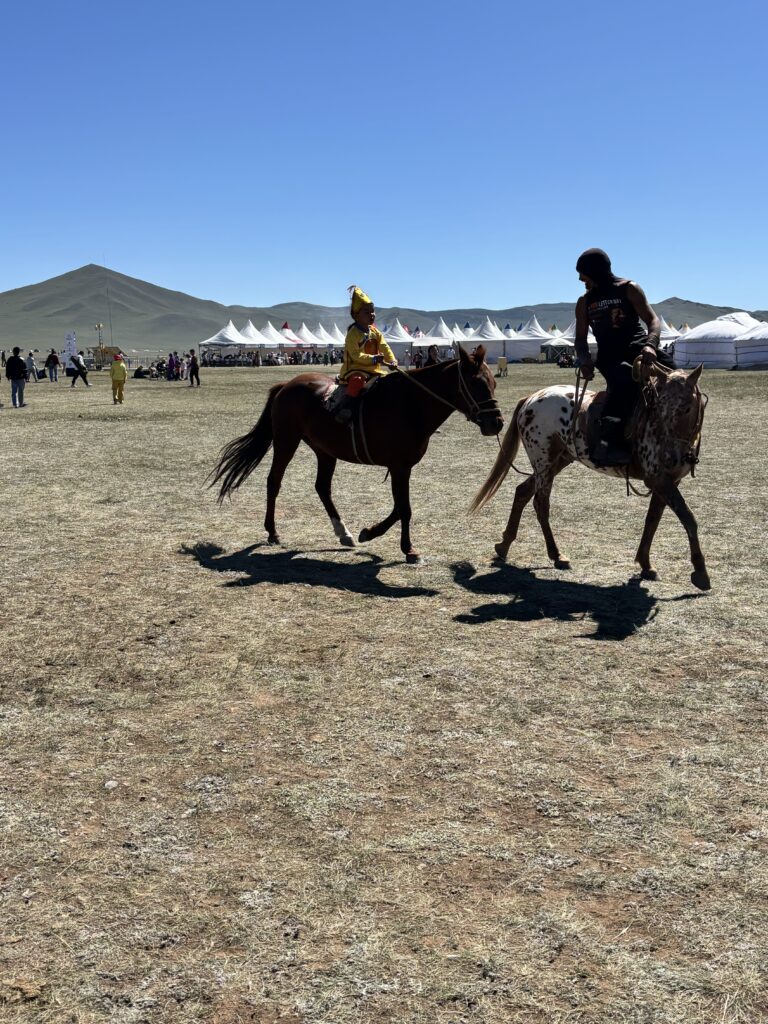
Archery has played an important part in Mongolian culture for centuries, used for hunting and fighting, and showcased every year in the colourful Naadam festival where we headed next. These days, it’s one of Mongolia’s three traditional sports, along with wrestling and horse racing.
Before I knew what was happening, I had an enormous hunting eagle perched on my right hand.
To this day, eagles are trained for hunting in western Mongolia, used to track foxes and other small game across the steppes. Beyond hunting, they’re symbols of strength and freedom, which is why they feature so prominently in local festivals. What a magnificent animal! I might have had some tears in my eyes.
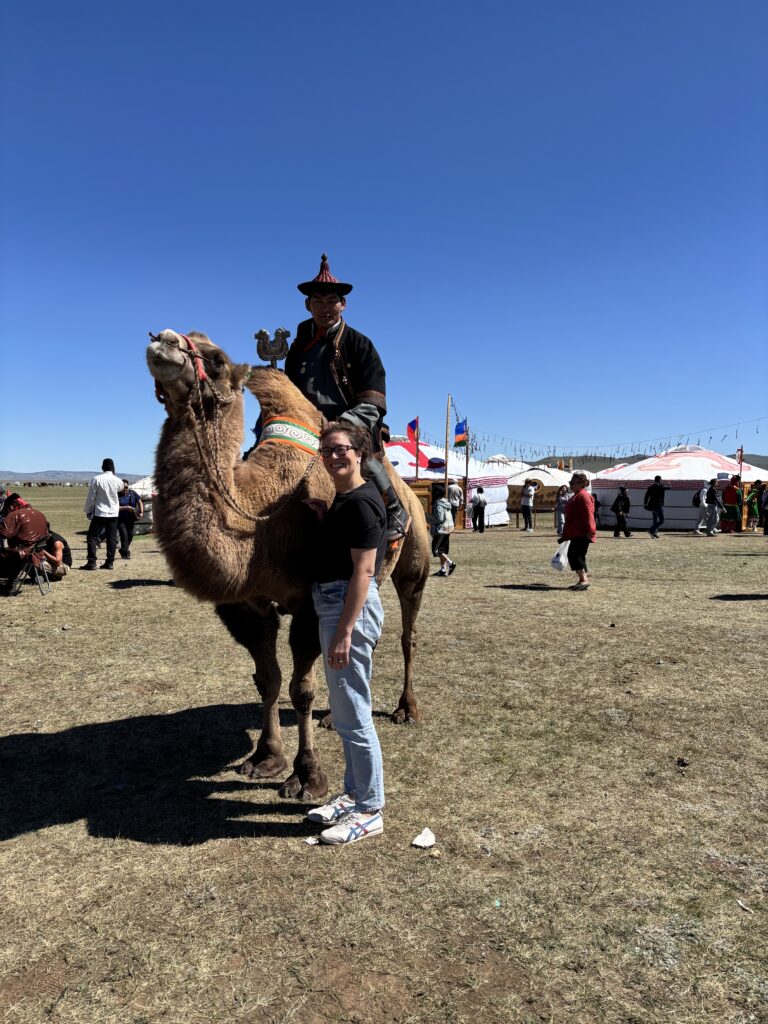
Speaking of animals, if there’s one that rivals the eagle in importance to Mongolian culture, it would have to be the camel.
I’ve rode on camels once before on my travels — in Doha — but the ones in Mongolia are different. They’re Bactrian camels, which I view as proper camels, because they have two humps instead of one! They’re stockier than single-hump camels and better suited for the icy steppe rather than endless sand.
After trying our hands at all the local activities, it was time to head further into the steppe. Our next stop was a visit to a family’s ger, and I couldn’t wait to take a peek inside these iconic homes.
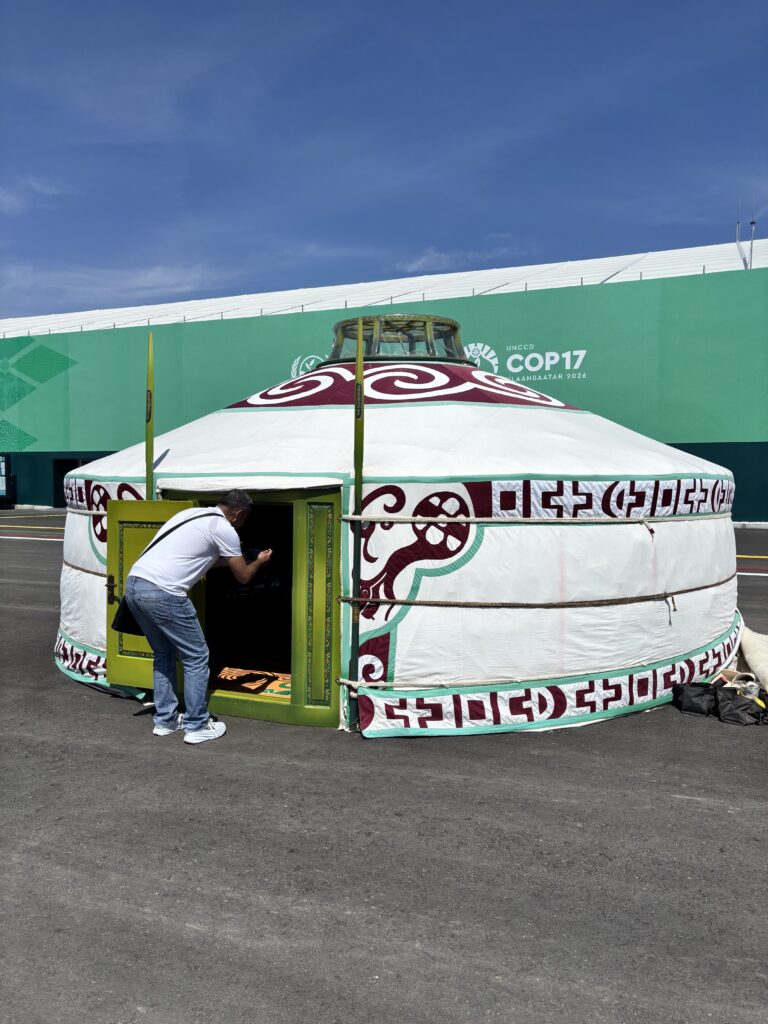
Gers have been used by Mongolian nomads for centuries.
It’s made of a collapsible wooden frame that’s covered in a thick felt, which helps keep out the cold. The entire thing can be packed up and carried on camels or horses whenever families decide to move on, so it’s super-practical for a nomadic existence.
Inside, there’s a central stove for warmth and cooking, and every piece of furniture has a purpose. Beds and low benches line the edges, acting as seating during the day and sleeping spots at night. Cupboards store clothes, blankets, and other essentials. In one corner, there’s often a small altar for offerings and prayers.
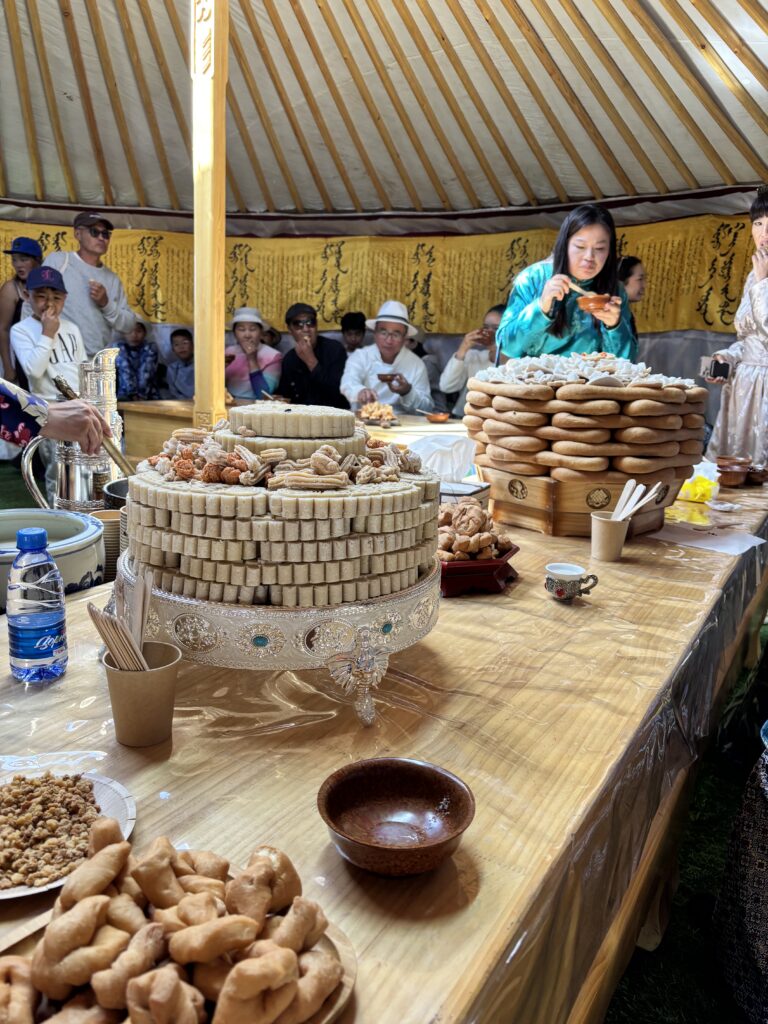
The mum of the family motioned for us to come inside, and we gathered in one cosy area, watching as she prepared a snack for us.
The white, tubular objects you can see on the tray in my photo are called aaruul, and they’re a staple of Mongolian nomadic life.
To make it, you ferment the milk you’ve collected from your camels then boil it to separate the curds and whey. The curds are then shaped into small tubes and placed on top of the ger to dry over several days.
The result is a hard, tangy snack that can last for months, is high in protein and calcium, and helps maintain strong teeth.
We were handed a warm cup of airag next: fermented horse milk that’s infamous to travellers in Mongolia. It’s sour, and fizzy, and… challenging to enjoy. I liked it. Horse and camel milk became my favorite daily drink in Mongolia!
This trip was a not really a vacation but a work trip and all my adventures I did after work or on my days off which I was fortunate to have. There is so much more to discover, obviously, but there was simply not enough time for me to explore.
The more time I spent in Mongolia, the more it started to grow on me. The city has a weird kind of energy, but you get used to it the longer you’re there, and you really do start to warm to it. Wandering through markets, temples, and museums, meeting friendly locals, and seeing the mix of Soviet architecture and modern skyscrapers made me appreciate just how complex this city is.
Ulaanbaatar is far from perfect, and it’s definitely not a polished tourist town, but that’s kind of part of its charm.
If you’re heading to Mongolia, give yourself a couple of days in the capital to see a side of the country away from the steppe. Visit all the museums, wander through the colourful temples, and see if it starts to grow on you.
I am typing this article from my hotel room in Ulaanbaatar, Mongolia, on my day off from work. Fortunately, I was selected to work at the COP 17 United Nations conference here, which is as mind-blowing as this beautiful country itself. There will be (hopefully next Friday) another blog post on Mongolia and what I discovered and experienced in two weeks. This article focuses more on the importance of leisure time, simply time off or a day to rest, which is so important. Anybody who has ever served at a conference knows how demanding it can be and how exhausted one gets after a couple of days. To recharge and relax, one day is already sufficient to get the spirits up again. So far, I am very lucky to have time to explore this beautiful, breathtaking country and all its gems. Sometimes this might be just reading my book somewhere in the park or people-watching.
We all spend our free time differently. For the last few years, I’ve spent some of my leisure time reading about leisure. Leisure is what you do just for the sake of doing it. Most of the time, it’s the things you do away from work, school, and other obligations. But we all have our own definition of leisure and what we consider work or play.
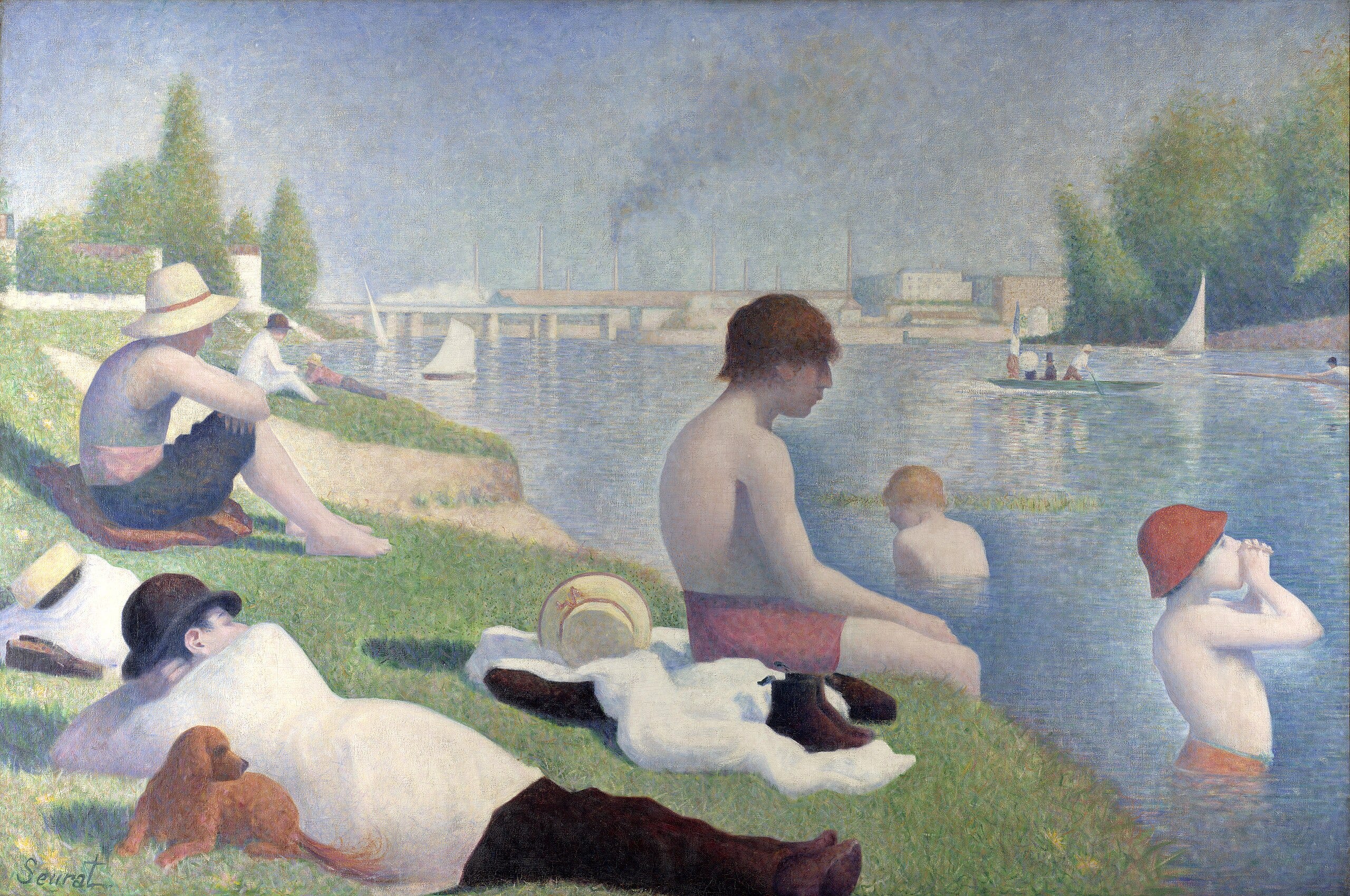
Bathers at Asnières by Georges-Pierre Seurat.
To me, leisure is working on this website, digging the internet for home inspo, and rearranging my furniture. It’s reading a good book in my backyard, taking a random Tuesday off, having a long lunch, and watching a documentary. It’s also taking a Yoga class, jogging, and spending hours researching topics that fascinate me. Leisure isn’t just “doing nothing.”
I recently read a condensed version of Aristotle’s Nicomachean Ethics. In it, Aristotle says that “to be at leisure is to be free to pursue studies and activities aimed at the cultivation of virtue.”
We *need* leisure for our well-being. We always have and always will. Another book I recently picked up is Life and Leisure in Ancient Rome. They went hard on work and business but always prioritized leisure.
“Leisure activities play a very important role in subjective well-being because they provide opportunities to meet real-life values and needs. [People can] build social relationships, feel positive emotions, acquire additional skills and knowledge, and therefore improve their quality of life.”
Historically, leisure activities were for the upper class. The more money you had, the less you had to work. You could spend more time attending operas, traveling for the summer, pursuing horseback riding, and hanging out in intellectual salons. The lower classes made time for leisure too, but in a way that was more accessible and affordable to them.
We are all deserving of leisure time, no matter how busy we are, how much money we have, or what we do for work. We just have to be intentional about carving out time for it, especially if it’s not a seamless part of your day already. Here are some things I do to bring more leisure time into my life.
Reading and writing. This will always be my number one!
Research for fun
Research is one of my favorite leisure activities. Being curious makes life exciting. As a kid, I was interested in a different topic every week at the library. One week it’d be clouds, the next week it’d be about poisonous animals. I’ve tried to carry this curiosity with me throughout my life, hence my obsession with collecting interesting books. Go to the public library and check out some books. Make an account on JSTOR and read papers and articles for fun. Visit an old bookstore and pick up a book about something you’ve been curious about. Watch a documentary you wouldn’t normally watch. It feels so good to learn. I like to do this at least once a week. Here in Mongolia, one of the movies the locals recommend is The Story of the Weeping Camel. A beautiful movie depicting daily nomadic life in Mongolia. Go watch it for free on YouTube.
Use PTO for leisure days
One of my small pleasures is taking off a day during the week. Pleasurable Time Off! You don’t need a special trip planned to take your PTO — a simple day of leisure is enough. I love using these days to visit spots that are otherwise too packed on the weekends, like those bakeries with long lines or those neighborhoods that are always too crowded on other days. And make sure to treat yourself to an extra long lunch, too. I once took myself to a nice lunch and then went to see a movie by myself at 2:00 pm. I had the loveliest time in that empty theater.
Leisure in good company
Community is everything — and experiencing leisure as a community is even better. And if there’s something you want that isn’t currently out there, build it yourself. Like a book club. When people make time for leisure and well-being, it affects the whole community — leisure has a domino effect! I know friends who are part of tennis teams, surf communities, and writing clubs, and that’s how they like to spend their leisure time.
Move your body mindfully and leisurely
Nothing makes me feel better than when I dedicate time to moving my body. This can be a 5-minute stretch, a 20-minute yoga flow, or an hour-long Pilates session. It doesn’t even have to be costly, either. Going on a run is free! I’ve been enjoying Krissy Arocho’s running videos. She runs every day, even if some of those days it’s just a short run. When you move your body, it’s for you. And if you don’t feel like moving your body (because sometimes the last thing you want to do is work out), then treat your body to a massage.
No to plans (sometimes), yes to leisure (always)
I’ve had weeks where I had something on my calendar after work every evening, back-to-back events, weekends with hangouts and full schedules, taking care and spending time with my son, household chores — all on top of my full-time job. I’ve gotten better at saying “no” this past year, but sometimes weeks like this still happen.
If I don’t get enough time to myself, I feel extremely drained, so I try my best to avoid getting to this point. Sometimes you have to be realistic with yourself: should I go to this even though I already have so many other things going on that day? What is my body telling me? You’re allowed to say no. Stay home. Watch a long movie. Organize your closet. Bake a sweet treat. Roast a good meal. Journal. Write your newsletter. Work on your business. Read. Lounge around. It’s your free time, so do what you want at your own leisurely pace.
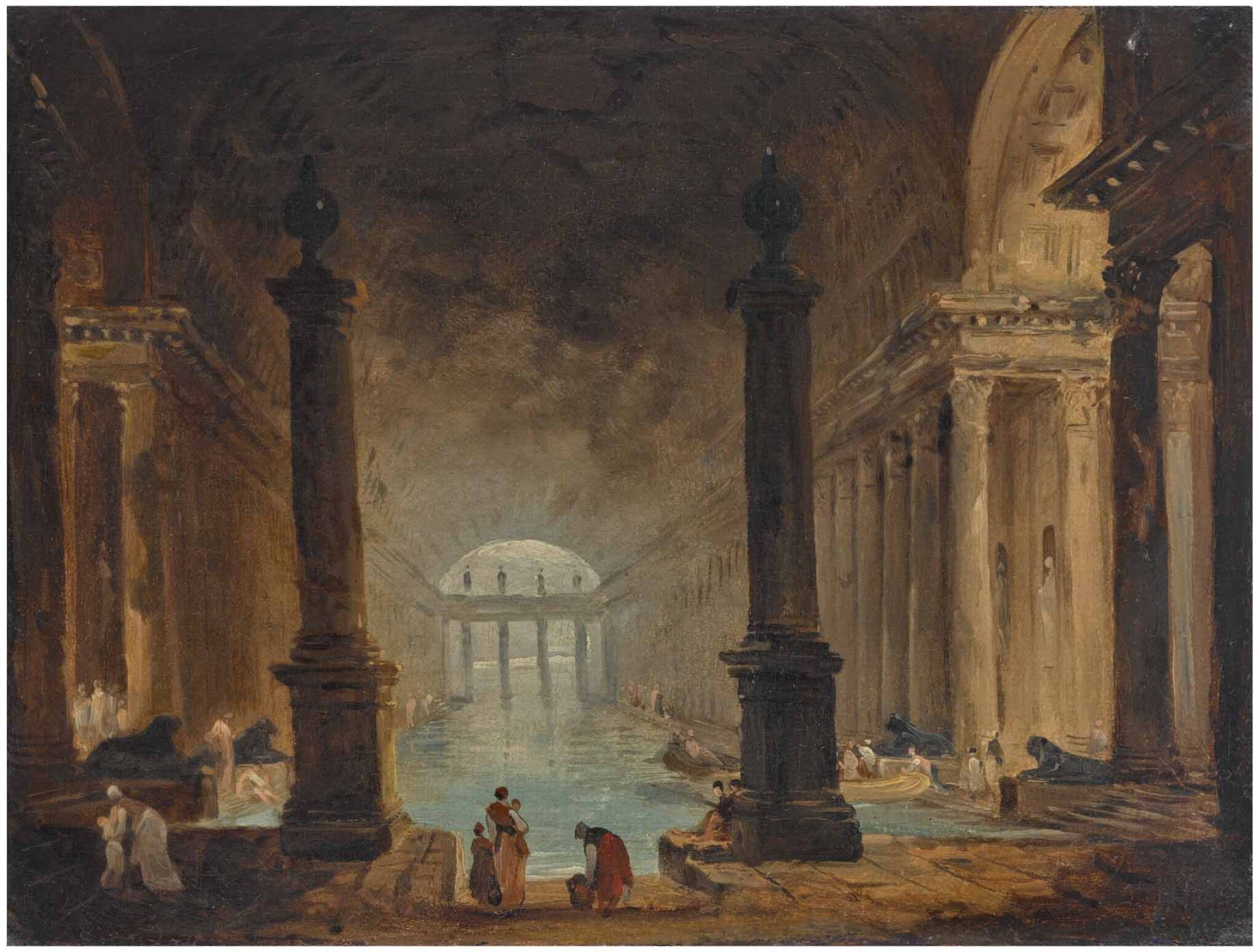
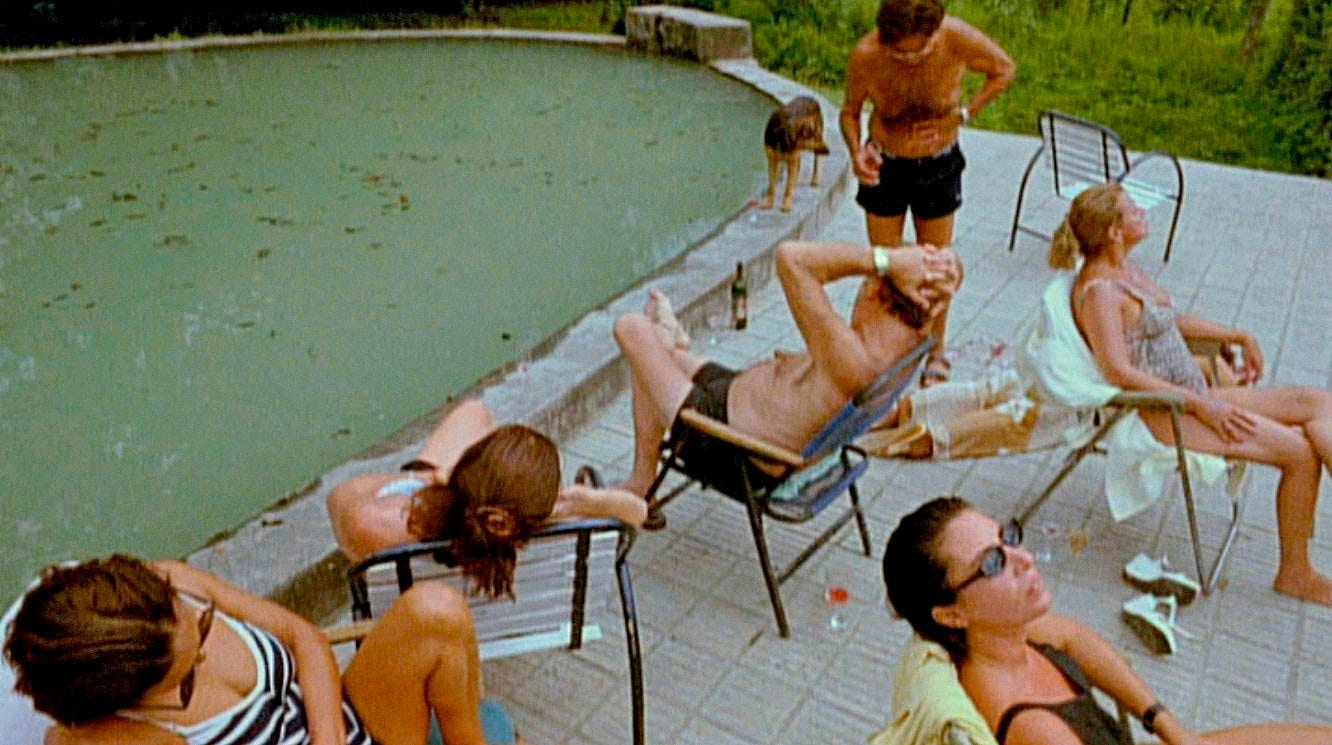
A scene from La Cienega
Lie on the floor
Ideally the grass. I don’t lie on the grass and look up at the sky enough. Stay there for a long time, try to find shapes in the clouds, and take a few deep breaths. If I’m at home, I try to lie on the floor daily for at least 10 minutes, even if it’s the busiest day, because that’s usually when I need it the most. Mini leisure time is better than no leisure time.
I hope you block off some leisure time on your calendar this week (and always).