.The Importance of Vitamin D3.

Although I love cozy fall and winter evenings, I do reach a point where I eventually begin to feel a little deprived of some bright, warm sunlight, and rightly so, we need it! Vitamin D carries out some pretty big roles in our body. Today, I want to share why this vitamin is so integral to your health and why it can be extra important to supplement during the fall and winter. Especially now in this crazy pandemic which makes me wonder why nobody mentions supplements and healthy food choices to boost your immune system but to rather receive a 100 Euro gift certificate and a sausage if you get the vaccine? Just wondering…. but this is me.

What is Vitamin D?

Vitamin D is a fat-soluble vitamin. It actually acts more like a hormone in our body than a vitamin and has countless important roles because nearly every tissue type in our body has a vitamin D receptor. This means having adequate vitamin D levels is crucial for good health and the function of many different systems in our body.

Sunshine is what enables our body to manufacture Vitamin D. It is made from the cholesterol in our skin when we’re exposed to sunlight. Unfortunately, these upcoming months, we don’t get a whole ton of sun. Let’s explore what some good old vitamin D does for us!

Health benefits of Vitamin D

Bone Health

It’s well known that vitamin D is essential for bone health. One of its main roles is stimulating and controlling the absorption of calcium. It helps draw calcium into the bloodstream and increase its absorption from our intestines.

Vitamin D also works synergistically alongside magnesium and vitamin K2 for optimal bone health. Vitamin K delivers calcium from the bloodstream to bones and teeth and helps remove calcium deposits found in soft tissue.

Immune Health

The sunshine vitamin supports our immune system and actually helps activate the T cells in our body. These cells seek out and destroy different bacteria and viruses that can cause colds and flu. In fact, a study in 2010 found that vitamin D3 supplementation during winter may help reduce your chances of catching the flu.

Mental Health

Vitamin D helps to activate our “feel good” neurotransmitters, including serotonin and dopamine. This can be especially helpful for those who suffer from Seasonal Affective Disorder (SAD) where a lack of sunlight has an adverse effect on mental health. It also helps maintain our nervous system and may help boost mood in those with depression.

Blood Sugar & Diabetes Management

Vitamin D can help support insulin levels and even diabetes management, including Type 1 and Type 2. According to research, 2000IU of vitamin D may help reduce the risk of Type 1 Diabetes. There was also a that study found low levels may increase risk of Type 2 Diabetes.

Cardiovascular Health

Vitamin D can even support your heart and reduce your risk of heart disease.

Cancer

There was a study that found participants’ cancer risk cut by 60% in those getting 1100IU per day, alongside calcium. How amazing is that?! Sufficient vitamin D levels in the body may also help reduce the risk of total rates of rates, including colorectalprostate, and breast cancer

How to boost your Vitamin D Levels

Food & Lifestyle

Get sunshine on your skin (being nude outside in the sun is the best, obviously not now!) and enjoy dark coloured mushrooms, eggs, and fish like sardines, herring and mackerel, or a cod liver oil.

Those of you living in cooler climates with limited sun exposure during parts of the year usually need a bit of a boost. Many people can benefit greatly from supplementing with this sunshine vitamin during the fall and winter months.

Supplementation

There are two kinds of vitamin D you can take as a supplement: vitamin D3 (cholecalciferol) and vitamin D2 (ergocalciferol).

D3 is derived from lanolin—the oil found in sheep’s wool—while D2 is a plant-based source. D2 is a popular choice amongst vegans and vegetarians, however if possible, I recommend opting for D3 as it’s easier for the body to absorb.

You can take vitamin D in a liquid, soft gel, or tablet form. Vitamin D is fat-soluble and is therefore better absorbed when taken as liquid or encapsulated in an oil, as opposed to a hard, chalky tablet. Vitamin D absorption is best when taken with food.

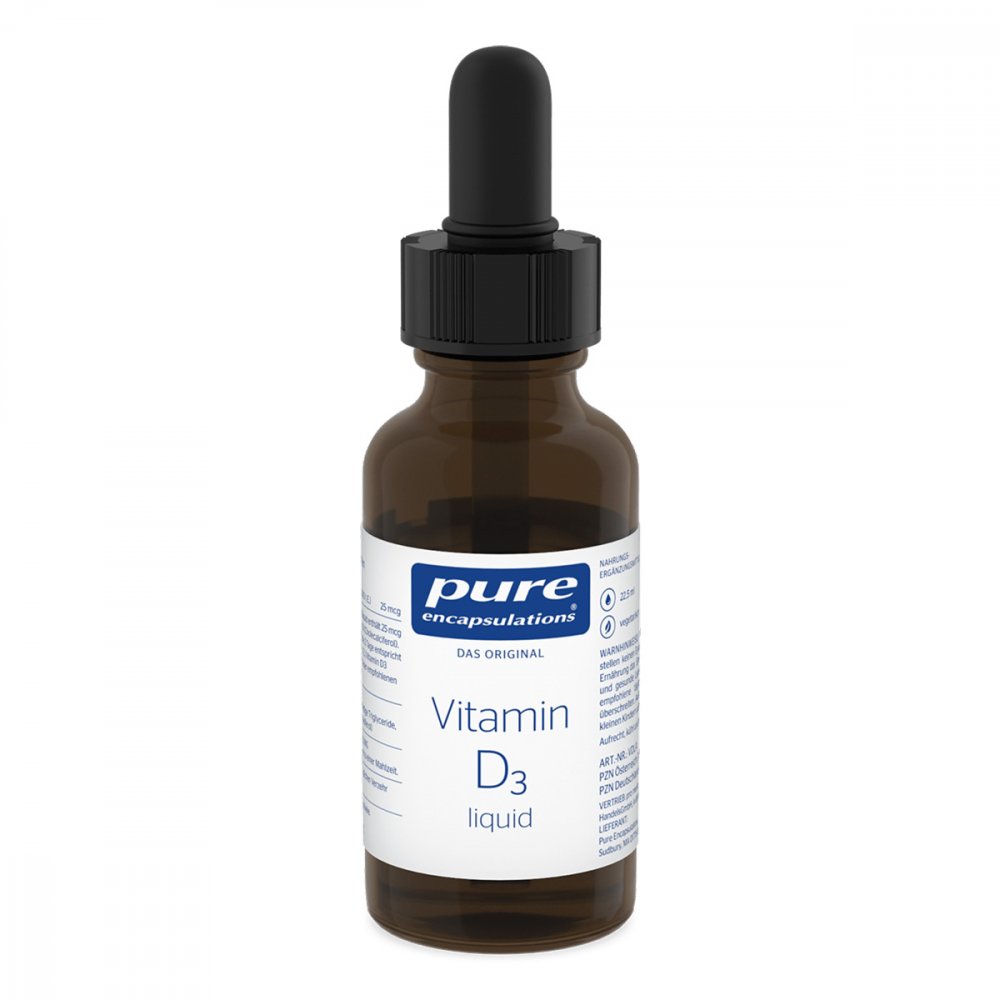
Dosages vary depending on individual needs, but a safe amount to start with is 1,000IU, although many people require much more than that. Be sure to speak with your health care practitioner for the appropriate dose. Below you see the Vitamin D3 I currently take. My personal dosage in the cold, dark fall and winter months is about 5-10 drops daily. Sometimes 15 drops a day for 3 days in a row if I my throat is achy or itchy. With this dosage I feel awesome, awake, and haven’t had the flu this season (knock on wood). My current Vitamin D Level is at 89% which is pretty good. Most people are deprived of Vitamin D and have Levels of 7-8 % or even below.
Are You Low in Vitamin D?

Low levels of vitamin D are more common than people would think. Dry skin, depression, osteoporosis, and conditions such as diabetes, heart disease, and even cancer, can be signs of low deficiency. A lowered immune function—such as frequent colds or flu—can also be implicated in vitamin D deficiency. Be sure to get your levels checked if you are concerned.

Stay healthy and let me know if you have questions.
.How to: Chia Pudding.

Many of you probably don’t know that I am a Certified Holistic Nutritionist who graduated from the Institute of Holistic Nutrition in Ottawa, Canada. I love everything health-related and cooking. Today, I would like to share two desserts that are very easy to make, taste delicious, and kids love them.

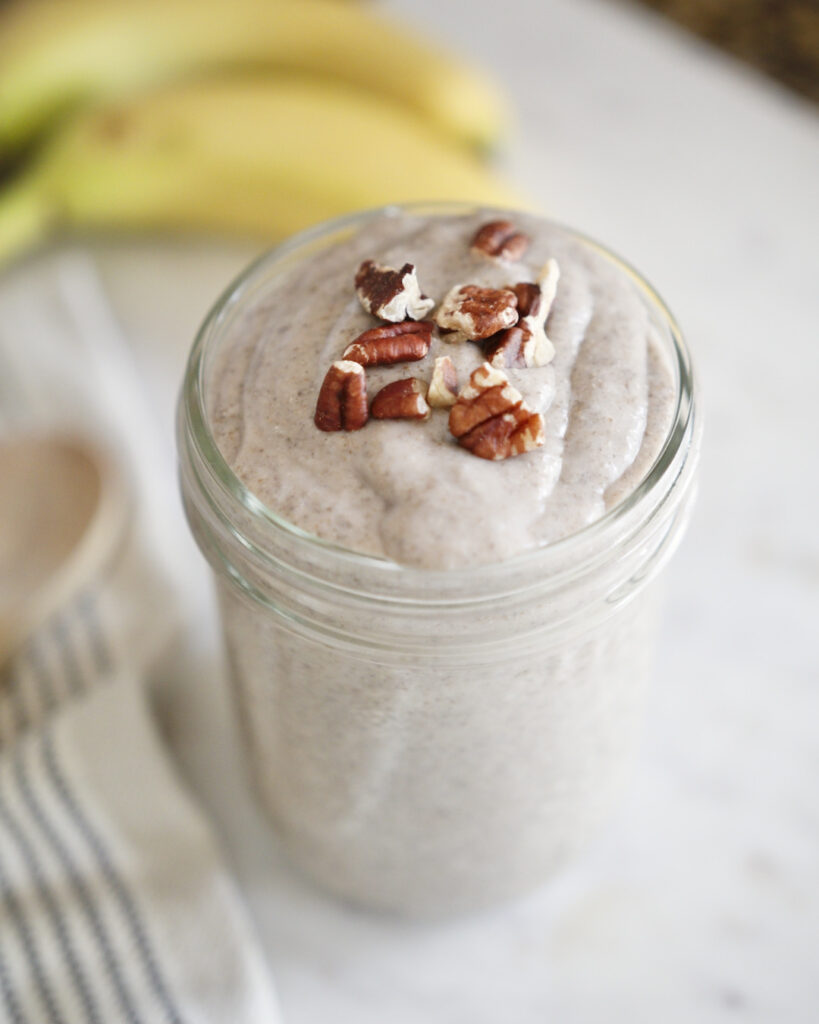
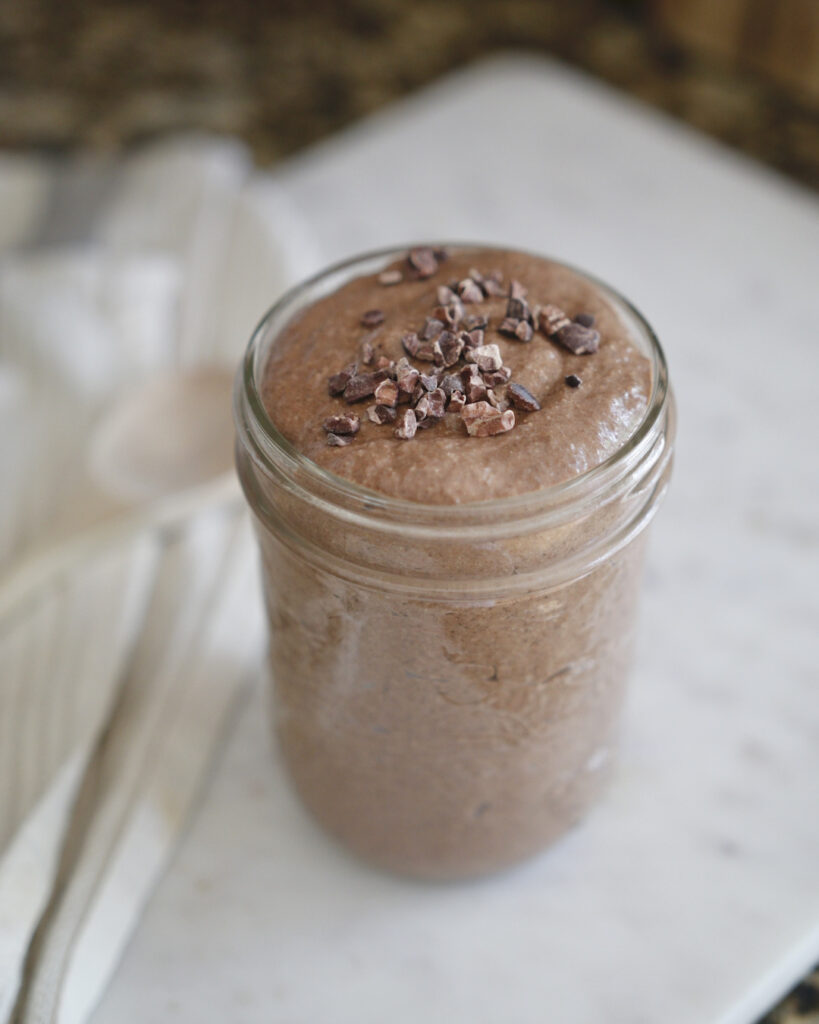
This decadent Chocolate Chia Pudding made with chia seeds, coconut milk, and cacao is the perfect wholesome dessert or midday snack. I have always been a fan of chia pudding because there are so many ways to make it. The base recipe is really simple.

How to make Chocolate Chia Pudding

Prep Time: 5 minutes

Servings: 4 servings

You will need:

  • a can of coconut milk
  • 30g chia seeds
  • 3-4 (medjool) dates or you can use a sweetener such as maple syrup or honey
  • 3-4 Tbs cacao powder (I use this one)
  • pinch of sea salt
  • for the banana chia pudding just use a banana and leave out the cacao
  • add water if desired or if pudding is too thick
  • Toppings (optional): chocolate chips, coconut flakes

A lot of chia pudding recipes involve mixing together the ingredients in a bowl, covering, and allowing to thicken on its own (since chia seeds are like little sponges that gelatinize when exposed to water). But I like to take it up a notch and blend it for an ultra-creamy pudding.

Instructions

  1. Peel dates and remove pits. Soak in a bit of warm water for 5-10 minutes or until softenend
  2. Add all ingredients to blender (I have a Vitamix!), including dates WITH the soaking water
  3. Blend on high until creamy well combined. Mixture will thicken rapidely in blender. Add up some extra water if needed to aid blending or for a thinner pudding.
  4. Transfer to container or jar (such as mason jar) and place in refrigerator to c hill and continue to thicken slightly.
  5. Enjoy with topping of choice!

.A Conversation with Alcohol.

Mr. X: I don’t like alcohol anymore. I want to slow down drinking a lot! It just does not do anything for me anymore. Actually, I think it never did. It makes me feel crappy and anxious the next day. Even just one cocktail does it. Stop looking at me like that. I rather take sparkling water instead.

Alcohol: What do you mean? So you are thinking about breaking up with me. As unlikely as it may sound, you are not the first but c’mon. Chances are you have got a lot on your mind right now if you tackle such questions but I think you are making a huge mistake. Breaking up with me could mean a very confusing time in your life. You will miss me so much, I guarantee you that. Make sure you have examined the short- and long-term effects of straight-up dumping my ass.

Mr. X: I thought about it. I feel so much better without you. I am more creative. No headaches and I can have fun at parties, too. Minus the major hangover the next day.

Alcohol: F*** you! Don’t do that. I know you love me. Grow old with me. Don’t turn your back on the best thing that ever happened to you. You risk a lifetime of gnawing regret!

Mr. X: Breaking up with you does feel a bit overwhelming but I know it is the right thing to do. You know why? My health! I don’t like how you make me feel.

Alcohol: Health blablabla. We all going to die anyway. Why not party in the meantime? Leaving my sweet embrace will make you feel lonely. Imagine everybody drinks alcohol while you sip on your water? Pffff… hello???…. boooooring. Your dumping me will trigger a swift chain of events that culminates at a bar. All your friends will have fun, except you. Oh wait, some effects are more insidious. Should you really kick me to the curb, you must anticipate that I am going to sit on that exact curb eating chocolate. I will eat chocolate every day, sometimes at strange hours, because I have seen sad women do this. You might meet different non-alcoholic drinks but honestly, good luck replacing me. Do you find yourself doubting yet? Because breaking up with me would mean a huge scale of devastation that can be blamed only on you.

Mr. X: I feel so much better without you. Also, anybody who cares that I don’t drink has a problem with alcohol. Honestly, f*** off.

Alcohol: It is with near certainty that, if you really break up with me you will break my heart. Also, don’t think you can just break up with me and head on your little “Eat Pray Love” – style journey. You neeeeeed me. You waaaaaant me. Always remember that. Many people need me. This is a conclusion based on years of data collection and analysis from bars, my friend. Oh, you won’t go to bars anymore either now? I could go on and on. You just make me angry. Breaking up with me is a very personal choice. No one can make it for you. Damn, I think you feel pretty strong about this.

Mr. X: I do. Honestly, it is fun to drink but one drink is usually not enough. I have another one, which leads to another one. I rather have a clear mind to live in the here and now and be fully present.

Alcohol: I really hope for you that you have gained a helpful new perspective, one broad enough to confront the fiery, drought-ravaged world that awaits you in your sobriety. Alternatively, we could stay together and preserve this beautiful friendship we have had over the years. I eagerly await your decision. You know I will be around for comfort. I always was, I always will be.

Mr. X: We were never friends. I always considered you a lying, backstabbing friend who never made me feel good. I consider this moment a brave act of not allowing a poisonous substance to dim my bright light. I know alcohol is never the answer. I am.

.The Journey home to the Heart.

(Photo by Chris J Ratcliffe/Getty Images)

“Solitude,may rest from responsibilities, and peace of mind, will do you more good than the atmosphere of the studio and the conversations which, generally speaking, are a waste of time.” – Louise Bourgeois

The move to Austria is done and another big chapter in my life began. For me, after all this stress, it is important to spend time alone and to reflect on what just happened. I read an article a while ago that artists throughout time have pontificated about the benefits of spending time alone as well as the lonely patience required to make art. I believe it is important for anyone to spend some quality time alone because it simply feels good and our batteries are recharged. Yet despite the long-praised benefits of alone-time on our practice and creativity, the right sort of solitude can seem elusive to many.

Some people forgot how to be alone and spend time with themselves. Sara Maitland writes in How to be Alone, “How have we arrived, in the relatively prosperous developed world, at least, at a cultural moment which values autonomy, personal freedom, fulfilment and human rights, and above all individualism, more highly than they have ever been valued before in human history, but at the same time these autonomous, free, self-fulfilling individuals are terrified of being alone with themselves?”

What do you associate with being alone? Many times we mistake being alone with doing nothing; which is actually totally fine, too. The problem is that we allow our work, social and family schedule to zap our alone-time. Endless opportunities for distractions mean that when we are alone, we are not truly alone – we have the world at our fingertips, and opportunities to compare ourselves and our work with each scroll we take through our social media newsfeed.

“I think we live in a world where we overburden ourselves not just with work commitments but social and family commitments, and that level of duty and obligation, and we completely forget to send time on our own and ourselves.” – Jull Stark

So, how do each of us go about finding solitude in our day to day lives? I did a little bit of soul-searching to find the benefits in spending time alone, the challenges that can be faced and how things can be prioritized. I am basically musing on the importance of alone time and how to secure it.

Solitude Cycles. Loneliness is a sign that you are in desparate need of yourself. I love spending time with friends, my partner, my family but I really need to be by myself, too. Time alone basically means to me to have peace and quiet to write. I will have really productive phases where I stay up all night. It seems a bit mysterious, the coming and going of it, but in general, I tend to want to be alone a lot. I need that alone time to work, think about things, do research or read up on things that are interesting to me (Süddeutsche Zeitung in the morning, Georg).

Scheduling Alone Time. I need time to dream, relax and create. Jill Stark says it best, “Time for myself is one thing that I factor into my week as much as I can. Even though I live on my own and I could say I always have time on my own, it’s a very different thing to put it in the diary as you would if you were meeting a friend or going on a date and nothing gets in the way and you don’t cancel on yourself.”

Acknowledge Distractions. My friend(s) call(s) me to go out for Pizza/Pho in the evening? Do I really have to get X, Y, and Z done today? If yes, stay in and work! If not, go out and have fun. Life is too short. Usually, I can block the world out easily; a good pair of headphones helps in most cases. I need to be alone to allow all of my daydreaming to create new works. I do think it is essential to discuss ideas with others and that can often lead to surprising outcomes, but the intimate core of my work comes from quiet times at my desk. Sometimes just sitting and staring at what is around my living room leads to the most exciting new connections.

The importance of doing nothing. Sometimes I literally do nothing but stare at the sky. Or I lay in a hammock all afternoon, enjoying the sun, reading a book. Can you do this? How does it feel? Are you comfortable? “I know this sounds really alien to us in this world where we are constantly distracted, but actually just sitting and doing nothing can be really helpful – and literally nothing, not reading a book; just sitting and thinking and letting whatever comes into your head.” – Jill Stark

One Task at a Time. I have an almost 6-year-old son who requires quite some attention, which is fine. But at the same time, I need alone time, too to stay sane, socialize, write, work, and meet with friends. But, one thing at a time because I believe it is healthy and important for the brain not to be too distracted and overwhelmed which easily leads to stress.

Small habits can protect alone time. I love my morning routine which I try to protect. I will have a cup of black coffee and read a book or newspaper. Uninterrupted. In the evening when I stay in: having a bath, a glass of red wine, soft lighting in my office, listening to music and wearing a Kimono just because. As soon as my son is in bed, I write, read and do all my intellectual stuff. And reflect. And love because sometimes “On days like this, I need you to run your fingers through my hair and speak softly.” – Rupi Kaur

Pausing gives me the space to make decisions. Whenever my brain is overloaded and I try to solve all my life’s problems at once I pause. At that moment it may feel counter-intuitive to have a break because we may just want to push through as fast as possible. But why? Just get an ice-cream instead (I recommend Chocolate and Cookie). This is quick happiness while putting things to the side, changing the scenery and actually looking after yourself.

.Stay Happy – Stay Healthy.

Part 2: Nutrition & the Environment and what it all boils down to.

via The New Yorker

What are food additives and why are they used?

Food additives are chemicals added to our food. Reasons for use are to improve shelf life/storage time. To make food more available. To increase nutritional value. To improve the flavor of food. To make food easier to prepare. To improve customer acceptance. Scary fact: The average person may be eating up to 5 kg of artificial food additives per year!

Flavors- Artificial and “Natural: When “flavor” is listed as an ingredient, we have no idea what is in that product. The term refers to “flavor” but also covers any “incidental additives”, such as solvents, emulsifiers, and preservatives. It is sometimes a mix of up to 100 chemicals. An artificial flavor must be comprised of one of the nearly 700 FDA-allowed flavoring chemicals or food additives categorized as “genrally recognized as safe”, or any of 2000 other chemicals not directly regulated by FDA but sanctioned for use by an industry group, the Flavor and Extract Manufacturers Association of the United States.

Artificial colors: In Canada, eight artificial dyes are permitted in food, with the others for restricted use only, labeling only required to list “color”. Many are derived from coal-tar and petrochemicals. Studies have found links between artificial food additives and hyperactivity, allergies (eczema, asthma) and cancers. Many European countries ban them and brands make the same products free of these additives for their market.

Caramel: Caramel is derived from allergens (corn, soy, wheat, dairy) and source not listed in the ingredients list because it is used as a color. Found in Cola, brown bread, chocolate, vinegar, gravy, donuts etc. Has been linked to lowered immune function in rats. Four different processing methods, two of them use ammonia that caused cancer in rats. Ammonia-caramel coloring listed as a carcinogen under California’s Proposition 65.

Nitrates & Nitrites: Sodium nitrate and sodium nitrite are two food preservatives used to preserve meat, kill bacteria and give meat its characteristic pink color. These are compounds found naturally in some foods (like vegetables) but also added to processed foods (like bacon) as a preservative. Nitrates are relatively inert until they are turned into nitrites by bacteria in the mouth or enzymes in the body. Nitrites can either turn into Nitric Oxide (good) or nitrosamines (bad) depending on your microbiome. Nitric oxide is important to make blood vessels dilate and blood pressure lower. Nitrosamines are also more likely to form when exposed to high heat (meats). They are carcinogenic.

BHA & BHT (butylated hydroxyanisole and butylated bydroxytoluene): BHA and BHT are preservatives derived from petrochemicals used to prevent rancidity of fats in foods and cosmetics. BHA linked to cancer in animal studies, the European Union classifies it as an endocrine disrupter (hormones!). BHT causes developmental effects and thyroid change in animal studies. Commonly found in potato chips, gum, cereal, meats, and candy. Found in most processed foods. BHA banned in cosmetics in Europe and labeled in California as a suspected carcinogen.

Sulfites: Preservatives and antioxidants found in wine, dried fruit, fruit juice concentrate, and many pharmaceuticals to help preserve and prevent browning. Reduce levels of important nutrients, such as beta-carotene, B-complex and calcium. Can cause headache, nausea, diarrhea, irrigated membranes, abdominal pain, rashes, and trigger asthma. The average intake is 2-3 mg/day, wine & beer drinkers 10 mg/day, restaurant frequenters 150mg/day.

MSG (monosodium glutamate): Is a flavor enhancer. Sodium salt or glutamic acid found in many proteins. Can be labeled as “hydrolyzed protein”, “natural flavoring” or yeast extract. Acute reactions include headache, agitation, increased heart rate, numbness, tingling. Linked with obesity, diabetes, ADD, allergies, IBS and depression. Studies show varying results, however.

Brominated Vegetable Oil (BVO): Is an emulsifier and clouding agent in soft drinks. It helps to suspend flavors in citrus-flavored beverages. Bromates used in flour to condition dough (not always listed). BVO is very poorly tested and safety concerns have led to a ban in EU, Japan, and India; many soft drink companies replacing it. BVO is the same chemical family as flame-retardants. Early studies suggest that flame-retardant chemicals disrupt normal hormone function, leading to problems with brain development in children, fertility, thyroid function, and possibly cancer. Some people have acute reactions, including food poisoning symptoms, memory loss, and neurological symptoms.

Is there anything that I can still eat? What about salt?

Ingredient Order: Ingredients are shown in descending order, except spices, seasoning, herbs (except salt!), natural and artificial flavors, flavor enhancers, food additives (except ingredients of food additives preparations), vitamins, soalts and derivatives of vitamins, mineral nutrients, salts of mineral nutrients.

This is a lot of information, I know. But maybe you keep some of it in mind when you shop for food. Read the labels and if you are not sure about some ingredients the EWG’S Food Score App may be helpful.

Part 3 about toxic exposure in cleaning and personal care products will be published soon.

Stay Happy. Stay Healthy.

.Part 1: Nutrition & the Environment and what it all boils down to

via The New Yorker

Why is organic expensive and why buy it?

Organic products are more expensive because of higher production costs. These include the cost of organic seeds and fertilizers, labor, lower yields of certain crops, and marketing. Organic products are also not subsidized by the government, as are commercially produced products. The growing of organic products prevents soil depletion and contributes to maintaining water quality; it uses less energy and keeps harmful and unnecessary chemicals off our plates. Organic products are not exposed to antibiotics: buying them means you help protect farm workers and support an economy that promotes biodiversity. Most importantly, the taste and flavor are so much better.

It is also wise to avoid crops that have been grown with genetically modified organisms (GMOs). Check the source of the meat, eggs, and dairy you buy; milk, cheese, eggs, meat, and poultry could all come from animals that were given GMO feed. If you are concerned, choose organic or non-GMO verified. Certified organic products do NOT contain GMOs. Look for the no-GMO label. The five most prevalent GMO crops – corn, canola, soy, cotton, and sugar beets – end up as hidden additives in all kinds of prepared foods including corn syrup, oil, sugar, flavoring agents, thickeners and hundreds of other foods.

Feel good about frozen: most frozen fruit and vegetables are non-GMO unless they are one of these five high-risk crops: corn, Hawaiian papaya, edamame (soybeans), zucchini and yellow summer squash. Choose organic or non-GMO verified for those five and watch out for other ingredients that might be from a high-risk crop. Choosing dried beans, grains, nuts and seeds, while avoiding corn and soy, is a great way to go non-GMO.

How do I eat more sustainably?

Support local and organic when you can. Shop at farmer’s markets whenever you can. Buy directly from an organic farm (great for meat, apples, pears, berries – things that freeze and store well). Join a Food Coop, e.g. the Ontario Natural Food Coop. Support Community Shared Agriculture. Join a community garden or grow your own; a window and pot are enough to get started. Use the Dirty Dozen & Clean 15 lists as a reference. Use the Environmental Working Group’s website as a reference.

via food network

How do I save money and eat well?

Plan your meals. Buy in bulk. Batch cook. Make your own stock, milk, nut/seed butter, dips, and dressings. Buy local and in season. Preserve the harvest (freeze, dry, ferment). Eat and cook meals at home. Eat cheaper cuts of meat (organ meat, ground meat, soup chickens). Support the Ugly Food Movement; apples with brown spots can still be eaten.

Get in the habit of eating everything you buy. Older vegetables and leftover cooked rice or quinoa can make a great soup or a hearty casserole. Leftover bread can be made into croutons or frozen and saved for a yummy bread pudding. Borderline fruit can be put in the blender and either put in smoothies or frozen for another use.

What are the impacts of Climate Change?

Environmental impacts/What to expect according to research: The Intergovernmental Panel on Climate Change (ICCP) predicts:

a rise in sea levels of up to 2 feet by 2100. Loss of freshwater (reduced snowmelt and saltwater intrusion), extreme weather patterns (hurricanes, droughts and extreme heat, floods, blizzards, tornados), forest loss due to fire and the spread of disease, oceanic acidification and dead zones, habitat change (cold – and vulnerable species) and potential mass extinction, and changing migration patterns.

Social impact: Coastal and island nations are at risk. Drought, crop disease, lack of water and food in vulnerable areas. Climate refugees and climate migrants have no international legal protection – 26 million people worldwide are displaced annually due to environmental disasters. Land grabs, land prices, global poverty, hunger, and increased social tension all contribute to the social impact of climate change.

Human impacts: Lack of food/diversity of food. Heat exhaustion. Nutrient deficiencies. Mental health. Crop failure due to extreme weather and rising temperatures. Lack of fresh water. Spread of tropical diseases such as malaria, dengue fever. A rise in insect-borne illnesses such as Lyme. Exacerbation of smog conditions such as asthma.

What can be done? Consume less. Buy better: Think locally, act globally. Support organizations that campaign to protect the climate. Recognize the connection of food to climate: we can make a difference! Get indoor plants. The top five houseplants that filter air are: Spider Plants, Peace Lilly, Mother-in-Law’s Tongue, Golden Pothos, and Aloe Vera!

Now, go outside and play.

Stay happy. Stay healthy. Part 2 is coming soon.

.The Uncertainly Principle and then there is always Ice Cream.

Big chapters in my life are closing while new ones open up. In the meantime, the summer approaches. I anticipate the best for me and my son to an unreasonable degree. My heart, body, and mind enjoy the idyllic weather every day, awesome music (Jazz festival) that makes me feel like being in a Chaka Khan video. If I were to reflect on memories and events of the past couple of months, there would only be one overwhelming theme: uncertainty.

For me, this spring and summer is just ripe with big hopes, changes, and set up with high expectations that won’t end with “if onlys” anymore. I was long overdue to release emotional pressure and uncertainty and these days it is clearly easier to find the light when the sun stays up past 8 p.m. I called this perfect summer into existence by checking off a couple of things on my to-do list. One was, to take my final exam at the Institute of Holistic Nutrition today, hand in the last assignment and become a Certified Nutritional Practitioner (CNP). Also, to just enjoy the simple things after a long harsh winter such as to sit outside at a fireplace until last at night, roast marshmallows, swim in the lake, enjoy Cottage-time, drink beer with a lime in it, endless conversations, read stories to my son and help him to learn to swim without his life vest.

Now that his school year and mine comes to an end, I feel like time is slipping through my fingers. This past year went by in a heartbeat. My birthday is around the corner, and I always expect that as I get older and wiser I become less interested in staying up past 1 a.m., but this won’t happen. I love my life. Every single second of it. All the ups and downs, sleepless nights spent with a good book, long conversations with friends, good and bad decisions were all part of the journey that got me where I am today. Reassessing the last year, I have to say that I truly made the most possible of every single month. All it sometimes takes is just a simple mindset-shift.

This morning, my son and I walked to school together. I dropped him off and realized that something new is around the corner for him, too. One last walk, one more time at his playground, one more time with his friends who accompanied him for one year. And he is excited about his new chapter of uncertainty while looking at it all with a playful approach. And so should we all. When I realized, I walked out of my school for the last time, it did it with a bit of emotions that made my heart heavy. But as my son says, “It is all good!”

I am excited for us and ready for it. And if I am being honest, I am not nervous because I have been working hard on my self and the future and what is best for us. As we walked across the street together he grabbed my hand. We walked into this new and foreign space full of uncertainty but as he grabbed my hand, the feeling that came over me what happiness. I know as long as I can hold his tiny hand, everything will be okay. We love each other unconditionally and give each other strength. Suddenly, he let go of my hand and I know that he will need me less and less by his side. He has grown up so much.

I am grateful for it all because I know I do not have much time left to hold his tiny hand. It is just a matter of time before his hand outgrows mine. It is inevitable. I cannot stop it. But I also would not want to if I could. So every feeling of surprise is matched with a feeling of gratitude. Watching him, by my side growing into his own independent, self-sufficient, amazing person is the sweetest gift I could have asked for. Regardless, now or later, if he needs my hand, is will be there.

Together we walk to new adventures. Time is too short and flies by. We might as well enjoy the sweet stuff while having a summer night of celebrations, putting our feet in the grass and having an impromptu ice cream. Because this is excatly what we need.

Stay happy. Stay healthy.

.Eat this: Salmon Veggie Bowl.

It is finally warm(er) in Canada which means for me, I want to eat light. One of my favorite things to prepare is (local, wild, Canadian) salmon. It is simple, delicious, quick and healthy. I fill my salad bowl with bright and fresh vegetables full of nutrients that my son enjoys as well. Feel free to adapt the recipe and include whatever you have on hand. Many veggies can be prepped ahead of time, so you can easily assemble your bowls on the fly when you come home late from the pool ha! Enjoy!

Salmon Veggie Bowl

Ingredients: yields one portion

3 oz. wild caught salmon
sweet paprika
dill, thyme
zucchini
cucumber
purple cabbage
lemon
fresh mint
olive oil
apple cider vinegar

How to:  

Wash veggies (actually, always wash all your veggies!). Chop carrots and cucumber or spiral your veggies. Chop or slice the purple cabbage and mint. Prepare vegetables any way you prefer. Mix in a bowl and set aside. Preheat over to 400 degrees.

While the oven is preheating, place salmon skin side down on a baking sheet lined with parchment paper. Put a little olive or avocado oil under salmon if you’d like to so the skin won’t stick to the parchment paper. Or don’t, if you prefer the salmon without the skin.

Squeeze lemon over salmon and then season with sweet paprika, dill, thyme, salt, and pepper. Bake salmon for 12-15 minutes. Place desired amount of prepped veggies into a bowl. I like to chop a lot extra to use the veggies for quick meals over the next few days and they keep nicely in the fridge. Use a dressing of choice or use a drizzle of apple cider vinegar and olive oil. Once salmon is done baking, place it on top of veggies and enjoy!

I added sliced radishes, pickled onions, and sesame, ginger, carrots to my bowl (you can really add anything to your dish: sliced avocado, roasted veggies, brown rice, etc.).

.There is no Planet Earth 2 – The Ecological Footprint.

Ecological footprint! What does this even mean? The ecological footprint measures the amount of nature’s resources an individual, a community, or a country consumes in a given year. Let’s focus on Canada. Here are some numbers for you taken from the WWF Living Planet Report:

As far as energy usage, Canada is ranked third in per capita and ranked in the top ten for Greenhouse Gas (GHG) emissions. The average Canadian household uses 500,000 liters of water annually. Canadian households generate 31 million tons of garbage each year. That is 2.7kg per person per day! Canadians toss more than 140,000 tonnes of electronic waste into landfills each year. Plastic use? Worldwide, over one million plastic bags are used per minute. We throw out 100 million plastic bottles every day! There are roughly 46,000 pieces of plastic in every square mile of the ocean. Sick yet? Let’s talk food.

In Toronto, single-family households discard about 275 kilos of food waste each year. Worldwide, 50% of food produced is wasted! Households waste an average of $1,456 worth of food annually. You like salmon? Over 85% of the world’s fisheries have been pushed to or past the point of collapse. Unsustainable methods such as bottom trawling, drift nets, dynamite, electro and poison fishing are being used.

Fashion? Do you love fast fashion? Consider, water pollution, toxic chemicals, carcinogenic dyes, sweatshops, waste. Have you ever wondered how it is possible to produce a sweater sold for $7,99?

What can be done?

Decrease Your Footprint:

Reduce, reuse, then recycle. Share, DIY, buy used, buy local (farmers market), buy toxin-free. Eat less meat and choose high-quality meant and sustainable seafood. Cook at home. Use less energy, drive less, turn down heat/AC, power down gadgets and standby lights. Get involved. Talk, volunteer, share, lobby, engage store managers, bosses, schools etc.

Buy less stuff! Before you buy, ask yourself: Do I really need this? If it is replacing something, can it be fixed? Can I do without it? Can I make it myself? Can I grow it? Who am I supporting when I buy this (small family business vs multi-national cooperation)? Is there a way to buy this from a local business? Is there a more sustainable option (Fairtrade, organic, recycled, sustainably made)?

Make smarter food choices! According to Statistics Canada, the average Canadian has 26 tsp of sugar daily; teenage boys have 41 tsp! Only 1/4 of Canadian families eat a homemade meal made from scratch every day, compared to half of the families in 1992. On any given day, 1 in every 3 children eats a fast-food meal. Children see 10 million ads a year just ion their ten most visited websites – 90% of those ads are for unhealthy food.

Avoid Farmed Fish! This includes salmon, shrimp, mussels, oysters, trout, bass, and tilapia. The main concerns are: Extreme over-crowding leads to antibiotic use and poor health. Farmed fish is fed with Genetically Modified Organism (GMO)-meal, often with added dye hence the nice pink color. Atlantic salmon is engineered with a growth hormone gene. GM (genetically modified) Atlantic salmon eggs are produced in Prince Edward Island (PEI), shipped to Panama to grow, then to the US for processing and finally back to Canada for sale. Yikes! The problem is the missing transparency in Canadian Regulation of GMOs for example product labeling. To be on the safe side: buy only wild – and not farmed salmon, or no salmon at all unless you really know where it comes from locally.

Meat: Overall, reduce consumption to what your body needs. Find a good farmer for meat, eggs, and dairy. Go to organic butchers that source locally. Emphasize grass-fed, hormone-free, GMO-free feed (the meat tastes so much better!) Did you know that “grass-fed”, “grass finished”, “pasture raised” are not regulated terms? Antiobiotic free means only that the animal didn’t receive antibiotics for a period of time before slaughter. Ethically or humanly raised terms are meaningless. Again, organic meat is best, ideally 100% grass-fed.

Eggs: Try to buy organic feed, animal welfare standards, and local (farmers market!). Do you know what it means when it says Cage-free on the egg carton? Cage-free means that hens are not confined to battery cages (but no access to outdoors and no idea what feed is). Free-run means hens can move around in open-concept barns (may still be overcrowded and may not have access to outdoors). Free-range: Hens can go outdoors. Yay!

Watch this: Michael Pollan’s documentary Cooked (actually, read and watch anything by Michael Pollan!)

“Cooking for yourself is one way to take back control of your diet from the food scientists and food processors” – Michael Pollan

Lifestyle questions to ask yourself:

How far is too far to walk or to cycle? What is the smallest amount of money you could live on for one year? What was the last thing you bought that you really didn’t need? Why did you buy it? Could you live without a car? How would it affect your life? Do you think that the best things in life are free? If you had no money, would you still have the same friends? How do you decide what clothes to buy? Do you know where your food comes from? Are you willing to buy second-hand? Are you comfortable borrowing things?

Stay healthy. Stay happy.

.Eat this: Kimchi Spring Rolls & Almond Butter Dip.

Readers keep asking me if I could share more healthy, quick and easy to make recipes (not too many ingredients). Your wish is my command. I will share one recipe weekly in addition to my regular blog post. On this blog, check out the Beauty & Food section for more recipes and (homemade) beauty products. Also, big news. My new holistic nutrition website will be up and running in a couple of weeks. Yay!

Hungry? No idea what to eat? How about Kimchi Spring Rolls. There are super easy to make, healthy, insanely delicious and filling. Enjoy this fresh and bold flavoured kimchi and cashew blend from heaven.

Ingredients:

Dipping Sauce:
1 cup raw almond butter
1 Tbsp freshly chopped ginger
1/3 cup water
1/4 cup fresh squeezed lemon juice
2 cloves garlic
add a bit of Cayenne pepper if you want it spicy

Kimchee Filling: Yields 4 cups (makes 7-8 wraps)
2 cups cashews (soaked for 1-2 hours and drained)
1/2 cup sesame oil
1/4 cup raw tahini
1T maple syrup/honey/agave syrup (optional for sweetness)
3-4 cups pre-made kimchi

Fresh veggies of choice
Collard Greens (remove the hard stem) and/or rice paper wrappers

How to:

Process cashews, sesame oil, tahini, maple syrup (if using), and ginger in food processor until chunky consistency is achieved. Mix with roughly chopped kimchi and set aside. I used collard wraps and rolled 2 Tbsp of kimchi filling, organic spring mix and julienned veggies (cucumber, bell pepper, and carrots are best!) For the dipping sauce, blend all ingredients in a blender. So easy and incredibly tasty!

Seriously, you need these wraps in your life!

xx