Recent Posts

Five Things.

Hello and Happy Friday!  Can you believe it is already March? When did that happen? My week was good so far. Quite some running around and doctor visits because of my elbow but otherwise, smooth sailing. I have some type of fracture which is very…

Frida Kahlo.

(Self-portrait with Thorn necklace and hummingbirds, 1940) Hello and Happy Thursday! “Nothing is worth more than laughter. It is strength to laugh and to abandon oneself, to be light. Tragedy is the most ridiculous thing.” – Frida Kahlo Frida Kahlo (de Rivera), 1907-1954, was a Mexican…

How to: Let’s make some Bagels.

Hello and Happy Wednesday!

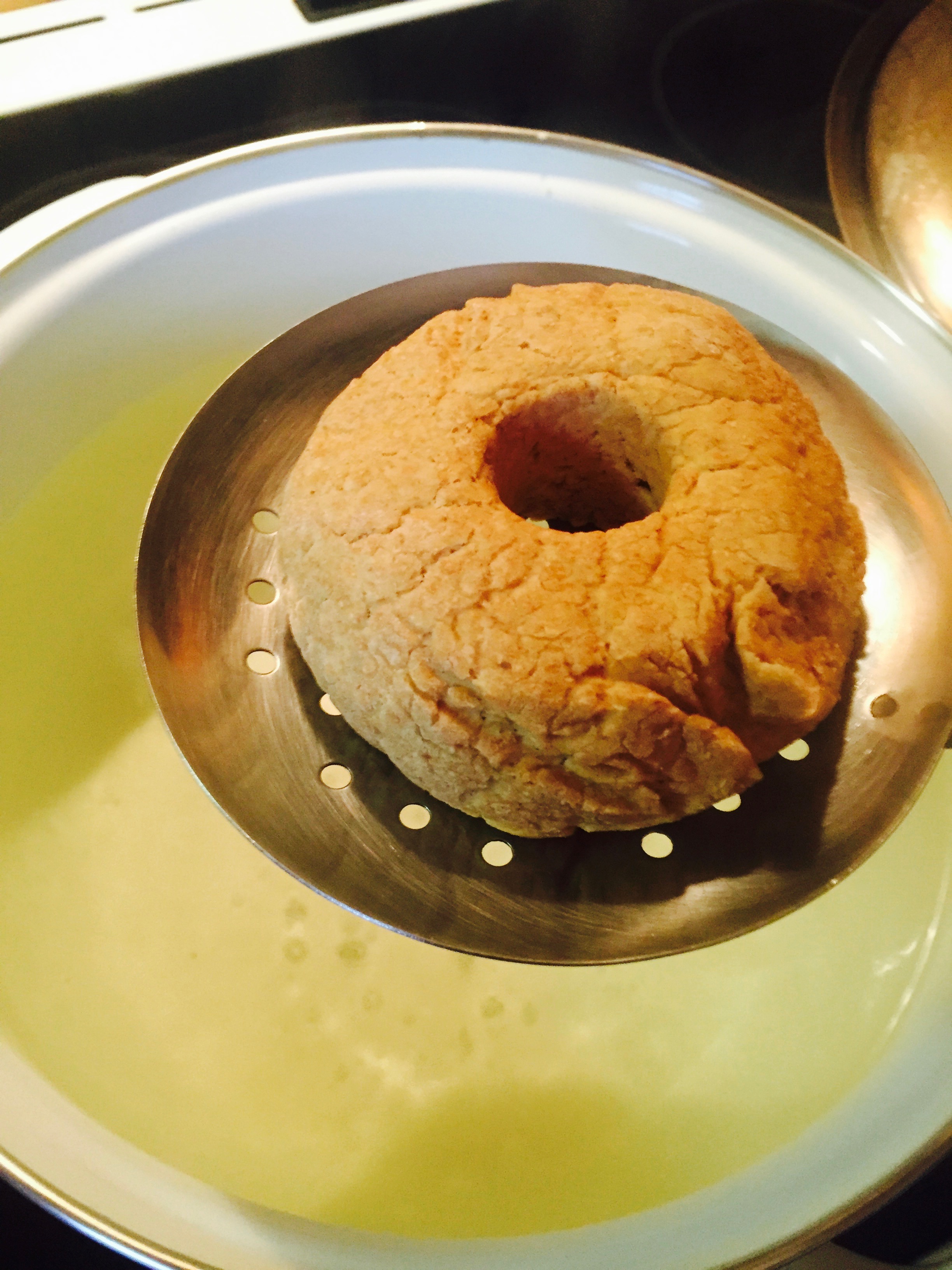
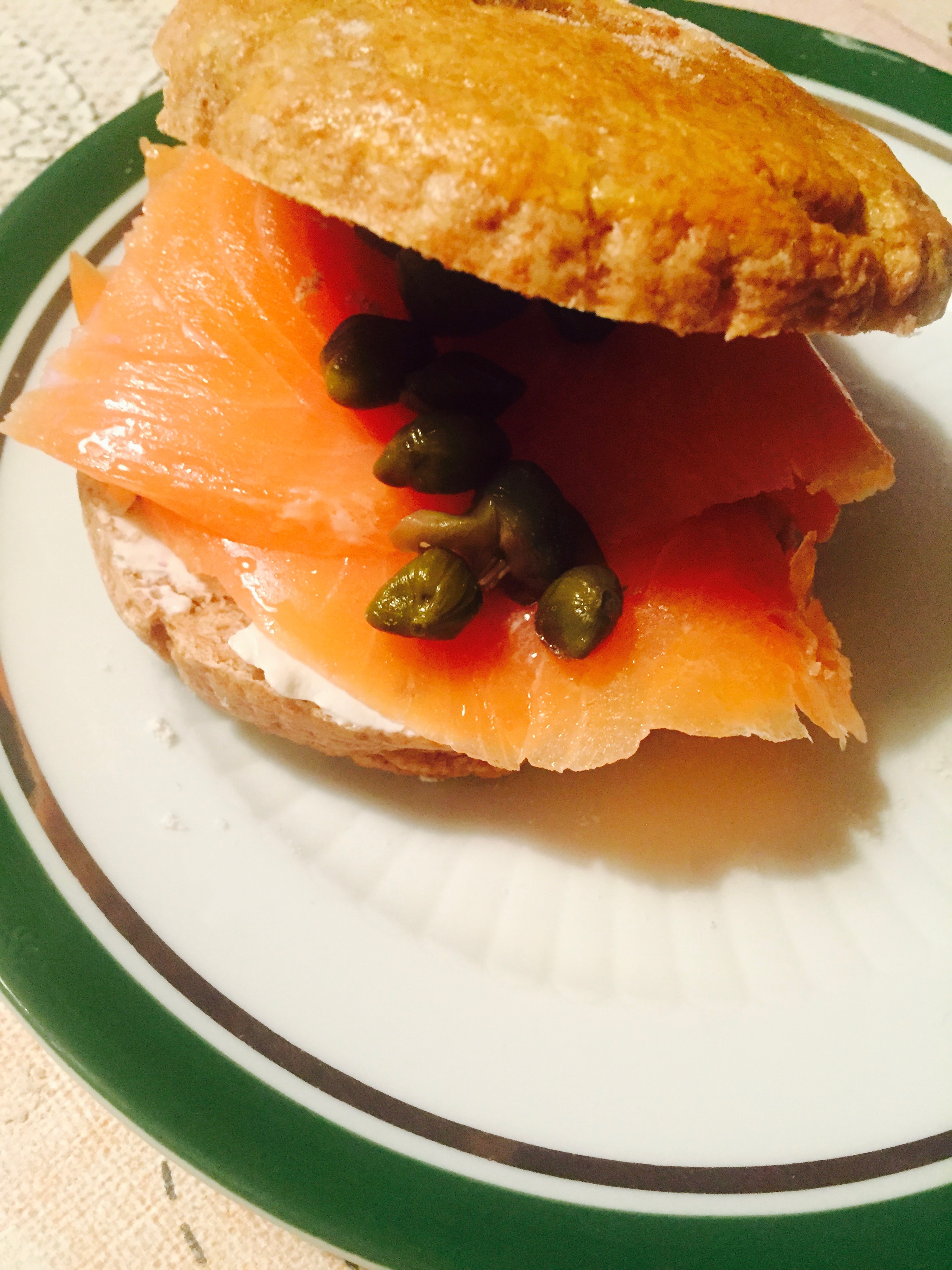
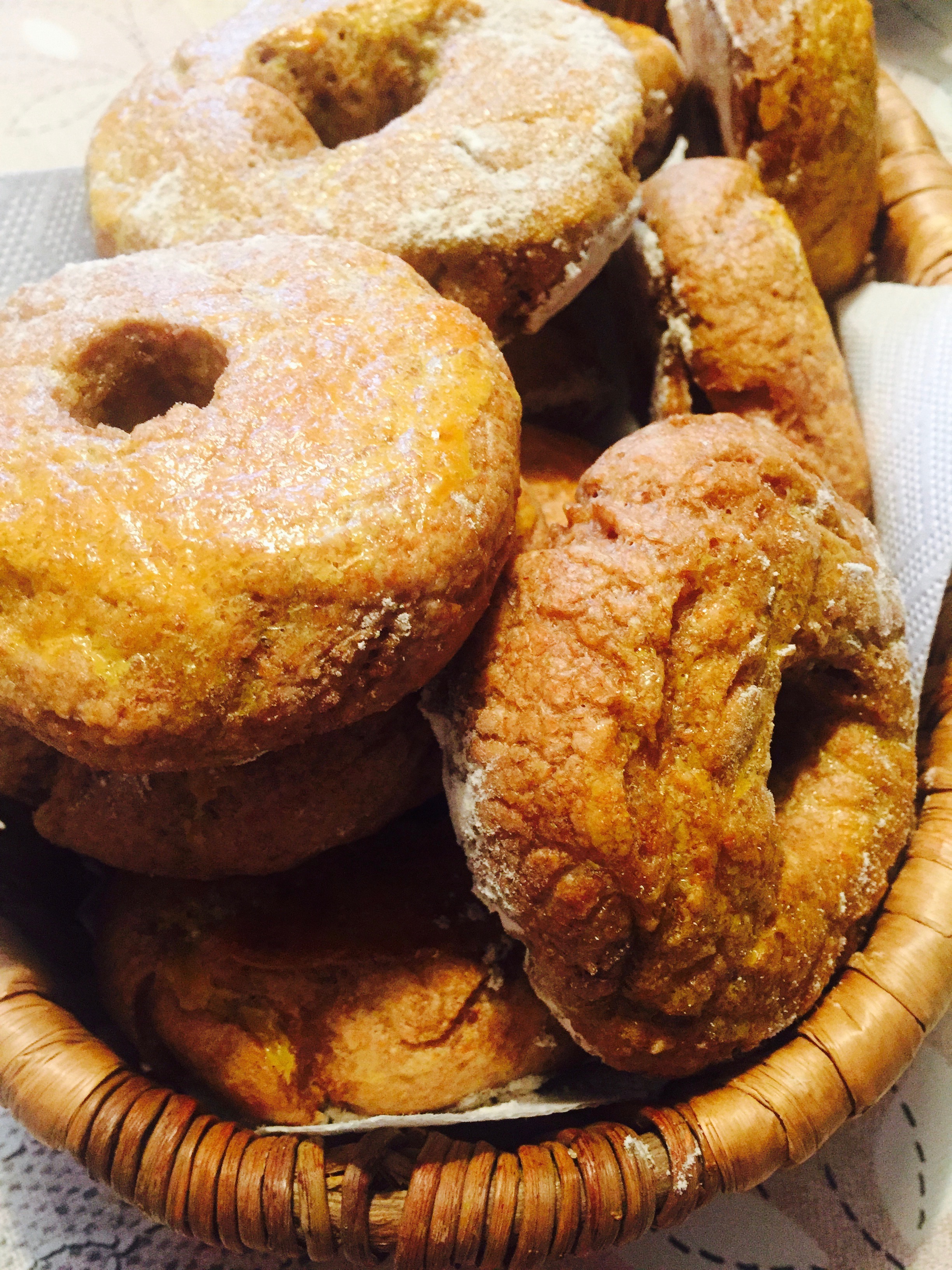
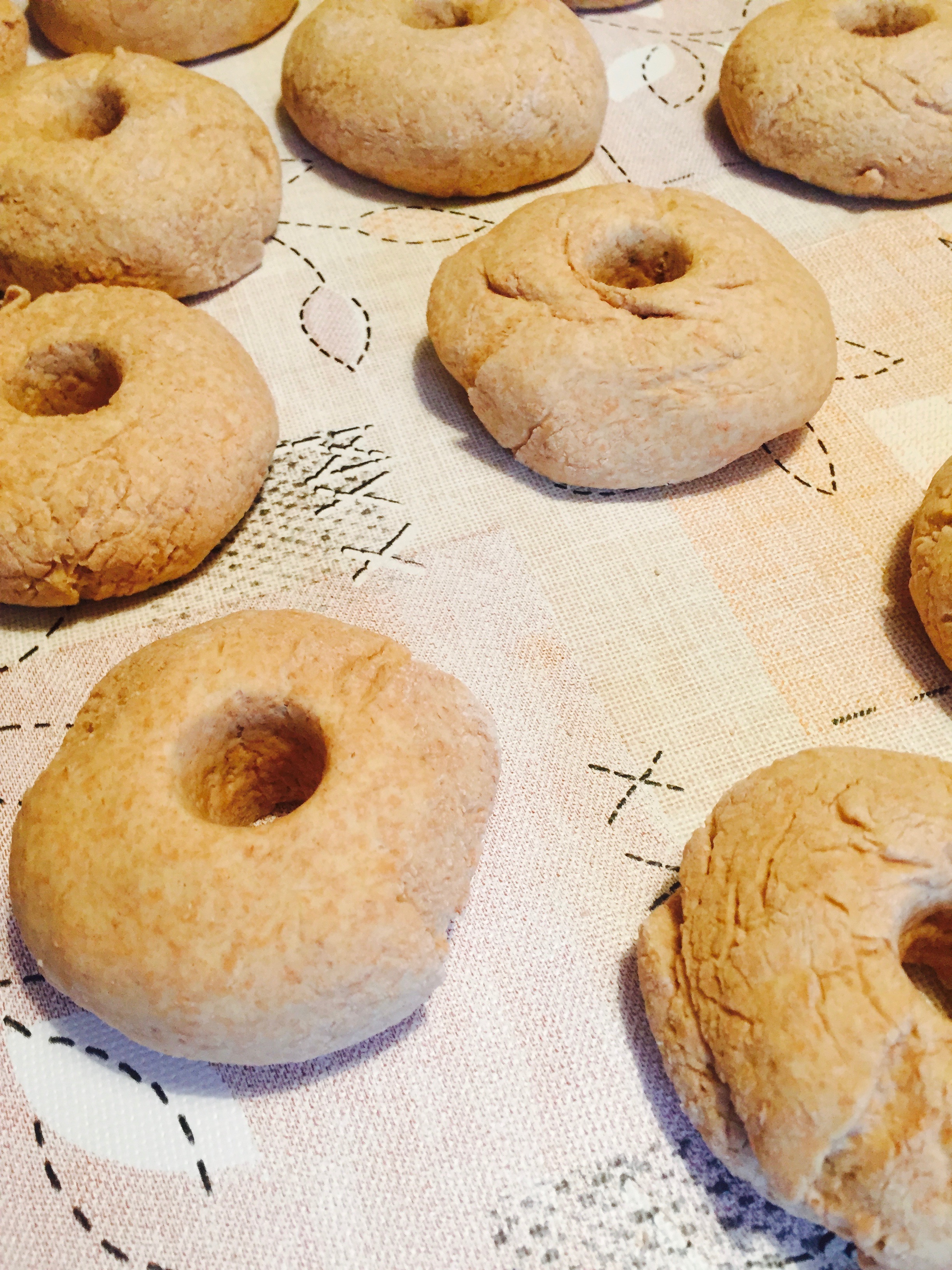
Do you like Bagels? I love them. The best ones I had in New York were hands down at  H&H Midtown Bagels, Tal Bagels and Barney Greengrass!  However, I don’t want to depend on any store to make me ‘bagel-happy’ but instead rather try to make my own. I searched for a good recipe for a long time but  the bagels did not have the right constancy or taste. Then I found this one! My bagels comes very close to my beloved Barney Bargels and they are so easy to make. With this recipe you can make your bagels at home and you know exactly what is in them! Sweet, no? 

A litte bagel 101 from Wikipedia:

“A bagel is a bread product originating in Poland, traditionally shaped by hand into the form of a ring from yeasted wheat dough, roughly hand-sized, which is first boiled for a short time in water and then baked. The result is a dense, chewy, doughy interior with a browned and sometimes crisp exterior. Bagels are often topped with seeds baked on the outer crust, with the traditional ones being poppy, sunflower or sesame seeds. Some also may have salt sprinkled on their surface, and there are also a number of different dough types, such as whole-grain or rye.

Though the origins of bagels are somewhat obscure, it is known that they were widely consumed in East European Jewish communities from the 17th century. The first known mention of the bagel, in 1610, was in Jewish community ordinances in Kraków, Poland. Bagels are now a popular bread product in North America, especially in cities with a large Jewish population, many with different ways of making bagels. Like other bakery products, bagels are available (either fresh or frozen, and often in many flavor varieties) in many major supermarkets in those countries.”

And here is the recipe. Enjoy! 

[mpprecipe-recipe:59]

Do you love Bagels? How do you enjoy eating your bagels? 

Together Always, in Darkness and in Light.

Hello and Happy Tuesday!  I mentioned the podcast Modern Love several times already. It is originally an essay published in the New York Times and now a free podcast on iTunes and simply amazing to listen to or read. I am actually looking forward to…

Fairy Tales.

Hello and Happy Monday. Glad that you are here.  I read to my son every night. We have these little rituals at night and always curl up in bed while he waits for his bedtime story. I love that he is into books for now.…

The Book Review : “Deutschland im Blaulicht” by Tania Kambouri

This article is originally written in German. Please click on the translation-option on my blog. (Danke, Mama! <3)

“Wir Polizisten haben rechtlich keinerlei Handhabe gegen solch ein Verhalten. Und das wissen diese Jungs nur zu gut. Sie wissen ganz genau, wie weit sie gehen können, ohne dafür belangt zu werden. Nicht nur, dass der Staat missachtet wird. Auf Dauer leiden vor allem die Beamten und deren Psyche unter diesen permanenten Erniedrigungen, mögen sie im Einzelfall auch noch so harmlos erscheinen. Man braucht da schon ein dickes Fell. Traue keiner Statistik, die du nicht selbst gefälscht hast.”

Wann ist der Punkt erreicht, an welchem es einfach nicht mehr weiter geht? Wann ist das Mass voll? Tania Kambouri ist eine mutige Frau, sie kennt den Alltag einer Polizistin; aber auch bei ihr war irgendwann der Punkt gekommen, an dem sie so nicht mehr weiter machen wollte. Die 32-jährige Streifenpolizistin hatte mal wieder einen Einsatz, bei dem ihr klar wurde, dass die Werte, die ihr wichtig sind -Achtung, Menschlichkeit, Respekt – keine Bedeutung mehr haben.  Beleidigungen und Beschimpfungen, Spucken und Widerstand sind Alltag und “Mutproben”. 

Mal wieder wurde sie als ‘Bullenschlampe’ bezeichnet-  diesmal von einem türkischstämmigen Mann, der die Polizei um Hilfe gebeten hatte. Empört war er zunächst mal über die Tatsache, dass man eine “Frau” geschickt hatte.  “Richtige ” Polizisten sind männlich. Frau Kambouri ist griechischer Abstammung und als Polizistin oftmals den Angriffen auf der Strasse ausgesetzt. Sie will sich dies nicht länger gefallen lassen und setzt sich zur Wehr. Sie nimmt kein Blatt vor den Mund und sagt auch ihren Vorgesetzten – die durchaus politisch korrekt handeln – was sie fühlt und denkt. Die Autorin, die in Bochum Streife fährt, macht mit ihrem Buch hauptsächlich aufmerksam auf  die Probleme der Polizei mit muslimischen Einwanderern und straffälligen Migranten. 

“Ich will den Finger in die Wunde legen, auch wenn mir bewusst ist, wie explosiv das Thema ist”.

Notruf einer Polizistin? Durchaus! Das Thema Einwanderung, Migranten und Asylanten ist momentan Gesprächsthema Nummer 1. Viele sind sich darüber im klaren, dass sich unsere Gesellschaft dramatisch verändert hat und in nächster Zukunft noch mehr verändern wird. “Verpiss dich, du Schlampe”, sind Beleidigungen, die Tania Kambouri fast täglich erlebt, zumeist in gebrochenem Deutsch. Kambouri macht deutlich, dass es Frauen in Uniform von vornherein schwerer haben als ihre männlichen Kollegen. Sie macht all dies an erschreckenden Beispielen in ihrem Buch deutlich. Frau Kambouri wurde in einem Monat bei Einsätzen gleich zweimal verletzt. Sie und auch ihre Kollegen sind Situationen manchmal hilflos ausgeliefert. In ihrem Buch wird nichts beschönigt und nichts verschleiert, sie erzählt einfach nur das, was sie wirklich erlebt. Und all dies ist erschreckend. Zumal ich selbst vor zwölf Jahren als Streifenpolizistin gearbeitet habe. Ich kann ihre Beschreibung gut nachvollziehen. Die Zeiten und Situationen sind nicht besser geworden- im Gegenteil. In Kambouri’s Buch erfahren Sie, wie der wahre Polizeialltag aussieht. Absolut lesenswert!

“Wir werden so schnell kein Paradies auf Erden schaffen, wahrscheinlich sogar nie. Aber wir sollten es trotzdem versuchen, jeden Tag, auch ween das etwas pathetisch klingt. […] Ein kleiner Schritt reicht vollkommen, ein grösserer schadet aber natürlich auch nicht. Vielleicht ist der erste der schwierigste. […] Ich verlange nicht mehr als Respekt vor meiner Person und die Achtung meiner Würde als Mensch. Denn dies ist tue mich der Boden, auf dem die vielbeschworene Toleranz, das Verständnis füreinander und die gegenseitige Akzeptanz erst wachsen können.” 

Tania Kambouri’s Buch “Deutschland im Blaulicht” bestellen? Klicken Sie hier. Ein interessanter Bericht und Interview mit Frau Kambouri bei Menschen bei Maischberger. 

https://www.youtube.com/watch?v=1ahQtP0tMnE

The Art of Slowing Down in a Museum.

Hello and Happy Saturday! I love to visit museums and while living in Manhattan I saw the most amazing art exhibits at the MET, MOMA (my favorite museum in New York City by far), the New Museum, The Whitney and the Guggenheim to just name a few.…

Five Things.

Hello and Happy Friday! This week was crazy. Running around, doctor appointments and such, schedules and more appointments and now I sit in the kitchen, write and breathe. Everything is okay. I had a great evening so far watching a movie at SEHES Haus (Paulette) which…

Words.

Hello and Happy Thursday!

English is not my first language. I have been living in the United States for so many years already that writing in English is more comfortable for me. I took several Literature classes at College and had to write a plethora of essays, papers, finals and midterms in English and I loved it. Am I good at grammar? Well, I am learning as I go along and write on my blog daily. And of course reading in English helps a lot. Occasionally, I do look up grammar and words in The Elements of Style which I think is amazingly written and easy explained. I would like to share some words that I people still do get wrong all the time. Especially on Facebook. 

1. Your vs. you’re (you are)

This one actually drives me insane and I read it usually in ‘comments’ on blogs. To avoid this error, you simply need to think before you write. The possessive pronoun “your” is used for your house, your car. “You’re” is a contraction for “you are” like you are okay. You are fine. You are welcome. 

2. There vs. Their 

“Their” is a plural possessive pronoun and you use it in “their house” or “their baby”. “There” on the other hand is used usually as a reference to a place (“I want to go there”) or as a pronoun (“there is simply no hope for you”)

3. Further vs. Farther

“Further” refers to a somewhat metaphorical distance while “farther” is used for a physical distance. Say what? Here is an example: I can see further into the future but my parents live farther away from me. 

4. Effect vs. Affect

This one is actually also difficult to me at points and I have to re-read my sentence to get it right. “Effect” is a noun and means the change that came as of a result of something for example “To be polite has a positive effect on people”.  “Affect” on the other hand is a verb for example “It is possible that it could affect their lives”. 

5. Should have (should’ve) vs. Should of

This one makes me almost throw up when people type it wrong. The phrase “should have” indicates simply a missed opportunity or obligation that happened in the past. “Should have” can be used informally as in “should’ve”. For example: You should have (should’ve) called me. NEVER EVER use “should of”. It only exists in sentences like “You should, of course, pay attention to the grammar in your sentences. Otherwise, it simple does not exist and makes you sound like and idiot. 

6. Every day vs. Everyday

“Every day” means all of the days. Every single day. “Everyday” describes something that is normal or ordinary. I wear my yoga pants every day. They are my everyday most comfortable pants. 

7. Lie vs. Lay

“Lie” means to assume a resting position and “Lay” means to put something down. “You are tired. Why don’ you lie down for a while. Why don’t you lay these books on the floor to sort through them?”

8. Except vs. Accept

“Except” simply means to exclude something. “Accept” means the consent to receive something. “Sometimes you have to give her a little time to accept the ideas. You can use all your pencils except the red one.” 

9. It is (It’s) vs. Its

“It’s” is a contraction to replace “it is”. “Its” indicates ownership. “It is raining. The child wants its toys.”

10. “Then” vs. “Than”

“Than” is used for comparison and “Then” conveys time. “We enjoyed the party and then went home. I would rather go to bed than stay up all night.” 

Which of these words drive you insane when used wrongly? Are you a grammar nerd? 

How to: Traditional Kanelbullar (Kanielipulla)

Can you go to Ikea and walk out of the store without buying at least one cinnamon roll? Nope! Exactly! They are so good. The other day I looked through a booklet on cooking courses here in the area and found a Finnish Cooking Class.…