.Book Recommendation: Children’s Books on Grief.

Last year, Joel, my nine-year-old son, asked me, “Where are my great-grandmas and great-grandpas?” Both my grandmas and grandpas passed away within a very short time in the past two years. When Joel asked about my grandparents, my first impulse was to avoid the conversation since death felt like such a complicated, painful topic.

Before my grandparents’ deaths, I’d had a lot of exposure to death due to my work as a police officer but fortunately little exposure to loss within my family. As I grew older, I learned more about grief, which (slowly) has helped me live with my emotions. The process made me understand the importance of talking about grief, as it is an inevitable part of life for us all.

So, I didn’t ignore Joel’s question. I researched how to talk to kids about death and then explained to him that they all had died. Now I regularly talk to him about death and what grief feels like. One way we have continued the conversation is by reading children’s books. Here are my five favorites: 

1. The Dead Bird by Margaret Wise Brown (ages 4-7). “The bird was dead when the children found it,” is the first line of the book. A group of friends decide to say goodbye by burying the bird in the woods, as well as singing “the way grown-up people did when someone died.” This book gently introduces the concept of death and mourning to young kids. I have read this many, many times to Fianna. She usually just listens, but she recently asked “If our dog dies, can we have a celebration for her, too?” 

2. The Rabbit Listened by Cori Doerrfeld (ages 2-6). Taylor builds a tower of blocks but it gets knocked down. Different animals come to offer comfort, like the chicken who tries to get Taylor to talk or the hyena who laughs about it. But the rabbit listens as Taylor works through many emotions. This book illustrates how we can support loved ones by simply being there. Both my girls love this book.

3. Why Do I Feel So Sad? by Tracy Lambert (ages 4-8). Written by a counsellor who specializes in loss, this book shares different reasons why we may feel grief — death, divorce, changing schools, losing friendships — and things kids can do to try to feel better, like moving their bodies, expressing themselves through music and talking to friends. In the end, Lambert also shares advice for parents, including how to talk to children about grief.

4. King and the Dragonflies by Kacen Callender (ages 8-12). In this award-winning chapter book, 12-year-old King loses his older brother, Khalid — and, in his grief, believes Khalid has turned into a dragonfly. The book deals with race, sexuality, friendships and love. I was moved by the bravery the character displayed in learning to love himself, and I can’t wait to read this book to my kids in a few years.

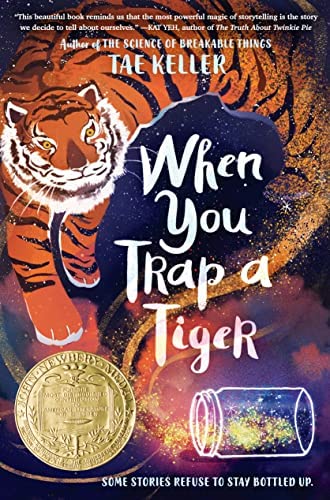
5. When You Trap a Tiger by Tae Keller (ages 9+). When Lily was a child, her halmoni (Korean for grandmother) told her folk stories about tigers. When Halmoni becomes ill, Lily, her mother, and her older sister move in to help care for her. Shortly after their move, a magical tiger from Halmoni’s stories comes to life and Lily is forced to face the tiger while also grappling with the reality of Halmoni’s failing health. When You Trap a Tiger is a beautiful story of illness, family, and learning to find your way.

What are your favorite books about grief? Do you have any grief experiences you hope will be written about?

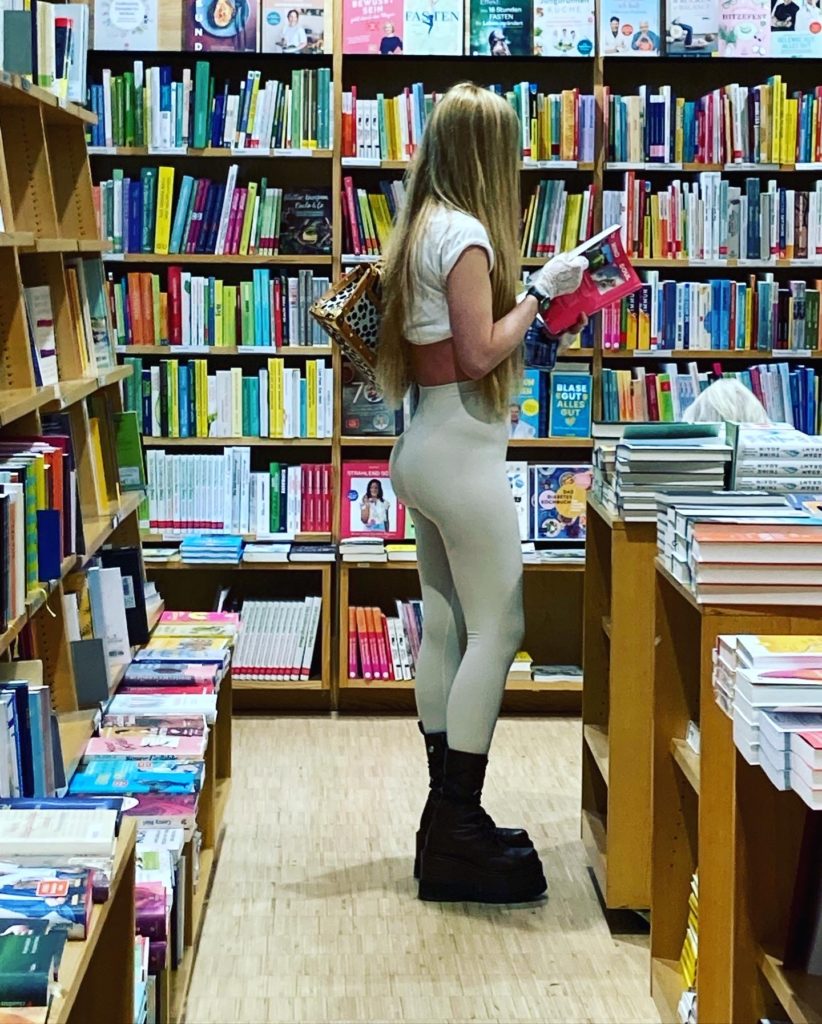
.What I thought when I saw this Person* Reading a Book.

*Honestly, I was not sure and since this is the proper way to address humans now, there you go.

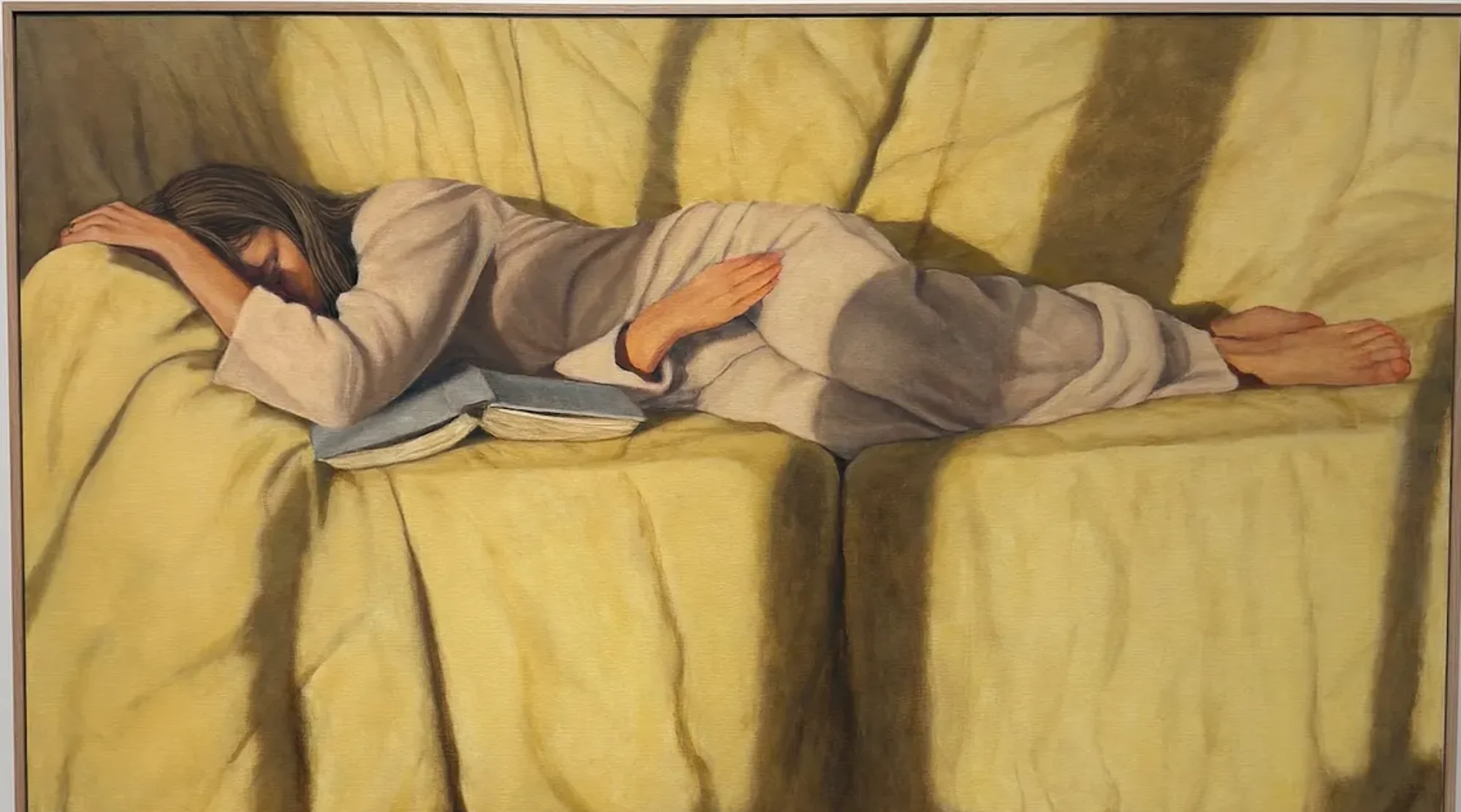
That person is so charming and uncomplicated, standing there quietly reading her book.

This person is definitely a keeper.

This style is very unique. Are these Buffalo plateau shoes back in style?

That person could be on her phone but she chose to read a book instead. I bet she has never watched a full season of “Fleabag” in a single day.

I’m overwhelmed by the simple elegance of that person with this book. I have the urge to tell this person a secret or buy a lavender-scented candle.

That person strikes me as someone who has moderate to advanced knitting skills but isn’t weird about it.

The man next to me was very attracted to that person. In a creepy way. I guess the person is objectively hot.

That person, over there—the one with the book. I’m positive that all of the art in the person’s home is framed.

That person must look very beautiful when she cries.

What’s with the gloves though? #wondering

That person surely woke up at 7 a.m. and baked a strawberry tart “just because.”

Look at how gingerly that person grasps her book. The hands seem soft but not sweaty due to the gloves. I would like to hold one.

That person could plan an outdoor barn wedding that is unique but tasteful.

That person definitely has an artisanal marmalade that she swears by in her fridge.

That person has never betrayed someone. The person has never lied. I would trust this person to hold my diary and never open it.

That person could explain the Electoral College to me in a way that isn’t patronizing at all.

I don’t know why, but seeing that person serenely reading this book just inspired me to finally call my sister.

That person has the kind of calming presence that you would want around when taking a statistic exam or birthing a child.

Seeing that tranquil person reading the book just reminded me that everything is going to be O.K.

That person is definitely reading that book. Definitely! This is not a performance. Although, it is strange that after fifteen minutes he/she is still on the same page.

.My Issues with the “Goodnight Moon” Bedroom.

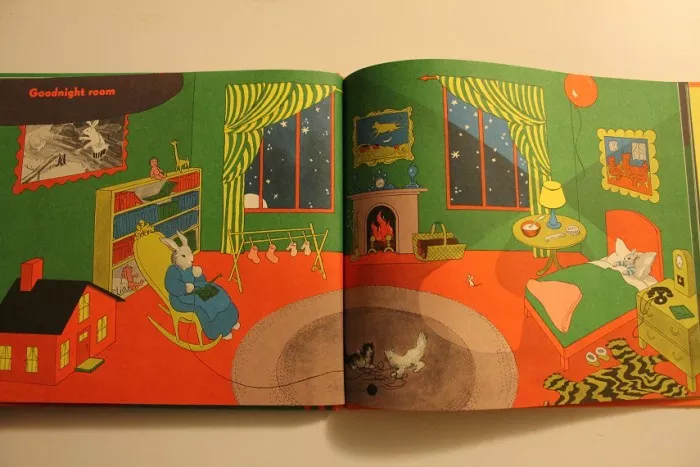
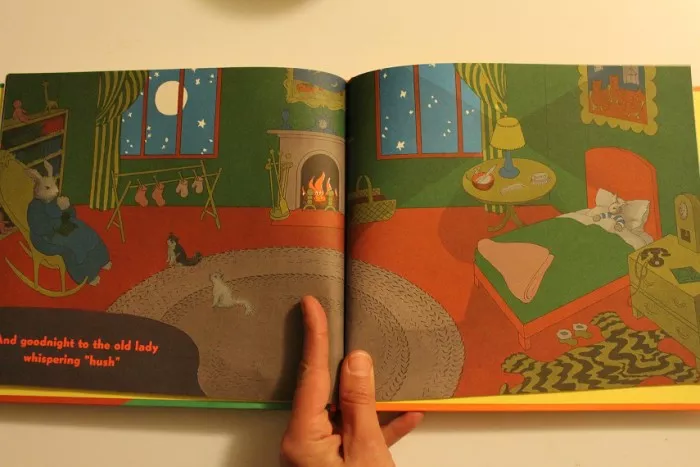
This is kind of a book recommendation but only kind of. I’ve read Goodnight Moon almost every night for two years straight to my son when he was tiny.  It’s a wonderful book which my son enjoyed. But here are some of my issues with the bedroom depicted in it.

1.  The Size of the Bedroom

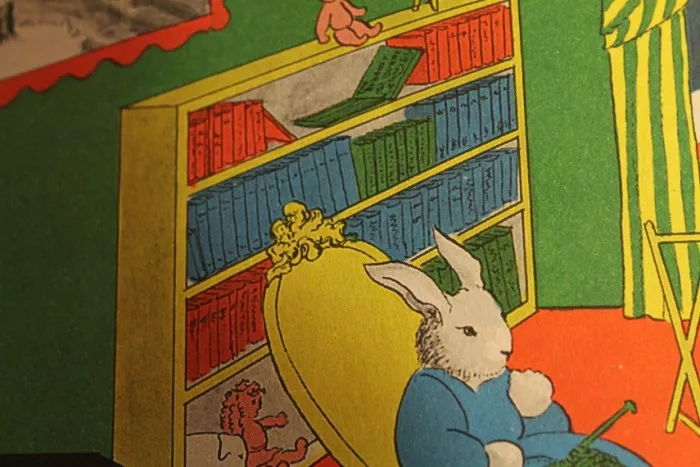
This bedroom is enormous.  There is no one, I think, who has not noticed this.  As someone who has lived in apartments only slightly larger than “a little toy house,” it’s mildly vexing that this bedroom is the size of a banquet hall in Downton Abbey.

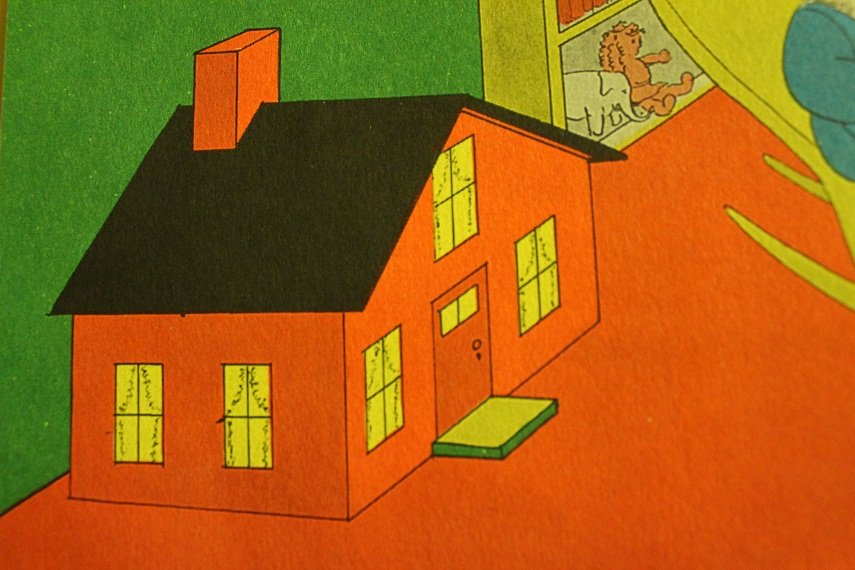
2. The Little Toy house.

This little toy house would rent out for $2500 a month in Manhattan (not including utilities)

This is not that little of a toy house.  Not only could the rabbit easily fit inside the “little toy house”, but the little toy house also has working electricity.  Why are these rabbits so civilized?  Is this some f**ked up Watership Down sequel???

3. This Just-Discovered Transcript of a Conversation had by the Interior Decorators

The colour scheme we are going for is “exploded paint factory.”

“So what colour have we decided on for the upstairs child’s bedroom?”

Which child’s bedroom?”

“The enormous one.  The one with the expansive tomato-coloured floor.”

“I was thinking for that room maybe a dark green?”

“Really?  Dark green?  You don’t think maybe dark green walls with a tomato-coloured floor is a bit much?”

No, it’ll look amazing.  We can break up the monotony of the colour with some dark green and yellow striped curtains.”

“That’s an amazing idea.  On non-matching red and yellow spearhead curtain rods?  Do you think a tiger skin rug would be overkill?”

For a young child’s room?  No.  Not at all.  ”  

4. This Bookshelf

“For tonight would you rather read “Hop on Pop” or the entire Encyclopedia Britannica?”

Why are these books so thick?  This is a child’s bedroom, not a law library.  Unless this rabbit is defending a doctoral thesis, there’s no need for him to own every non-fiction hardcover from Law Publishing.

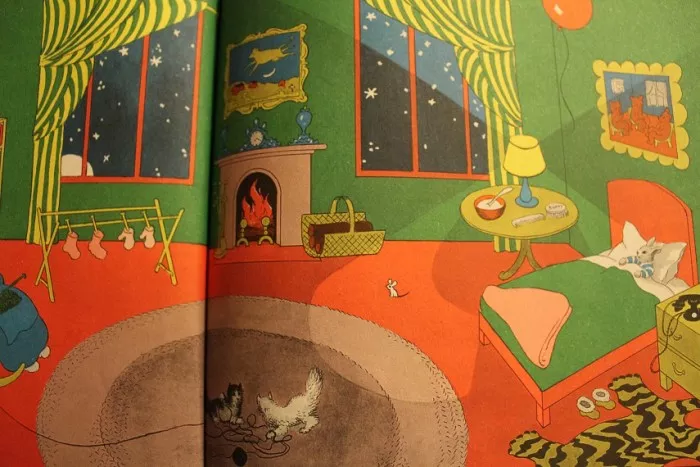
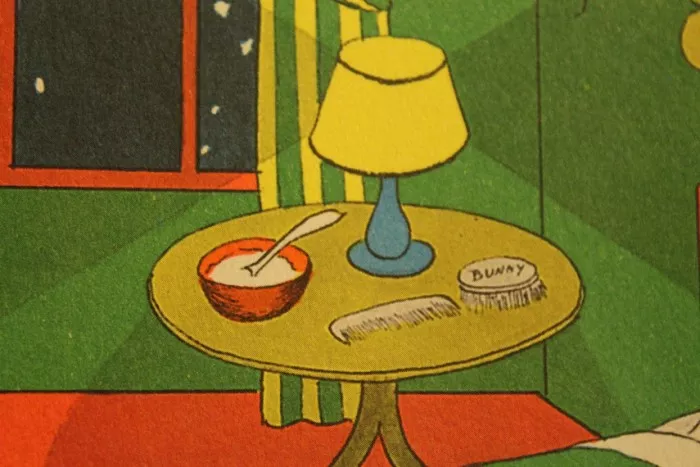
5. The Idea That Anyone Would Keep a Comb and a Brush and a Bowl Full of Oatmeal on the Same Table

Almost as appealing as a nail clipper next to a plate of sunny-side-up eggs.

I’m right now trying to picture a situation in which I would place my unwashed hairbrush next to a bowl of cream of wheat and even the idea of it is turning my stomach.

Oh, you’re eating a bowl of warm cereal?  How do you take it?  With milk, cinnamon and dozens of soggy, long white hairs?

*Vomits onto neatly stacked fireplace logs*

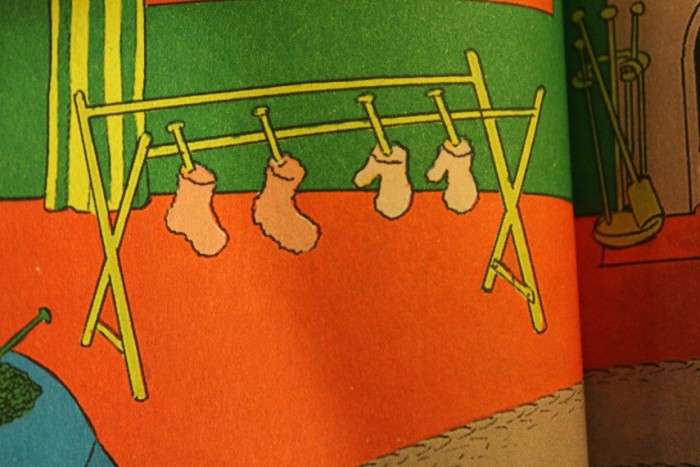
6. The World’s Smallest Most Useless Clothesline

Somewhere a personal organizer is having an aneurysm from this thing.

I lived in New York City for almost a decade and I’m very big into “intelligent use of space,” and the fact that this much floor space is taken up by a free-standing clothesline that’s being used to dry ONE pair of socks and ONE pair of mittens makes me grind my teeth.  Mount it on the wall, idiots!  The people at IKEA would have a seizure if they looked at this room.  Also, isn’t there a laundry room or something?  Just put it in there.

7.   Continued…

Meanwhile, back at the ranch…

“So what colour do you think for the child’s bed?”

I was thinking like a tomato-ish red colour?”

“You remember the floor’s a tomato-ish red colour.”

Yeah.”

“You don’t think that’s a lot of red for a child’s bedroom?  We don’t want it to look like the Amityville Horror kill room or anything.”

You don’t trust me?  I’ve been decorating children’s bedrooms for almost twenty years.”

“No, I trust you, I trust you.  So you want to do all the furniture in red?”

Are you out of your f**king mind?  Of course not.  For the rest of the furniture, I was thinking something sophisticated, like a mustard yellow.”

“For everything??  All the furniture?”

All the furniture.”

“Even the little toy house?”

Are you seriously asking me this?  No. Of course not. The little toy house should be red.”

8. The Dangerously Non-childproofed Fireplace

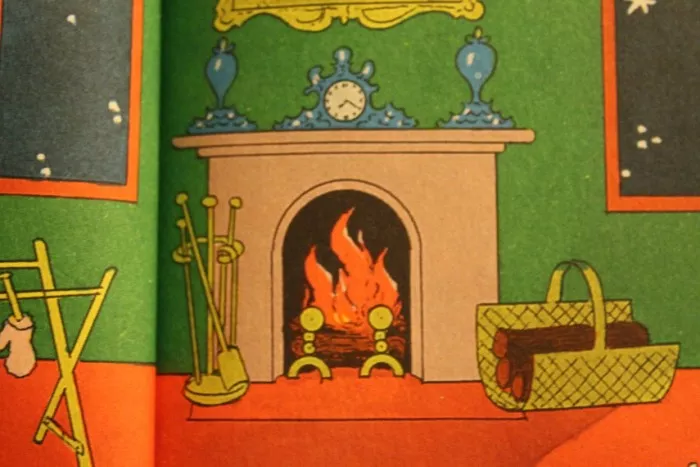
Also, nothing says “child’s bedroom” like an expensive mantelpiece clock bordered by Cookie Monster-blue funeral urns.

Look, I’m not a crazy stickler for safety or anything but shouldn’t there at least be a screen between the roaring open flame and the rest of the nursery?  Also, can we talk about how the heating situation is going to play out?  You’re going to use an old-fashioned fireplace to heat a room the size of an elementary school gymnasium when the room has zero radiators and two enormous single-paned windows?  Have fun!  You’ll be totally fine with that thin green blanket you’ve thrown over the kid’s legs!

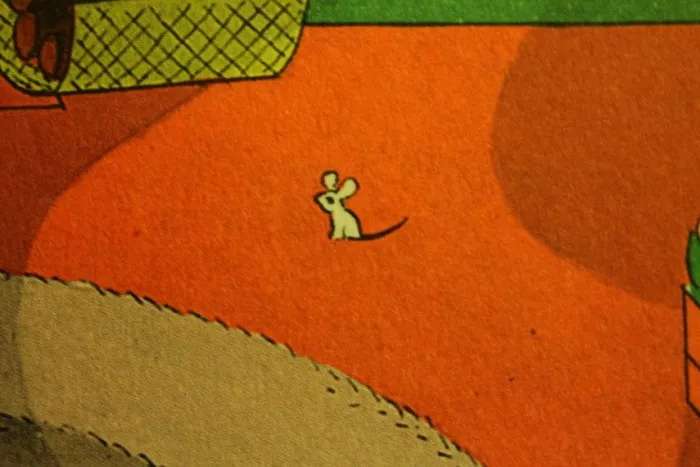
9. The Totally Ignored Existential Mouse

As casual about their infestations as they are exacting about their interior design.

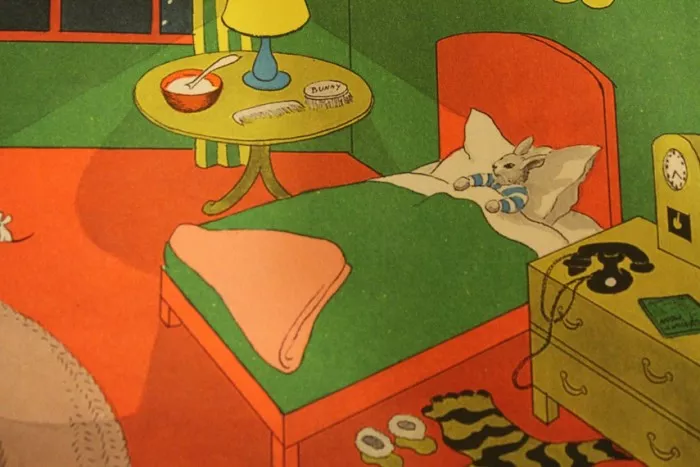
Anyone notice this guy?  What sort of mouse just hangs out in the middle of the carpet in an enormous open room within spitting distance of two cats?  Clearly, this illustrator has never had an apartment with mice because real mice creep along the edges of rooms, usually in the dark, along baseboards and under furniture, occasionally chewing through the walls. Given his devil-may-care attitude, this mouse is obviously lucid in a way we cannot understand.

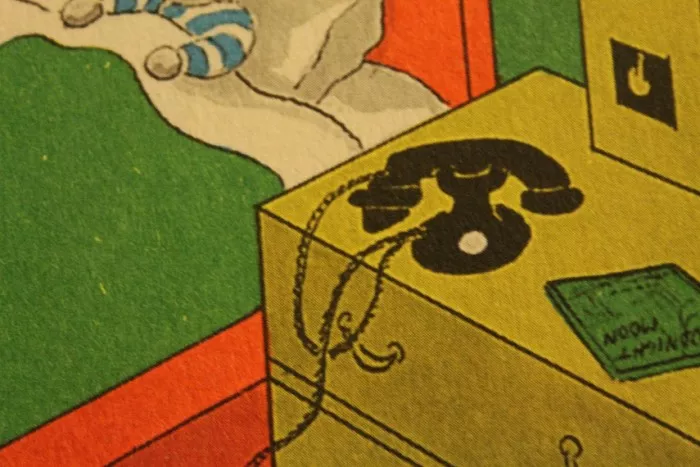
10. The idea that a child this young (rabbit or human) would need a black office telephone by his bedside.

“Goodnight, Technologically-out-of-date-telephone”

Who’s calling, his financial adviser? Why would someone this age need a telephone unless it’s to call the woman across the vast expanse of his bedroom to ask her to stop whispering, “Hush.”

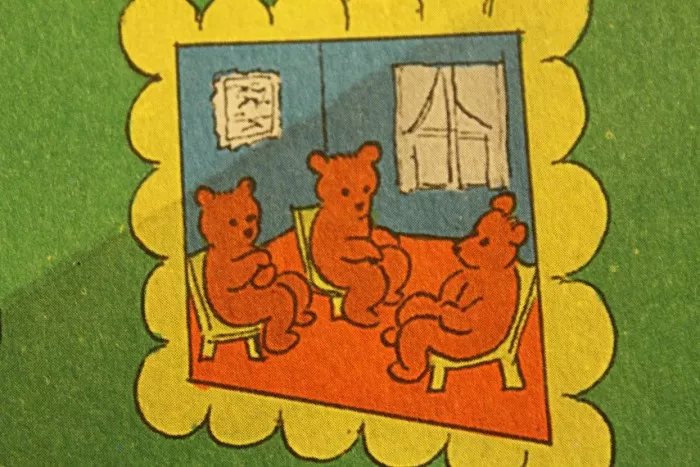
11.  This Picture of Bears in a Couples Therapy Session

“So you say your mother was…. protective?”

Husband Bear:  We’ve started fighting more since our son was born.  I feel like she resents me.  I feel like every little thing turns into an argument.”

Wife Bear:  “How could I not resent you?  We have a newborn and you’re off eating salmon in a PBS documentary while I’m stuck at home 24/7.

Husband Bear: “Don’t start, Janet!  That documentary was a once-in-a-lifetime opportunity!”

Therapist Bear:  You sound angry.

Husband Bear:  Brilliant observation!  It took you eight years of graduate school to figure that out?

Therapist Bear:  Let’s all take a deep breath.  In, two three, out, two three…

(They are all silent for several seconds)

Wife Bear:  Also, a tomato red floor seems like a really bold choice for a psychologist’s office, doesn’t it?

Husband Bear:  God, you are so CRITICAL OF EVERYTHING.

Wife Bear:  Ugh.  My mother told me not to marry a grizzly.

*Husband Storms out.  Wife sobs quietly.  Psychologist quietly questions whether he was wise in going with the blue walls and mustard yellow office furniture.*

 12.  And in closing…

“Are we about done decorating this apocalypse of a bedroom?”

“Ok, so the mustard-coloured bookcase came in. I had them install it in the corner and fill it with large, antique books. ”

Great, so now all we’re waiting on is the round side table, the rocking chair and the freakishly enormous nightstand.”

“So wait, that’s it on the furniture?  It’s a big room, isn’t there going to be a lot of unused space?  Or are we filling that with toys?”

Actually I was thinking for toys let’s keep it minimal.  I’m thinking maybe one elephant, one giraffe and then the uncomfortably pink naked dolls on the bookshelf.

“You don’t think maybe he could use a few more toys?  It’s such a huge room and it feels so empty and formal.  You’re sure his parents are going to be ok with it?”

Will his parents be ok with it?  Did I not graduate at the top of my class with a degree in interior design?

“I know, I just—”

Have I not been designing rooms for the past twenty years?

“No, I know!  I just thought—”

How about when I want your opinion I ask for it.”

“Arrggghhh.  I’m…I’m sorry I spoke up.”  (struggles between wanting to storm out in anger and being grateful for this apprenticeship, which he knows is a big deal.

This book is awesome though. Purchase it. Your child will love it. Recommended age: 1-3 years old.
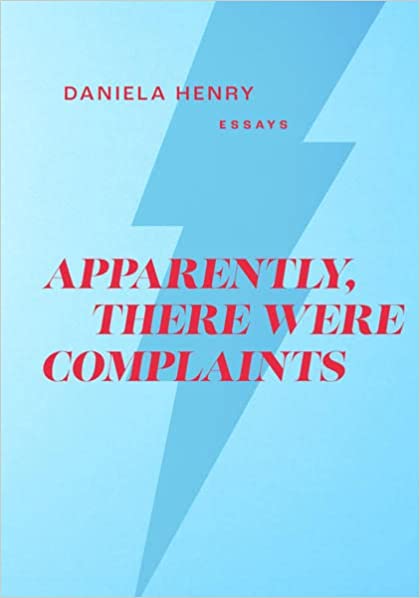
. My New Book “Apparently, there were Complaints” is Out.

Ladies and Gentlemen,

can I please have your attention for this public service announcement: I did it again. My fifth book has been published. 

What the book is about: 

Like my previous books, I have written essays on my life in general, about simplifying, how not to kill your kid(s), and how to create a passionate life for me and the people I love to spend my time with. You will find inspiration, (mental) health tips, and how to be a better version of yourself. This time, more focus is placed on new adventures, buying a house, and ways to enjoy life to the fullest.

What I hope to achieve with my book is that you get comfortable, enjoy a glass of wine, send your kid(s) to bed, and read my book in silence and peace. I hope it will transfer you into a relaxed, thought-provoking, or inspirational mode, make you reflect and most importantly think. Always think outside the box. 

I really want to thank my family, friends, and blog readers, and the support I have gotten to make this happen. I will have book signings coming up in Vienna at independent bookstores. Announcements and dates will be shared on this website. 

To sum this book up according to Morawa Publisher:

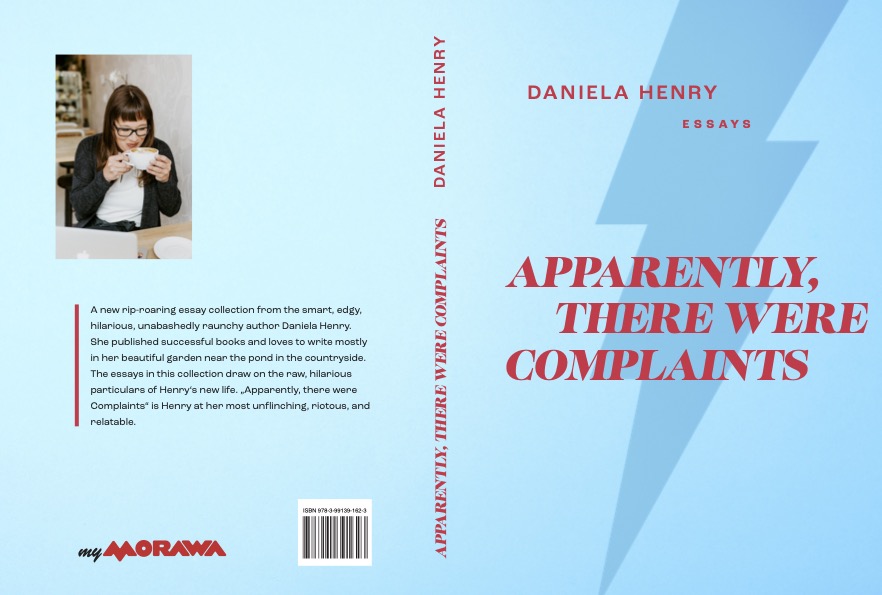
A new rip-roaring essay collection from the smart, edgy, hilarious, unabashedly raunchy author Daniela Henry. She published successful books and loves to write mostly in her beautiful garden near the pond in the countryside. The essays in this collection draw on the raw, hilarious particulars of Henry’s new life. “Apparently, there were Complaints” is Henry at her most unflinching, riotous, and relatable.

Order your copy herehere, or in any bookstore.  

Thank you for reading my stuff. <3

.How I Publish a Book while my Son plays Minecraft.

Soon to be released in bookstores. Stay tuned.

My son (Joel) and I are sitting in the living room. He is playing Minecraft and I am working on getting my 5th book published.

Getting Started

Mom, first, you need to decide between Creative Mode and Survival Mode. In Creative Mode, you are like a god, the lord and master of all you see, with an infinite number of items and resources at your disposal. Creative Mode is only available for writers. Everybody else has to play in Survival Mode. You will also need to choose a difficulty level. Your options are Peaceful, Easy, Normal, Hard, and Writer. Let’s select that last one and see what happens.

Your Character Spawns

Mom, your character could spawn in any biome, but since you selected Writer Mode, there is a 90 percent chance you will appear at a café where you are writing essays. (What is this child of mine talking about?) If you chose to begin with a Bonus Chest, it should be in one of the adjacent bathroom stalls. Look inside to find useful information written on the stall walls that will help you on your quest, including more writing, and then go back to the café for a brownie or a muffin.

Building a Shelter

You can build your shelter out of almost any material, but choose something cozy since you’ll be sharing your shelter/house/office with every other writer playing in your realm. A well-built shelter will keep the elements and most hostile mobs at bay, but letters from publishers who reject your work will always find you. Don’t bother crafting windows for your shelter, since it must be located underground next to a lava pool, a bottomless chasm, and several broken photocopiers.

Searching for Resources

There are tons of resources to write at work! All you need to do is to observe! But, mom, start by gathering valuable natural resources such as wood, cobblestone, and coal, all of which can be bartered with villagers for the mini muffins that will constitute 90 percent of your diet (the other 10 percent comes from the salmon sandwich you found in the caféteria, so eat it sparingly). You should also gather sticks and wool to craft the futon that will be your bed, office, and occasional sexual partner. If you encounter gold, diamonds, or anything else even remotely valuable, immediately select SAVE AND QUIT and invest in your negative Rate this Writer evaluations, I guess.

Crafting Supplies

Mom, I think, you should just combine four wooden planks to create a crafting table. You can use this helpful item to craft pretty much anything, including powerful weapons, armor, and tools. Unfortunately, I will just use it as a desk to write on and edit the two hundred essays on gender identity in Jane Eyre. You are actually the Link character in Minecraft because I guess “you know gender“. The good news is that you don’t need to sleep in Minecraft, so this can be just like one of your real-life workdays. Only stop if a zombie starts trying to eat you, or—worst of all—if a zombie tries to kill you before you can save your writings.

Encountering Hostile Mobs

Zombies, spiders, and creepers will all try to kill you, but the most dangerous hostile mob you will encounter is the dreaded “publishing committee,” who will not only kill you but also demand that you give them a CV, a cover letter, academic transcripts from undergrad, grad school, and kindergarten, seven letters of reference, a twelve-year research plan, and three thousand euros to pay your own way to have your book published.

Fighting the Ender Dragon

Mom, to reach the end of the game, you will need to fight the most terrifying, powerful, and remorseless enemy you can imagine. His name is Jason Eaterson Gandalf, and he was granted tenure in 1978 with one conference paper and zero publications on his CV. Despite getting his first tenure-track job because his supervisor was a drinking buddy of the department, he now expects everyone to do an excellent job on a daily basis. He hasn’t published anything yet, though. Conventional weapons (conversations or spells) cannot harm him, so your only hope is to say good things about him, wear that baseball hat, and pray that he gets offered a job somewhere else.

Starting Over

Playing Minecraft on Writer Mode means you will need to start a new game from scratch every eight to twelve weeks. Just because. No explanation needed. You are a writer and will come up with something else interesting. If you don’t backup your work, it does not exist. You may want to consider playing a game that simulates a safer and more stable career, such as auto thief, soldier of fortune, or assassin. However, given the large number of new writers out there who are joining the game each year, the smartest move might be selling your gaming system and funneling the profits into a yogurt stock.

Now, win the final battle, mom.

.Body Language 101.

The other day at the supermarket register line I encountered some existential quandaries and saw a German magazine analyzing Meghan Markle and Prince Harry’s body language. An “expert” claimed does she know that Meghan’s hand placed on Harry’s arm means she is enjoying the moment. Or that the position of Harry’s fingers indicates that he is a relaxed parent. When it comes to body language, I can recommend the book by Allen and Barbara Pease, “The Definitive Book of Body Language” that I enjoyed quite a lot. They train lawyers, journalists, salespeople, and other professionals in the art and science of body language. I would like to share some insights of the book that are helpful on a daily basis because reading body language is a superpower.

Sometimes I can see the subtle, nuanced element of human communication so I guess I studied linguistics for something. When talking to each other, people are mostly focused on the words the other person is saying. In the book, it says that our bodies reveal how we feel in ways we may not even realize. If you’re nervous, you might rock slightly, rub your lips with your finger, or play with your hair. I was surprised how many industries use the services of body language experts to read people better and recognize, for example, a customer’s reservations about making a big purchase. I love to learn more about body language because my goal is to understand people better.

What I learned while/after reading the book

The book highlights that there are a lot of factors to take into consideration when reading body language. Culture and context are really important, as are “clusters”. In body language, a cluster is two or more types of gestures a person makes at around the same time. For example, say a person is talking to someone and they crinkle their nose. Crinkling the nose is a micro-expression of disgust. That is a clue on its own, but when paired with other gestures we can extract more information about what a person is really thinking. Crinkling the nose and leaning away from someone would indicate the subject’s dislike of the person they are talking to, or of the topic. If they crinkle their nose while nodding their head, they may be trying to give the impression that they agree when really they do not.

I am not a mind reader. I think, however, that body language is a combination of art and science. To “read someone” is by no means a 100 percent certainty. But think of it this way: not all doctors are going to solve the same medical condition the same way, right? They might try different medications or procedures based on their expertise and experience. It’s important to remember that body language analysis is just my/your interpretation of the situation. Obviously, it is almost impossible to interpret someone’s body language based on a TV appearance or a photo. There is only so much information you can get from a photo or video. No clue what happened before the picture was taken, there is no context at all, but newspapers and crappy magazines do not care. To interpret someone’s body language, I need a lot more context. If it were that easy to tell if someone is lying, we would not have the Innocence Project, we would not have this high false confession rate. You could also spot someone cheating on you a lot earlier because you would have been able to see right through the deception. It is not that easy. I wish it was! It becomes more challenging if the other person sends you mixed messages and signals such as he/she doesn’t look in your eyes much and often looks over your head. But at the same time, touches your arm occasionally when you say something funny. The authors suggest to closely watch the person when they are talking. He/she might feel uncomfortable, lying or hiding something if they look everywhere but in your eyes.

I believe moving through the world is easier when I am more mindful of the body language signals I am giving off and receiving. It is helpful to be in the right mindset when talking to someone because your non-verbal cues will reflect that. The final test: Person A (whom you really like and kinda hung out with for a couple of weeks) takes you to a party. As soon as you arrive, he takes off and completely ignores you the entire evening. He does not talk to you, does not sit next to you and hangs out with his friends only. What does this tell you? (A): He really likes you and loves spending time with you or (B) His focus is clearly not you, he does not care about you.

.What if This is Enough? My New Book is Out.

Cover painting by Judith Lockett

Ladies and Gentlemen,

can I please have your attention for this public service announcement: MY SECOND BOOK HAS BEEN PUBLISHED. The title: What if This is Enough? Essays. I love the title and the cover because it just works really well together.

What my second book is about: 

Like my first book, I have written essays on my life in general, about simplifying, about being a mother, about creating that like I am passionate about, inspirations, (mental) health and being a better version of myself. More focus is placed on my life before, during and after divorce. With this book I wanted to cover many aspects of (my) life but also share personal tips how to stay sane through a divorce.

What I hope to achieve with my book is that you get comfortable, enjoy a glass of wine, send your kids out with your partners and read my book in silence and peace. I hope my book will transfer you into a relaxed, though-provoking or inspirational mode and make you reflect and most importantly think. Publishing a book for a writer is a dream come true. Being an avid reader, publishing books was on my bucket list for a long time. It is a great feeling to stroll through bookstores and show my son the books I have written on the shelf. #shelfie

I really want to thank my family, friends, blog readers and the support I have gotten to make this happen. I will have a book signing coming up in Germany and Vienna at independent bookstores. Announcements and dates will be shared on this website. Honestly, I am still totally overwhelmed in the best way possible right now. Today,  I just spent the day with my family and friends celebrating in style.

.As a Writer.

As a writer, it is normal to be drawn to the written word, to daydream and to write down sentences that begin with the phrase: “as a writer”. These days, my fantasies center around the publication of my second book and what book cover to use. Of course, as a writer, one of my favorite authors is Patti Smith.

Patti’s book Just Kids has become a staple in every hipster-aesthete’s literary arsenal just because the cover is so goddamn awesome. As a writer, I have often pondered what makes a successful book cover these days, especially in the age of e-books and Audible. Would Daniela Henry’s book Sometimes Raw been such a hit without this cover?

This image has an empty alt attribute; its file name is 71AAfBgAYL.jpg

“The real marrow of what makes a great cover is looking at an image and it being able to project out the abstract but important ideas or story that book is trying to convey, “explained Abigail Bergstrom, Head of Publishing Gleam Futures. “A lot of my authors have existing communities, so they have a real instinct and intuition on who’s going to buy the book,” she continued. This increase in agency among authors is reflected in their covers. “I think in the non-fiction space it’s very type-led, especially on issues of gender and women’s voices. They’re being taken seriously in the way that they should be and maybe haven’t in the past. Their covers are looking more authoritative — that’s a word I hear a lot of my authors say — they want to look authoritative. Less millennial pink, more authority.”

Bergstrom says that e-book sales have now plateaued, hinting that people still desire the physical object over its digital counterpart. I totally agree with this. People rarely post pictures of their Kindle book and a cup of coffee on Instagram for example. A book is a symbolic object which makes the picture so much more significant. Holding it, smelling it…. You get my point.

So, what draws you to a book? The cover for one because it speaks volumes about not only the content but how we choose to represent ourselves. How do I choose a design? “Really, it’s not about designing a cover that works for Instagram, it’s about designing a cover that’s going to be saleable through the internet,” explains Bergstrom. “Things like thumbnails on Audible — if you’ve got a cover that has really intricate tiny drawings, that’s not going to speak to the reader.” I heard stories from my writer-colleagues who had fights with their publishers over their cover design. How come? “The tug and war of the creative process is helpful,” says Bergstrom. “It really brings to light the positioning of the book and who it’s for…it’s good to have that ironed out and focused so that everybody’s on the same page before we enter the stage of comms and marketing the book.” For me, it is hard to find a suitable cover. Why? Because there is no specific formula for guaranteeing a cover’s success. “A successful book cover properly captures the tone of the book,” says Joan Wong, book designer. “To me, it’s not so much about making sure the book sells as much as it is about doing right by the writing.”

As a writer, I have to tell you that writing a book is not easy. It is hard work but I love it. I also have to tell you that I am in the final stages and just sent my second manuscript to a publisher. I love it at the moment and then I hate it in others and finally, I get used to it. After finishing a book, often an emptiness results and I write nothing. But I have found it is important to just be patient and go about my business and unexpectedly it will happen again. I know it always does. I will sit down again and begin the next book. This way I am never discouraged.

It does not matter if your dreams come true and you do get published, if agents swoon and audiences cheer. Trust me on this: It truly does not matter! What matters is the feeling that you are writing, every day. What matters is the work, diving in, feeling your way in the dark, finding the words, trusting yourself, embracing your weird (german) voice, celebrating your quirks on the page and believing in all of it. What matters is you, all alone on your desk, your favorite place to write, a place where you know who you are and what you are meant to accomplish in this life. Realize that it all depends on you. If you don’t want it, then to hell with it. Reach for what you love with abandon, with hope in your heart, with fragility, without knowing exactly what comes next. Reach and never stop reaching.

One last piece of advice. Whenever you feed your soul and truly savor what you do with your time, it makes it much more likely that your big dreams will come true. Now write and don’t judge the book by its cover.

.Disaster Preparedness: Bring a Book.

“I always read a lot. I read the same amount, no matter what season it is. I read every night. When I’m on book tour, I’m on airplanes all the time, so I’m always reading. People say, ‘How do you have time to read?’ Oh, come on, it’s simple! You’re single and you don’t watch television.”— John Waters

I love to read because it makes me happy. Whenever someone asks me how I can find time to read I most likely always answer, “Because I make time for it.” I wrote about how to read more here already but I have some more stuff to add. For example:

Carry a book with you at all times.

“Because I was carrying the book around all the time, I pulled it out all the time: On the subway, walking down the block to get groceries…” – Clive Thompson https://br5.bookriot.com/quarterly/bkr07/amp/

I carry a book with me wherever I go. Pick up at my son’s school? Book is in my purse. I call it my emergency book. You never know where you end up, what will happen or if you do not want to talk to people. Grocery store lines, waiting in offices, at traffic lights, killing some time, lunch breaks; to carry a book with me is my version of disaster preparedness. Like doomsday preppers. I know someone who watches it with a passion.

Read and date several books at the same time. Then decide which one you want to go with. Have a book next to your bed. Go to bed early and read in bed. Wake up early and read two pages before you get out of bed.

Stop reading books you do not like.

“There is only one way to read, which is to browse in libraries and bookshops, picking up books that attract you, reading only those, dropping them when they bore you, skipping the parts that drag – and never, never reading anything because you feel you ought, or because it is part of a trend or a movement. Remember that the book which bores you when you are twenty or thirty will open doors for you when you are forty or fifty – and vice-versa. Don’t read a book out of its right time for you.” – Doris Lessing

If you don’t “feel” a book and get nothing out of it, just put it down and pick up another one. (For me: Infinite Jest!) There are so many great books out there. Find the ones that make you happy. I give a book usually fifty pages to catch my interest. Stop reading what society decides you should have read by now. Like 100 books you should have read by now. Do not take Tolstoy’s Anna Karenina in your beach bag to Cancun. You are not going to read it. Sometimes a book is just not for you. Don’t read a book to just impress others. “Look at me, I am reading Kierkegaard on the bus. I am very smart.” Read what you love. I know you will love this one.

Visit your local independent bookstores and libraries.

“You must go to the library and fall in love.” – Ray Bradbury

My son and I love to go to the local library. Or to Ottawa’s best and most well-curated selection or used books and independent bookstore, The Black Squirrel. It is glorious to spend time browsing and shopping at this place. My son cannot read yet but he loves to explore and discover. These days he is into Star Wars. However, he is afraid of The Hobbit because of Gollum and National Geographic books in French are used to cut out animal pictures for art projects. I know the most amazing librarian who knows exactly what 5-year-old boys love to “read” because she shows interest and asks my son what he is into these days. Browsing through indie bookstores is an adventure because it is the serendipity of the stacks combined with the magical discoveries of book-treasures that often happens when I least expect it.

Talk about books.

“Read the books you love, tell people about authors you like, and don’t worry about it.” – Neil Gaiman

Talking about books will give you more ideas about new books to read and interesting conversations. Just ask what others are reading. Maybe keep track of what you are reading. For example, I signed up at the website Goodreads. When a book really inspired me, I wrote about it on my blog. Share the books you love in whatever way you can.

.The Book Review: Sarah Pinborough “The Language of Dying”.

“People talk a lot when someone is dying.  They talk as if the person is already dead.  Maybe it’s the first step of the healing process for those inevitably left behind.  And maybe you have already started the process by pulling a few steps away from us.  The frail used-to-be man in the bed upstairs is not our father.  You were so much more than that.” (8)

Sarah Pinborough’s The Language of Dying(Quercus, 2016) is a novella about five adults who gather at their childhood home as their father reaches the final stages of a cancer that will kill him.  Pinborough’s narrator uses plain language, and that language is the highlight of the book. At 130 pages, the book is sparse but packed with meaning and gives a glimpse of characters like an impressionist painting.  It is not a detailed portrayal of the characters but an impression of them as people, filtered through the narrator. 

The story is told from the perspective of the family’s middle child, who has returned home first to recover from an abusive relationship, then to care for her dying father.  Her siblings join her as their father’s life will soon end.  The family now consists of the dying father and his five children: Paul, Penny, the narrator, Davey, and Simon.  It’s a family of damaged people who cope in different ways.  We read the narrator’s thoughts and she speaks in her mind as though she is speaking to her father.  It’s a personal and conversational style that gives us her perspective without contrivances.  Her reliability as the person closest to the situation (apart from the father) also makes her a trustworthy perspective at the beginning of the story: “I take a deep breath of the air that has been just mine and yours for months.  It’s been two days since you last smoked a cigarette, but I imagine the lingering tobacco scent filling me up and it gives me the confidence to face the outside.  How Penny came to be part of the outside, I’m not quite sure” (5-6).  This reliability becomes strained as the story progresses and the stress of caring for her father while dealing with her siblings becomes more difficult for her to handle: “I’m crying as I change the stained sheets and I don’t know who for.  Maybe for all of us.  Maybe just for me.  There is a worm in my head that whispers that it isn’t only Paul who doesn’t think other people feel and think and care.  And maybe the worm is right” (113).  

The narrator is aware that her father’s death will change the family, and one of the key elements of the story is her balance between the intensity of the moments (good and bad) and knowing that the moments will end.  Being so focused on time, death, and change, she also compares how those relationships used to be and how they have changed or will change irrevocably.  

As impressionistic as the book is, we’re constrained by the narrator’s anxieties and memories, her love, envy, sorrow, sadness, and happiness.  There’s enough there to suggest deeper lives than we see.  So much so that the unicorn might be the least interesting part of the story.  

The one part of the book that I found disappointing is the ending.  I won’t say what it is, but after the first 120 pages, I expected a more impactful end.  It’s a bit clichéd and a let down, but I’d say that the 120 pages outweigh the 10 in that proportion.

——————————–

This book review was written by Dat Tran (guest blogger). He grew up in Nepean, Ontario. In grade 10, he wrote a book report on the fate of the royal family of Troy, and Greek tragedy and mythology became his gateway into literature, philosophy, and history.  He is not good at math.