Recent Posts

.Boat & Sharks.

Hi, it’s me, the mom of an eight-year-old child who is currently picking off small pieces of coloured tape I put on the floor because some Montessori Mom’s Instagram account said this would distract him long enough for me to take a break and read.…
.The Importance of Gut Health.

I’m passionate about gut health. From a personal perspective, I’ve experienced first-hand the debilitating symptoms associated with a severe case of gastroenteritis and gallstones. And as a result, you bet I’ve done a whole lot of work on healing my gut because this was no…

.New Updated School Covid Policies.

Dear Parents,

there are some great news about a new testing system called “Flow Flex Test” (this is actually a new thing at schools to test kids!) at schools and we hope you had a wonderful evening and are delighted to welcome you back to school as we celebrate a return to normalcy. We want to assure you that schools are open, safe, and operating completely as usual. However, we did want to make you aware of some policy changes to ensure a great learning environment for all!

Your child’s classroom will have no teacher. Understandably, many of our educators have been reluctant to return to school, with COVID cases and hospitalizations reaching an all-time high according to the experts and emergency rooms are on the brink of collapse. We want to reassure you that our approach is pedagogically sound and has been studied in-depth by our wonderful Department of Education over the past few weeks. We are eager to offer your child a timely learning opportunity. We promise.

Depending on the age and local funding, your child’s classroom will be staffed by:

  • A small robot with lifelike emotions on loan from NASA
  • YouTube and TikTok (please refer to our “Healthy Social Media Policy” on page 391 of the school handbook for an FAQ)
  • Reruns of Teletubbies for 1st graders and Frozen 1+2 all day
  • A local middle-school student who needs a job

This strategy will allow us to keep schools operational and enriching. Feel free to contact us with any specific questions.

Your child should report to school no matter what. Remember that kids really should be in school because, at this point, everyone will get COVID anyway. Moreover, due to the unavailability of test results on time and the fact that the nearest official PRC “free-yourself-from-quarantine” drive-thru is in Korneuburg (email us for more info), this is the most expedient route. Please follow these easy steps every morning:

1. Fill out a daily health questionnaire by 5 a.m. We understand that you will lie.

2. Please screen your child for COVID using an antigen test by 7 a.m. We recognize that at-home tests no longer exist except at pharmacies that are closed at this time. With this in mind, our school nurse has approved the use of a cotton swab or Q-tip with six droplets of vodka splashed onto an egg carton instead. 

3. Once at school, regardless of testing status, if your child must cough, they are no longer allowed to do so into their elbow. Instead, they must just kind of swallow it into their throat until it goes away.

Be flexible. We recognize the burden that COVID has placed on our families. We wanted to take a moment to outline in detail our school cancellation policies clearly.

Your child will be sent home only if:

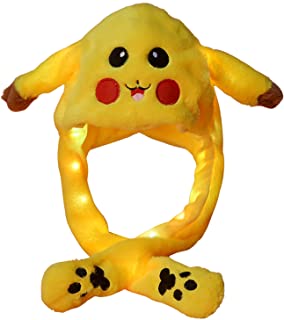
1. They have tested positive for COVID in the past thirty days, but only on a PCR test, which is impossible to find or afford, so please don’t worry about this possibility. You have enough on your mind as it is. If they wear this Pokemon hat below. It is the law, you have to understand.


2. Their class has more than one but fewer than four positive cases, in which case they can return the day after tomorrow, after 1 p.m., but only with proof of two antigen tests or one PCR test, as well as a fever of under 38 degrees Celcius, proof of which you can submit via App to an unknown Dropbox link that we will have up and running as soon as our assistant IT manager returns from the Intensive Care Unit.

3. There are no robots available to teach your child.

And remember: Per the Department of Education, you can send your child back to school even with symptoms and without the presence of a negative test, provided they spent three days playing Minecraft in isolation. Nintendo Switch is also an option.

Wear a mask! If you cannot locate a mask, please note that we will also accept knitted face coverings. (Check out upcoming virtual Community Education class “How to Design Your Own FFP2 Mask” for more on this technique, taught by a local retired art teacher.)

A few other odds and ends: Children will no longer eat lunch at school. Please feed them a hearty breakfast. We plan to conduct all classes outdoors unless temperatures drop below minus 20 degrees. Our staff psychologist has skimmed early studies concluding that frigid temperatures stimulate the firing of neurons and have been shown to accelerate brain growth in children. Please contact us to learn more about his new innovation, which we hope to continue even after the pandemic ends. Which will never happen anyway.

We do recognize that the pavement is cold, so please send your child with their own heated quilt, available only on Amazon for Euro 150.00. Mr B., the founder and owner of Amazon is a partner of the Department of Education and Health and he wants us to mention that his net income is approximately 200 Billion US Dollars but hey, who is counting. I am proud to say that our schools have partnered up with Mr B. who offers these quilts with our school logo. He will donate some of the money toward at-home antigen tests in April 2024 because currently, these are not valid.

Thank you for your understanding and patience during these reassuring times since everything has returned back not normal. We are happy to see your child(ren) in class soon!

Sincerely,

Your School District

.How to: Healthy Food Relationship 101.

Have you struggled with fears, obsessions, or feelings of guilt or shame around your food choices? Or perhaps you’ve found yourself stuck in a cycle of “starting fresh tomorrow”, or restricting foods in your diet. If you can relate, today’s post is for you. Today…

. The Ultimate Hangover Cure.

Hangover? Do you want to play a little game? Riddle Number 1 There is a room with five chairs in it. Eight people are standing in the room. Some of them are Vampires. Some of them are Normals. Vampires always lie. Normals always tell the…

.Girls Gone Mild.

THAT IS IRRATIONAL! THAT IS STUPID! THEY ARE MAKING THINGS DIFFICULT FOR THE SAKE OF IT!

When I encounter emotions and behaviours that do not make sense to me, it is often because I do not have all the information. And in the absence of information, I tend to assume the worst. Have you heard about “emotional generosity”? This is the ability to see past behaviour that one does not understand and proactively look for compassionate ways to explain them. It is easy to do this for young children. If they start crying or throwing a tantrum, we wonder whether they are hungry, tired, or hurt. Sadly, it is harder to do this for adults. Well, not for me.

Here are some useful patterns that help me nurture more generous interpretations – and get to the root of the issue faster. Damn you, Coronavirus, I am throwing a tandrum at least twice on a daily basis. Below, I present a list of things that I discovered over many years:

  1. Overreaction is often driven by something else entirely. They shout and cry…. over an innocent mistake. Over something someone said. Something benign. Has this person lost it? Overreaction is often a sign that something else might be going on that I am not aware of. Perhaps I didn’t get enough sleep or recently had a fight with someone. Maybe something about the situation is triggering an unresolved trauma from childhood. When I notice someone overreacting, I broaden my focus and get curious about what else might be going on.
  2. Blame is Often Driven by Anger. They point the finger at their colleagues… but it’s their own targets they missed. Is this person blind to their own role in the situation? Blame is a way of venting anger. The brain has a knack for redirecting negative emotions outwards, often to the unfortunate people who happen to be closest. It’s a psychological trap that can prevent us from taking responsibility and holding others accountable. When you notice someone blaming others for their problems, help that person to label their underlying emotions. Some studies have shown that it takes about 90 seconds for negative emotions to dissipate — and often when the anger subsides, the arguments change too.
  3. Anxiety is Often Driven by A Lack of Visibility. They worry so much… that it makes everyone else worry too. Don’t they have faith in their team? Anxiety is a feeling of unease or nervousness, usually about a particular event or situation with an unknown outcome — and it can be contagious. My favourite quote about anxiety comes from tidying-up expert Marie Condo: Anxiety comes from not seeing the whole picture. This doesn’t just apply to messy wardrobes, it applies to the mind too. Thoughts can be hard to organise when they’re bouncing around your head, so many psychologists recommend writing your thoughts down. This makes them more tangible and easier to inspect and organise.
  4. Avoidance is Often Driven by Insecurity. They put it off or make light of it… but they know how important it is. Don’t they even care? I think, avoidance and anxiety are both ways of expressing insecurity. They’re so interconnected that one person’s avoidance can trigger another person’s anxiety — and vice versa. Avoidance is often a defence mechanism against painful feelings, such as the fear of failure or rejection.
  5. Criticism is Oftern Driven by Shame. They criticise other people’s work… even when it’s not really an issue. Do they get a kick from putting people down? They tell lies about others or invent things so a person does not get the desired position or promotion. In Daring Greatly, Brene Brown provides a useful insight: ‘Research tells us that we judge people in areas where we’re vulnerable to shame, especially picking on folks who are doing worse than we’re doing.’ Once again, it’s easier to project negative self-talk onto others than deal with it head-on.
  6. Unrequested Advice is Often Driven by Regret. They tell others what to do… even when advice isn’t welcome. Aren’t these people just control freaks? Advice is sometimes regret in disguise. Perhaps a past experience has left them with a longing to have acted differently, and this is their chance to put things right and help you avoid the pain they felt.
  7. Mistrust is Often Driven by an Unspoken Expectation. They don’t trust their partner… even when they want to. Do these people just have relationship issues? Trust tends to break down when there’s an unspoken perception of the other side not taking responsibility for their behaviours. This perception turns into resentment, which eventually shows up as a lack of trust. And of course, when trust breaks down, so does communication.
  8. Doubt is Often Driven by a Lack of Clarity. They can’t make a call… even when they seem to have enough information. Are they incapable of making decisions? Doubt arises when outcomes are uncertain. However, in the modern world, if you’re waiting for certainty you’ll wait forever. Clarifying what matters can help others overcome paralysing doubt and make bolder decisions.
  9. Acts of Selflessness. Acts of selflessness may not seem like bad behaviours — and they aren’t necessarily. Working around the clock and sacrificing your own needs for others can seem like commitment and diligence. However, prolonged selflessness often masks a sense of unworthiness; if you believe you don’t deserve to have your own needs met, you focus on the needs of others instead. And eventually this can lead to resentment, fatigue, and burnout.

These ‘rules’ aren’t guaranteed to work in every situation, but they help me expand my ability to reinterpret bad behaviours with generosity. Ask yourself, ‘What else might be going on here?’ Then listen carefully and stay curious. At the same time, being generous doesn’t mean ‘taking one for the team’. If other people’s behaviours affect your wellbeing, it’s time to set some boundaries. After all, your emotions and behaviours are your responsibility.

Stay happy. Stay sane. Keep laughing.

.Me and the Billa Self-Check-Out-Lane.

I hate self-checkout lanes at stores. I don’t like the notion to replace humans with machines. I like the social contact and the small talk at the register. But then the other day I only had three items, the line at the register was really…

.Processed Food 101.

Many of us are made to believe that all processed foods should be eliminated from the diet, but in today’s post, I’ll be shedding some light on what food processing means and the many different kinds. Processed food is a term we hear left and right.…

.Purpose & Reason.

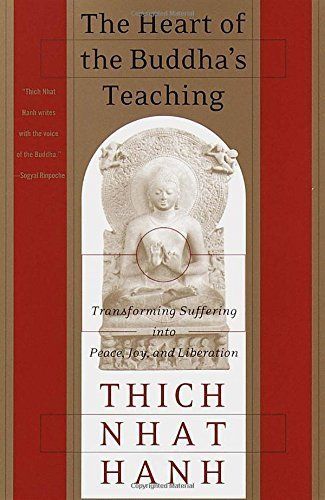
I am not into any particular religion but I am open to new things. The other day I stumbled upon a book on Buddhism that I enjoyed. I would like to share what I loved the most.

There is an old Buddhist proverb called “The 84th Problem.” In it, a farmer seeks advice from Buddha on how to solve his problems. After speaking about all of them and being told, one by one, that Buddha can’t offer any help, the farmer grows frustrated and asks why.

“You see, at any point in time, you’ll always have 84 problems in your life,” Buddha replies. “The 84th problem is the key. If you solve the 84th problem, the first 83 will resolve themselves.” Intrigued, the farmer asks what the 84th problem is, and how might he solve it. “Your 84th problem is you want to get rid of the first 83 problems,” Buddha says. “If you understand that life is never without problems, it won’t look so bad.” Kind of cool, no?

I discovered this proverb five years ago when I was trapped: Is this it? Am I doing enough? Is something wrong with me? This is when I had picked up this book on Buddhism after a friend recommended it.

That so many of us have gone through the same dizzying existential crises doesn’t surprise me. We are living in a crazy time with so many mixed messages: We’re told to strive for more but be content, be content but not complacent, be ambitious but not envious, be grateful but don’t settle, be happy in spite of all of it because life is always hard, every relationship has doubt, every job is difficult, every person has problems. It’s all sound advice but it makes the important task of identifying why you feel uneasy really tricky. And so around we go.

It’s been a couple of years since I played that specific brand of emotional pinball, and I have a theory as to what it was that got me out of it.

Imagine you’re digging a hole in a dirt field. You don’t know what it’s for, you just know you’re supposed to dig it and enjoy it. After a while, your arms grow heavy, your hands begin to blister and every shovelful of dirt feels heavier than the last. You admit to a friend that you’re tired and unhappy. “That’s part of it,” she tells you. “Just trust me!” So you keep going. You try to feel pride for what you’ve accomplished and find solace in the fact that everyone else is digging too, but mostly you’re frustrated and plagued with self-doubt because something just doesn’t feel right.

Now imagine, instead, you were digging that hole to plant a tree, and every time you felt that fatigue, you remembered your efforts were going towards something you recognized, understood and respected.

That metaphor may seem a little weird, but my theory as to how I dismantled the pinball machine is not expressly about finding a purpose. It’s more so about the importance of having something larger to lean on when problems inevitably arise — an answer to the question, “Why am I doing this?” that is not, at its deepest root, “because I’m supposed to.”

That wasn’t an answer I had, nor one I placed much importance in finding. And the result was a life — relationship, job, situation — I liked day-to-day, and which was great on paper, but which I constantly, puzzlingly, struggled to find fulfilling on a broader level. I busied myself trying to snap the hell out of it: Everyone’s arms are heavy, everyone’s hands have blisters, I’m lucky to be digging at all. But those reminders were ultimately Band-Aid solutions. As soon as I heard someone say that her relationship was hard, but she knew it was what she wanted; or heard a writer say that her work was hard, but she knew it was what she wanted to be doing; or heard a person say that Vienna was a hard place to live, but she knew it was where she wanted to be, it would all come crumbling down. Those deeper truths weren’t there for me.

This is hard but, at the end of the day, I’m digging a hole to plant a tree, and that’s important to me. Those six words — “at the end of the day” — eluded me; I could never convincingly apply them to the areas I most wanted to. As in: “At the end of the day, this is the person I want to be with,” or, “At the end of the day, this is what I want to be doing.” It’s a simple phrase that underlines the idea that life’s problems are less daunting when they’re in service of something you believe with gut-certainty. I spent a lot of energy convincing myself that wasn’t true, or that I wasn’t the “type of person” who’d ever be certain of anything, but I was wrong.

So maybe I turned the table over on my life, but I don’t think that’s the only way out of that disquiet. If your answer to why you’re working at your job is: “At the end of the day, it’s paying the bills, and I’m okay with that” — and that feels honest, I say embrace that; let it tether you and accept its associated costs. I’ve seen people do that and they’re much happier for it. But if it doesn’t, and you know it never will?

Find or create a new purpose for what you’re doing that does, and accept the costs that come with that, too. What won’t work are fake reasons that just sound right, because you can’t change your feelings by force. Believe me, I tried.

The why questions aren’t easy to answer, but if I’d placed more value in asking them instead of blaming myself for needing to, I would have identified what was up with me much sooner. My life is different for a while now — a new job, new relationship, new city — and I still have 83 problems, but they no longer make me spiral with self-doubt or question my decisions. As soon as I asked myself what I wanted my problems to be, and began rearranging my life around that answer, the existential hand-wringing of my 84th fell away.

.Things to Do for Yourself.

Lockdown 3487 and Happy New Year. When I get out of here,” I wrote to the group chat during the lockdown, “the first place I’m going to is a bookstore.” And that’s just where I went when the world opened up again. I spent an…