Recent Posts

.How to: Healthy Food Relationship 101.

Have you struggled with fears, obsessions, or feelings of guilt or shame around your food choices? Or perhaps you’ve found yourself stuck in a cycle of “starting fresh tomorrow”, or restricting foods in your diet. If you can relate, today’s post is for you. Today…

. The Ultimate Hangover Cure.

Hangover? Do you want to play a little game? Riddle Number 1 There is a room with five chairs in it. Eight people are standing in the room. Some of them are Vampires. Some of them are Normals. Vampires always lie. Normals always tell the…

.Girls Gone Mild.

THAT IS IRRATIONAL! THAT IS STUPID! THEY ARE MAKING THINGS DIFFICULT FOR THE SAKE OF IT!

When I encounter emotions and behaviours that do not make sense to me, it is often because I do not have all the information. And in the absence of information, I tend to assume the worst. Have you heard about “emotional generosity”? This is the ability to see past behaviour that one does not understand and proactively look for compassionate ways to explain them. It is easy to do this for young children. If they start crying or throwing a tantrum, we wonder whether they are hungry, tired, or hurt. Sadly, it is harder to do this for adults. Well, not for me.

Here are some useful patterns that help me nurture more generous interpretations – and get to the root of the issue faster. Damn you, Coronavirus, I am throwing a tandrum at least twice on a daily basis. Below, I present a list of things that I discovered over many years:

  1. Overreaction is often driven by something else entirely. They shout and cry…. over an innocent mistake. Over something someone said. Something benign. Has this person lost it? Overreaction is often a sign that something else might be going on that I am not aware of. Perhaps I didn’t get enough sleep or recently had a fight with someone. Maybe something about the situation is triggering an unresolved trauma from childhood. When I notice someone overreacting, I broaden my focus and get curious about what else might be going on.
  2. Blame is Often Driven by Anger. They point the finger at their colleagues… but it’s their own targets they missed. Is this person blind to their own role in the situation? Blame is a way of venting anger. The brain has a knack for redirecting negative emotions outwards, often to the unfortunate people who happen to be closest. It’s a psychological trap that can prevent us from taking responsibility and holding others accountable. When you notice someone blaming others for their problems, help that person to label their underlying emotions. Some studies have shown that it takes about 90 seconds for negative emotions to dissipate — and often when the anger subsides, the arguments change too.
  3. Anxiety is Often Driven by A Lack of Visibility. They worry so much… that it makes everyone else worry too. Don’t they have faith in their team? Anxiety is a feeling of unease or nervousness, usually about a particular event or situation with an unknown outcome — and it can be contagious. My favourite quote about anxiety comes from tidying-up expert Marie Condo: Anxiety comes from not seeing the whole picture. This doesn’t just apply to messy wardrobes, it applies to the mind too. Thoughts can be hard to organise when they’re bouncing around your head, so many psychologists recommend writing your thoughts down. This makes them more tangible and easier to inspect and organise.
  4. Avoidance is Often Driven by Insecurity. They put it off or make light of it… but they know how important it is. Don’t they even care? I think, avoidance and anxiety are both ways of expressing insecurity. They’re so interconnected that one person’s avoidance can trigger another person’s anxiety — and vice versa. Avoidance is often a defence mechanism against painful feelings, such as the fear of failure or rejection.
  5. Criticism is Oftern Driven by Shame. They criticise other people’s work… even when it’s not really an issue. Do they get a kick from putting people down? They tell lies about others or invent things so a person does not get the desired position or promotion. In Daring Greatly, Brene Brown provides a useful insight: ‘Research tells us that we judge people in areas where we’re vulnerable to shame, especially picking on folks who are doing worse than we’re doing.’ Once again, it’s easier to project negative self-talk onto others than deal with it head-on.
  6. Unrequested Advice is Often Driven by Regret. They tell others what to do… even when advice isn’t welcome. Aren’t these people just control freaks? Advice is sometimes regret in disguise. Perhaps a past experience has left them with a longing to have acted differently, and this is their chance to put things right and help you avoid the pain they felt.
  7. Mistrust is Often Driven by an Unspoken Expectation. They don’t trust their partner… even when they want to. Do these people just have relationship issues? Trust tends to break down when there’s an unspoken perception of the other side not taking responsibility for their behaviours. This perception turns into resentment, which eventually shows up as a lack of trust. And of course, when trust breaks down, so does communication.
  8. Doubt is Often Driven by a Lack of Clarity. They can’t make a call… even when they seem to have enough information. Are they incapable of making decisions? Doubt arises when outcomes are uncertain. However, in the modern world, if you’re waiting for certainty you’ll wait forever. Clarifying what matters can help others overcome paralysing doubt and make bolder decisions.
  9. Acts of Selflessness. Acts of selflessness may not seem like bad behaviours — and they aren’t necessarily. Working around the clock and sacrificing your own needs for others can seem like commitment and diligence. However, prolonged selflessness often masks a sense of unworthiness; if you believe you don’t deserve to have your own needs met, you focus on the needs of others instead. And eventually this can lead to resentment, fatigue, and burnout.

These ‘rules’ aren’t guaranteed to work in every situation, but they help me expand my ability to reinterpret bad behaviours with generosity. Ask yourself, ‘What else might be going on here?’ Then listen carefully and stay curious. At the same time, being generous doesn’t mean ‘taking one for the team’. If other people’s behaviours affect your wellbeing, it’s time to set some boundaries. After all, your emotions and behaviours are your responsibility.

Stay happy. Stay sane. Keep laughing.

.Me and the Billa Self-Check-Out-Lane.

I hate self-checkout lanes at stores. I don’t like the notion to replace humans with machines. I like the social contact and the small talk at the register. But then the other day I only had three items, the line at the register was really…

.Processed Food 101.

Many of us are made to believe that all processed foods should be eliminated from the diet, but in today’s post, I’ll be shedding some light on what food processing means and the many different kinds. Processed food is a term we hear left and right.…

.Purpose & Reason.

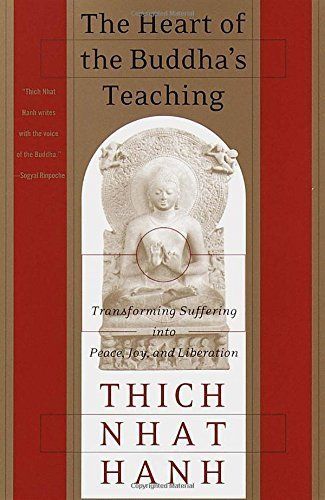
I am not into any particular religion but I am open to new things. The other day I stumbled upon a book on Buddhism that I enjoyed. I would like to share what I loved the most.

There is an old Buddhist proverb called “The 84th Problem.” In it, a farmer seeks advice from Buddha on how to solve his problems. After speaking about all of them and being told, one by one, that Buddha can’t offer any help, the farmer grows frustrated and asks why.

“You see, at any point in time, you’ll always have 84 problems in your life,” Buddha replies. “The 84th problem is the key. If you solve the 84th problem, the first 83 will resolve themselves.” Intrigued, the farmer asks what the 84th problem is, and how might he solve it. “Your 84th problem is you want to get rid of the first 83 problems,” Buddha says. “If you understand that life is never without problems, it won’t look so bad.” Kind of cool, no?

I discovered this proverb five years ago when I was trapped: Is this it? Am I doing enough? Is something wrong with me? This is when I had picked up this book on Buddhism after a friend recommended it.

That so many of us have gone through the same dizzying existential crises doesn’t surprise me. We are living in a crazy time with so many mixed messages: We’re told to strive for more but be content, be content but not complacent, be ambitious but not envious, be grateful but don’t settle, be happy in spite of all of it because life is always hard, every relationship has doubt, every job is difficult, every person has problems. It’s all sound advice but it makes the important task of identifying why you feel uneasy really tricky. And so around we go.

It’s been a couple of years since I played that specific brand of emotional pinball, and I have a theory as to what it was that got me out of it.

Imagine you’re digging a hole in a dirt field. You don’t know what it’s for, you just know you’re supposed to dig it and enjoy it. After a while, your arms grow heavy, your hands begin to blister and every shovelful of dirt feels heavier than the last. You admit to a friend that you’re tired and unhappy. “That’s part of it,” she tells you. “Just trust me!” So you keep going. You try to feel pride for what you’ve accomplished and find solace in the fact that everyone else is digging too, but mostly you’re frustrated and plagued with self-doubt because something just doesn’t feel right.

Now imagine, instead, you were digging that hole to plant a tree, and every time you felt that fatigue, you remembered your efforts were going towards something you recognized, understood and respected.

That metaphor may seem a little weird, but my theory as to how I dismantled the pinball machine is not expressly about finding a purpose. It’s more so about the importance of having something larger to lean on when problems inevitably arise — an answer to the question, “Why am I doing this?” that is not, at its deepest root, “because I’m supposed to.”

That wasn’t an answer I had, nor one I placed much importance in finding. And the result was a life — relationship, job, situation — I liked day-to-day, and which was great on paper, but which I constantly, puzzlingly, struggled to find fulfilling on a broader level. I busied myself trying to snap the hell out of it: Everyone’s arms are heavy, everyone’s hands have blisters, I’m lucky to be digging at all. But those reminders were ultimately Band-Aid solutions. As soon as I heard someone say that her relationship was hard, but she knew it was what she wanted; or heard a writer say that her work was hard, but she knew it was what she wanted to be doing; or heard a person say that Vienna was a hard place to live, but she knew it was where she wanted to be, it would all come crumbling down. Those deeper truths weren’t there for me.

This is hard but, at the end of the day, I’m digging a hole to plant a tree, and that’s important to me. Those six words — “at the end of the day” — eluded me; I could never convincingly apply them to the areas I most wanted to. As in: “At the end of the day, this is the person I want to be with,” or, “At the end of the day, this is what I want to be doing.” It’s a simple phrase that underlines the idea that life’s problems are less daunting when they’re in service of something you believe with gut-certainty. I spent a lot of energy convincing myself that wasn’t true, or that I wasn’t the “type of person” who’d ever be certain of anything, but I was wrong.

So maybe I turned the table over on my life, but I don’t think that’s the only way out of that disquiet. If your answer to why you’re working at your job is: “At the end of the day, it’s paying the bills, and I’m okay with that” — and that feels honest, I say embrace that; let it tether you and accept its associated costs. I’ve seen people do that and they’re much happier for it. But if it doesn’t, and you know it never will?

Find or create a new purpose for what you’re doing that does, and accept the costs that come with that, too. What won’t work are fake reasons that just sound right, because you can’t change your feelings by force. Believe me, I tried.

The why questions aren’t easy to answer, but if I’d placed more value in asking them instead of blaming myself for needing to, I would have identified what was up with me much sooner. My life is different for a while now — a new job, new relationship, new city — and I still have 83 problems, but they no longer make me spiral with self-doubt or question my decisions. As soon as I asked myself what I wanted my problems to be, and began rearranging my life around that answer, the existential hand-wringing of my 84th fell away.

.Things to Do for Yourself.

Lockdown 3487 and Happy New Year. When I get out of here,” I wrote to the group chat during the lockdown, “the first place I’m going to is a bookstore.” And that’s just where I went when the world opened up again. I spent an…

Hey Everyone, I am going to have a loud phone conversation on the train.

It is almost five o’clock, it’s Wednesday, and I am feeling good. Finally, I made it halfway through the week. I had a somewhat productive day at work, and I am looking forward getting home. I am finally on the train and just want to…

.Intuition and What it is all About.

Today, I want to talk about intuition, what it is, and how to listen to your inner knowing better. Keep reading for 6 strategies to sharpen your intuition.

The subject of intuition and “listening to your gut” is so near and dear to me. I live with my intuition (and values) as my compass. I knew that it was the right thing to do when I resigned from the German Federal Police at age 23 to join the United Nations in New York. I just knew. Or move to Canada and study there. Or to move back to Germany to finally end up in Vienna.

It’s guided me in making many big decisions in my life, and I gotta say, it’s never steered me wrong. I needed to explore this passion of mine. Fast forward a few years ago to getting a divorce which was one of the hardest things I’ve done. And even in all the craziness, my intuition spoke loud and clear. I wouldn’t be who I am (or with the person I’m now with!) if it wasn’t for listening to that inner guidance.

Whether it’s your personal life, relationships, business, or little things like listening to your body or eating intuitively, intuition can offer powerful insights.

What is Intuition?

Explaining intuition can be difficult because it’s largely a feeling and a knowing. It’s like trying to describe the colour blue — it’s not easy to do! But simply put, intuition is an innate inclination or drive toward a particular action or behaviour (as opposed to thinking or analyzing). It’s a feeling or a sense that you have, and in many cases, a gut feeling based on past experiences.

Now, this isn’t to say that you should disregard logic or conscious reasoning. Our analytical brain is important, too. Instead, it’s all about finding a balance with bringing many of our cognitive resources into action depending on the situation. All are very useful, however, intuition can provide us with valuable insights into what may be best for us, in ways that logic sometimes cannot. Sometimes it logically makes sense to do something, but still just doesn’t feel right. Have you ever experienced that before?

Intuition has been a topic of research for centuries in the fields of philosophy and psychology. It’s fascinating stuff. Whether you call it intuition, listening to your gut, or your inner knowing, we all have the ability to tap into it and that’s what this post is all about.

Here are 6 strategies to better listen to & sharpen intuition that work for me personally plus some questions you can ask yourself.

Six strategies for listening to your intuition

1. Clear the Noise

Clearing the clutter of mental or external noise is one of the best ways to tap into our intuition easier. Spending time in solitude or in meditation can be profound in helping us better pick up on our inner guidance.

When we’re constantly being influenced by others, what we see/hear, others’ opinions or what others might think, the “shoulds” that we feel, or the general busyness of our daily lives, it makes it harder for us to pay attention to what truly feels best for us. By getting quiet and spending time alone we can better tune into our needs and intuition, free of distraction.

2. Initial Gut Reaction

Practice paying attention to your Initial split-second gut reaction when being faced with a set of decisions.

To practice this now, take a moment to think about a decision you’re trying to make. Remove all thoughts or analyses about them, and just focus on the feeling of when you weigh your options. You can try flipping a coin to see what that split-second moment feels like.

Generally, when something feels right, there’s a pull toward it, an openness, lightness, or a sense of excitement. When something doesn’t feel right, you may feel a sense of contraction, resistance, dread, or pulling back. You can ask yourself: which choice feels relieving, liberating, calming, or exciting? Which one feels heavy or uncomfortable? Your initial reaction can give you lots of insight into what might be best for you.

Tuning into these feelings will help you familiarize yourself with your “gut feelings” or intuition.

3. Physical Sensations

The brain and body are intricately connected. When we feel a certain way mentally or emotionally, our physical body responds accordingly thanks to the connections in our nervous system. For example, if something feels wrong, you may hunch your shoulders, feel a heaviness in your chest or feel sick to your stomach, or you may have a concerned facial expression. Likewise, if something feels good, you may be smiling while talking about it or feel a sense of lightness and openness in your body, even if there’s a bit of nervousness about it.

This is where some people get confused by fear vs. intuition. To help distinguish between the two, I invite you to think about it this way: how would you feel AFTER the decision is all said and done, either immediately, after a few weeks, or even months later? Do you have a sense of relief, pride, joy, or confidence? Or does it make you feel sad, regretful, or disappointed?

Fear can typically be overcome. We can push through fears, learn new skills, and improve confidence. But intuition typically lingers by giving us a nagging feeling that something isn’t right, even after we’ve made a decision.

4. Explore Your Options

Take a moment to think about a decision you’ve tried to make and that you kept coming back to again and again. Perhaps it felt unresolved, you kept second-guessing yourself or a nagging feeling never subsided. In my experience, my intuition is calling when something keeps coming back to my mind and an issue keeps repeating itself. It can sometimes mean we need to explore what it is that we keep questioning, to put it to rest.

5. Past Experiences

Recalling past experiences where you had a good or bad feeling about something can help you notice that feeling in the future. Try and remember what that “thing” felt like, especially in an experience where you were correct about it.

6. Write It Out

Sometimes using our conscious, analytical mind can be helpful to pave the way for our intuition to shine through. Here are a few questions you can ask yourself if you’re trying to make a decision or weighing a few options in your life right now. Grab a journal and write these out:

  1. What is the ultimate outcome I want? What is most important when it comes to this area of my life?
  2. What are the pros, cons, and worst case scenarios for each option?
  3. Are my fears (worst case scenarios) realistic or imaginary? Often we are afraid of outcomes that aren’t even likely, let alone realistic. This can drown out your intuition. Ask yourself if your fears are deep-seated insecurities disguised as convincing truths.

Put it into Practice

Listening to your intuition takes time and practice and is just like a skill you can develop.

If you’re new to listening to your intuition, try tapping into it in situations that don’t matter quite as much, such as very small decisions (e.g. what to order off a menu, or which type of cuisine to cook or order for dinner). You can also try it in conversations with others by gently picking up on the way someone feels behind the words they are saying.

.Stress-Free Eating over the Holidays.

Happy Holidays & Omicron Greetings, it is that time of year my friends! Corona-Omicron-Christmas 2021 isn’t far away. This time of year is full of all kinds of things for those who celebrate, and while it all feels admittedly different again because of COVID-some-mutation, dinner…